
Silver Reflective Film Manufacturer | Architectural Mirror Window Film
Silver reflective film is a practical solar-control solution for projects that need lower heat gain, better glare control, and a more private daytime interior environment without changing the glass into a decorative product. We supply silver reflective window film for contractors, distributors, and project buyers who need a clear tier structure, project-ready documentation, and stable bulk delivery for commercial use.
In real projects, this category is usually chosen for one clear reason: it solves visible building problems in a way that is easy to explain. When solar discomfort, strong glare, and daytime exposure become ongoing issues, silver reflective film gives you a direct response with a mirror-style exterior appearance, a more controlled indoor environment, and a product line that is easy to sample, specify, and quote.
What you can request from us
- Sample rolls for project review
- Specification sheets and quotation support
- Project-tier selection guidance
- Private label and packaging support

Technical Parameters
| Thickness | VLT | IR Cut | UV Cut | Color | Warranty | |
| Silver Film | 2mil | 5% | 90% | 99% | Silver | 3 Years |
| 2mil | 15% | 88% | 99% | Silver | 3 Years | |
| 2mil | 35% | 83% | 99% | Silver | 3 Years | |
| 2mil | 50% | 62% | 99% | Silver | 3 Years | |
| 2mil | 8% | 90% | 99% | Green | 3 Years | |
| 2mil | 8% | 90% | 99% | Blue | 3 Years | |
| 2mil | 25% | 75% | 99% | Gold | 3 Years | |
| 2mil | 10% | 75% | 99% | Grey | 3 Years | |
| 2mil | 15% | 75% | 99% | Bronze | 3 Years |
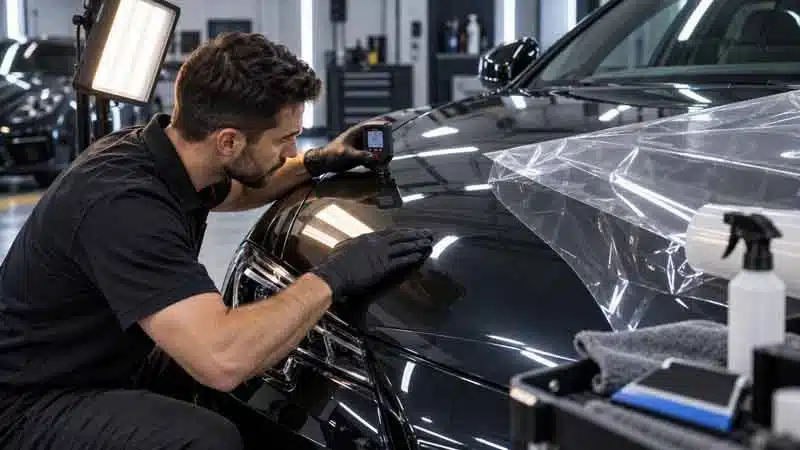
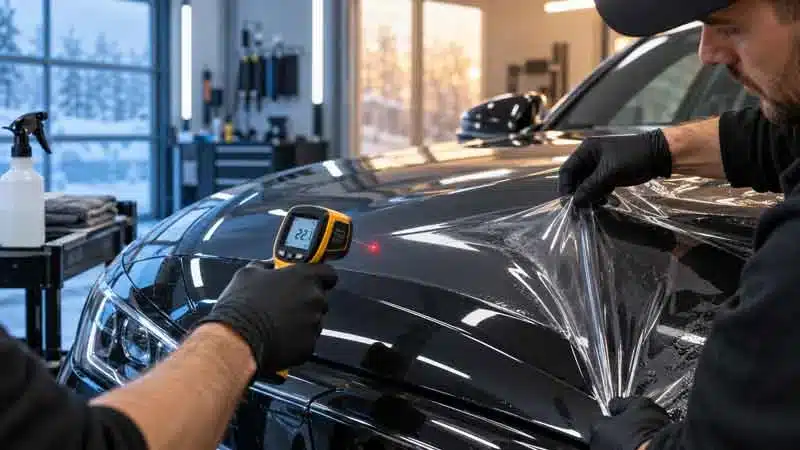
Test PPF Samples Before Bulk Buying
Before committing to a bulk PPF order, we recommend testing the film under real installation conditions.
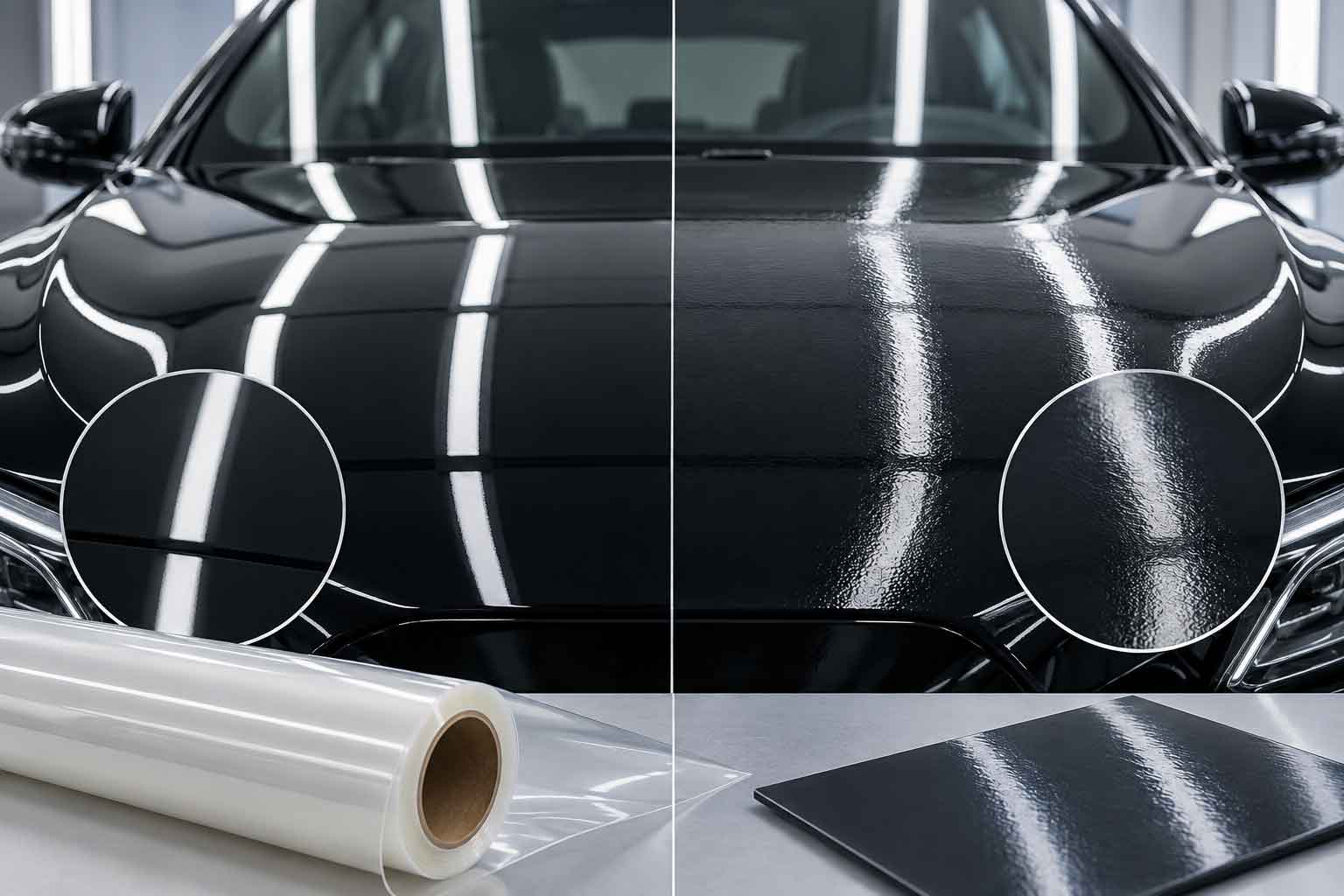
Professional buyers should compare more than film thickness or warranty. Sample evaluation can help you check:
- surface clarity and finish consistency;
- orange peel and visual texture;
- adhesive tack and repositionability;
- stretch and conformability;
- edge stability;
- self-healing response;
- hydrophobic behavior;
- stain resistance;
- installer feedback.
FUNO supports sample evaluation for distributors, installer networks, importers, and private label buyers before volume purchasing.
For a complete evaluation method, read our PPF Sample Testing Guide
Why Project Buyers Choose Silver Reflective Film
Silver reflective film is widely selected when a project needs a more visible solar-control result than standard neutral films can offer. It is especially useful when the client wants the performance benefit to be obvious in both comfort and façade appearance.
This category works well because it combines four practical project values:
- lower solar heat gain
- stronger glare reduction
- daytime privacy support
- a clean mirror-style exterior look
For many commercial buildings, that combination is easier to justify than a film that looks softer but delivers less visible change.
What Silver Reflective Film Helps Improve
Solar Heat Management
This film helps reduce part of the solar load entering through glass, which can support a more stable indoor environment and improve comfort in sun-exposed areas.
Glare Control
Reflective film is often selected when direct brightness and screen glare create problems for offices, reception zones, meeting rooms, retail counters, or other daylight-sensitive spaces.
Daytime Privacy
A stronger reflective surface can improve daytime privacy when outdoor light is stronger than indoor light. This is one of the most common reasons clients choose silver reflective film.
Façade Appearance
Beyond performance, the exterior visual effect matters. Silver reflective film creates a more controlled, mirrored building look that many commercial properties prefer for a cleaner and more uniform façade.
Silver Reflective Film Specification for Procurement
| Item | Silver 80 Series | Silver 30 Series | Ultra Dark Reflective Silver 01 |
|---|---|---|---|
| Main Positioning | Higher daylight openness with reflective control | Balanced solar control and privacy | Maximum privacy and stronger statement façade |
| Visible Light Transmission | Higher VLT by series | Mid-range VLT by series | Very low VLT by series |
| Visible Light Reflectance | Moderate-to-high reflective appearance | Strong reflective appearance | Very strong reflective appearance |
| UV Rejection | Available by series | Available by series | Available by series |
| Main Use Direction | Brighter interiors that still need glare and heat management | General commercial solar-control programs | High-privacy and strong façade-image projects |
| Best Fit | Offices, mixed-use projects, brighter commercial spaces | Broad commercial applications | Privacy-sensitive and high-impact reflective projects |
| Warranty Terms | By series and project program | By series and project program | By series and project program |
| Documentation | Spec sheet, quote support, sample support | Spec sheet, quote support, sample support | Spec sheet, quote support, sample support |
| OEM / Private Label | Available | Available | Available |
This structure makes it easier to compare the range by project goal, not only by shade name.
Silver 80, Silver 30, or Ultra Dark Silver 01: Quick Selection Guide
Choose Silver 80 When
You want a more open interior feel and a lighter visible result while still improving glare control, solar management, and façade consistency.
Choose Silver 30 When
You want a stronger all-around reflective option that balances comfort, glare reduction, privacy, and a clear mirror-style appearance for mainstream commercial projects.
Choose Ultra Dark Reflective Silver 01 When
You want a more dramatic exterior effect and much stronger privacy positioning, and the project accepts the trade-off of a darker visible environment.
A better project result usually comes from choosing the film by goal first, not by shade name alone.
One-Way Mirror Privacy: What to Tell End Users Before Approval
Silver reflective film can support a one-way mirror effect in daytime conditions, but that result is always influenced by the lighting balance between interior and exterior spaces.
The most important points to explain before approval are:
- daytime privacy is stronger when outside light is brighter
- nighttime privacy can weaken or reverse when interior light becomes stronger
- 24/7 privacy should not rely on reflective film alone
If a project needs privacy at all times, reflective film should be discussed together with lighting design, blinds, curtains, or decorative zoning. This helps avoid unrealistic expectations and protects project satisfaction after installation.
What to Include in RFQs and Distributor Catalogs
A reflective film program becomes easier to quote and compare when the RFQ structure is clear. The most useful project inputs usually include:
Optical Metrics
- visible light transmission
- visible light reflectance
- color and appearance direction
Solar and Comfort Notes
- UV performance
- glare problem level
- heat-control expectation
Application Conditions
- glazing type
- façade orientation
- interior lighting condition
- installation position and building use
A more complete RFQ usually leads to a more accurate recommendation and fewer disputes later.
Recommended Project Workflow
A cleaner reflective-film project process usually follows these steps:
1. Site Survey
Review the project type, exposure conditions, and the spaces where glare, heat, or privacy issues are most visible.
2. Glazing Identification
Confirm the glass type before recommending the final film tier. This is especially important for projects with coated, insulated, laminated, or otherwise sensitive glazing systems.
3. Film Tier Selection
Choose the reflective tier according to daylight goals, privacy level, façade appearance, and project risk tolerance.
4. Mock-Up Review
Use a sample panel or mock-up section to confirm appearance, reflectivity, and daytime privacy expectations before large-scale rollout.
5. Installation and Handover
Proceed with installation using agreed specifications and complete the project with documentation, maintenance guidance, and warranty handover.
This workflow is more reliable than choosing a reflective level too early without checking the glazing and real visual conditions.
Commercial Use Cases
Office Buildings
Reflective film works well where solar heat gain and screen glare affect workspaces, meeting rooms, or reception areas.
Retail Storefronts
It can support a more controlled exterior appearance while helping manage glare and daytime viewing conditions.
Hotels and Hospitality Projects
This category is useful where guest comfort, façade image, and selected privacy needs must be balanced in a single film direction.
Schools and Public Buildings
Projects with large glass areas often use reflective film to improve comfort and reduce direct brightness in occupied spaces.
Healthcare and Institutional Spaces
Where daylight is welcome but direct glare and overheating are not, reflective film can provide a more controlled internal experience.
Industrial Offices and Control Rooms
This category is especially relevant where glass exposure creates discomfort, visibility problems, or indoor heat pressure during working hours.
Commercial Supply Program
We support silver reflective film as a project-ready supply program, not only as a roll product. Depending on your needs, support can include:
- sample swatches and mock-up rolls by tier
- spec sheets with VLT and reflectance data
- quotation packs for project comparison
- private label and packaging support
- documentation for comfort and appearance narratives
- bulk supply planning for staged delivery
This makes it easier to move from early project discussion to formal quotation and delivery without rebuilding the process each time.
Glass Compatibility and Project Assurance
Reflective architectural film should never be chosen by appearance alone. Glass compatibility matters. A stronger project process usually depends on:
- glazing identification before final approval
- mock-up review before full rollout
- clear installation scope
- defined acceptance criteria
- warranty handover after completion
If the project includes coated glass, IGUs, laminated assemblies, tinted substrates, or mixed façades, compatibility should be checked early. That is one of the most important steps in project assurance.
Documentation Package and Private Label Support
We support silver reflective film programs with documentation that is easier to use in project quotation and distributor catalogs.
Support can include:
- specification sheets by tier
- sample rolls and mock-up support
- project quotation templates
- warranty card templates
- claim workflow guidance
- private label and carton labeling support
- multi-language support where required
These materials help your team communicate the product more clearly and reduce confusion during approval and delivery.
3-Year Warranty Positioning
A clear 3-year warranty structure is suitable for many reflective architectural film programs where the product is sold with defined project scope, clear documentation, and controlled application logic.
The commercial value of warranty is not only the number of years. It is the fact that the project team knows:
- what the coverage includes
- how claim review works
- how product traceability is handled
- how installation scope affects the support path
That kind of clarity matters more than a vague warranty headline.
Manufacturing Consistency and Supply Stability
In reflective film programs, repeat-order stability matters because projects and distributors rely on appearance consistency as much as basic performance. A strong supply program should support:
- stable reflective appearance
- repeatable VLT and reflectance direction
- consistent documentation
- predictable bulk supply
- clean private label execution
The real test is not the first approved sample. The real test is whether the next shipment still matches the same project standard closely enough to keep confidence high.
FAQs
Is silver reflective film suitable for reducing solar heat and glare?
Yes. This category is commonly selected to reduce part of the solar load and control glare in glass-heavy buildings.
Does one-way mirror privacy work at night?
Not in the same way. The privacy effect depends on the lighting balance. When interior light becomes stronger, the one-way mirror effect can weaken or reverse.
How should I choose between Silver 80, Silver 30, and Ultra Dark Silver 01?
Choose based on project goal. Silver 80 suits brighter interiors, Silver 30 suits balanced performance, and Ultra Dark Silver 01 suits stronger privacy and façade impact.
What data should be included in a reflective film datasheet?
At minimum, it should include visible light transmission, visible light reflectance, UV-related information, appearance direction, and application notes relevant to the project.
Is this film suitable for every climate and every glazing type?
Not automatically. Project location, façade exposure, and glazing type should always be checked before final film approval.
Do you provide sample rolls and project quotation packs?
Yes. We can support sample rolls, mock-up review planning, specification sheets, and quotation support for project and distribution needs.
Request a Project Quote and Sample Roll
To help us recommend the right silver reflective film tier, please share:
- project type and location
- façade orientation
- primary pain point: heat, glare, privacy, façade appearance, or a combination
- glazing type
- preferred tier or visible light target
- quantity expectation
- documentation or private label requirement
We will respond with a more suitable film direction, sample support, and project-ready quotation structure based on your actual application needs.
Contact us
Related products
Silver reflective window film combines solar-control performance with a visible reflective exterior appearance.
It is commonly evaluated for commercial buildings, offices, hotels, storefronts, and high-sun-exposure glazing where buyers need glare reduction, solar control, and a more reflective façade appearance.
Best for: commercial façades, office glass, hotels, storefronts, reflective solar-control projects.
Safety and security window film is used in glazing systems where glass fragment retention and safer breakage behavior are important project requirements.
Depending on the project, buyers should evaluate film thickness, glass configuration, installation method, attachment requirements, and available test documentation before specifying the final system.
Best for: schools, hospitals, storefronts, public buildings, glass doors, safety-upgrade projects.
Decorative window film is used for privacy, interior design, branding, and visual zoning on architectural glass.
It is suitable for office partitions, meeting rooms, clinics, banks, hotels, retail interiors, and other spaces where privacy or visual design is required without necessarily replacing the existing glass.
Best for: office partitions, interior glass, retail spaces, hospitality, branding and design projects.
articles & resources




Ready to Launch Your Silver Reflective Film Business?
Get Pricing, Samples & Distributor Terms
Tell us your target market, preferred finish (gloss / matte / hydrophobic), and expected volume. We’ll recommend the right Silver Reflective Film series, share technical documentation, and provide sampling options so you can evaluate clarity, install feel, and surface performance before scaling.
Ready to Launch Your Silver Reflective Film Business?
Get Pricing, Samples & Distributor Terms
Tell us your target market, preferred finish (gloss / matte / hydrophobic), and expected volume. We’ll recommend the right Silver Reflective Film series, share technical documentation, and provide sampling options so you can evaluate clarity, install feel, and surface performance before scaling.