
Decorative Window Film for Privacy and Branding
Decorative film gives you a simpler way to improve glass without replacing it. You can use it to add privacy, light diffusion, branding, and interior style on office partitions, doors, meeting rooms, storefront glass, healthcare spaces, and other project areas where plain clear glass does not work well enough.
We manufacture decorative film for distributors, contractors, installers, project buyers, and private label partners who need a product line that is easy to sample, easy to specify, and easy to repeat across multiple sites. Our decorative film range can support frosted designs, etched-glass looks, patterns, gradient privacy styles, blackout and whiteout effects, and custom-cut branding graphics with stable roll supply and project-ready support.
What you can request from us
- Sample book and swatch support
- Specification sheets and quotation
- Custom cutting and logo discussion
- OEM and private label packaging

Why Buyers Choose Decorative Film
Decorative film is chosen when the project needs more than plain glass but does not need the cost, lead time, and installation disruption of replacing glass panels. It creates a cleaner and more flexible solution for spaces that need privacy, zoning, visual identity, or a lighter design refresh.
This category works well because it helps solve several common project problems at the same time:
- privacy without blocking all daylight
- glass design upgrade without glass replacement
- cleaner branding and wayfinding
- faster rollout across multiple rooms or sites
- easier replacement or update when layouts change
For many commercial interiors, decorative film is easier to approve because the visual result is clear, the installation is faster, and the budget is more practical than specialty glass.
Technical Parameters
| Decorative Film | Thickness | VLT | Remark | Model | Color | Warranty |
| 2mil | 99% | 1.38m × 30m | White Matte | Frost | 6 Years | |
| 2mil | 99% | Rainbow Blue | Rainbow Blue | 6 Years | ||
| 2mil | 99% | Rainbow Red | Rainbow Red | 6 Years | ||
| 2mil | 99% | Black Out | Black out | 6 Years | ||
| 2mil | 99% | White out | White out | 6 Years | ||
| 2mil | 99% | Mini Blind | Mini Blind | 6 Years | ||
| 2mil | 99% | Venetian blind | Venetian blind | 6 Years |
Test PPF Samples Before Bulk Buying
Before committing to a bulk PPF order, we recommend testing the film under real installation conditions.
Professional buyers should compare more than film thickness or warranty. Sample evaluation can help you check:
- surface clarity and finish consistency;
- orange peel and visual texture;
- adhesive tack and repositionability;
- stretch and conformability;
- edge stability;
- self-healing response;
- hydrophobic behavior;
- stain resistance;
- installer feedback.
FUNO supports sample evaluation for distributors, installer networks, importers, and private label buyers before volume purchasing.
For a complete evaluation method, read our PPF Sample Testing Guide
What Is Decorative Window Film?
Decorative window film is a surface-applied film used on glass to improve privacy, soften visibility, add pattern or branding, and change the look of a space without replacing the glass itself. It can be used on full panels, partial strips, logos, privacy bands, doors, partitions, and selected feature areas.
In practical use, decorative film is not only a design product. It is also a project tool. It helps teams control visibility, separate zones, improve interior appearance, and standardize visual design across one site or many sites with less disruption than full glass replacement.
Decorative Film Types
A stronger decorative film page should help buyers choose by design effect, not by random product names. The main categories usually include the following:
Frosted Decorative Film
Frosted film is one of the most widely used options because it creates privacy while still allowing light to pass through. It works well for offices, clinic rooms, meeting spaces, partition walls, doors, and shared interiors where people want a cleaner private feel without closing the space visually.
Etched-Glass Look Film
This type gives the visual effect of etched or sandblasted glass at a lower project cost and with easier replacement later. It is a strong fit when the project wants a premium finish but does not want permanent glass treatment.
Patterned Decorative Film
Patterned film is used when the project needs both design and privacy. This category can include stripes, dots, geometric designs, repeating textures, and other visual structures that help define space while keeping the glass more interesting.
Gradient Decorative Film
Gradient film is useful when the project wants changing privacy levels from one part of the glass to another. It is often chosen for meeting rooms, hospitality interiors, feature partitions, and premium office spaces.
Blackout and Whiteout Film
These films are used when full visual blocking or strong design contrast is needed. They work well for back-of-house zones, visual separation, temporary blocking, branding zones, or project areas where complete privacy matters more than light transmission.
Special Effect and Color Decorative Film
This category can include stained-glass-style looks, color accents, visual themes, and feature-driven interior glass graphics. It is more design-led and often used for retail, hospitality, themed spaces, and promotional environments.
Privacy Level Guide
One of the most important decisions in decorative film projects is how much privacy the glass should provide. Buyers usually make better decisions when privacy is explained in simple levels.
Light Privacy
Light privacy means the film softens direct visibility but still keeps a more open visual feeling. This level is suitable when the project wants subtle separation without making the space feel closed.
Medium Privacy
Medium privacy is one of the most common choices for office partitions, treatment rooms, consultation zones, and meeting rooms. It balances privacy and daylight well.
High Privacy
High privacy is used when visibility must be reduced much more clearly. This is a better fit for more sensitive rooms, selected internal partitions, or zones where confidentiality matters more.
Full Visual Blocking
This level is used when the glass should function more like a visual barrier than a viewing surface. Blackout, whiteout, and heavy-coverage custom graphics usually fit here.
A better project result usually comes from choosing privacy level first, then choosing the pattern or finish style that matches it.
Adhesive, Static Cling, and Removable Options
Decorative film projects do not all need the same installation method. The right material direction depends on how permanent the application should be and how often the design may need to change.
Adhesive Decorative Film
Adhesive film is the most common choice for stable long-term applications. It is suitable for offices, hospitals, hotels, schools, and branded commercial interiors where the design should stay in place through normal use.
Static Cling Decorative Film
Static cling options are more suitable when the film may need to be removed, repositioned, or updated more often. This can be useful for temporary promotions, seasonal retail graphics, temporary privacy needs, or short-term space changes.
Removable Decorative Film
Some projects need a cleaner balance between stable installation and future replacement. In these cases, removable decorative film can be a practical option when the client expects layout or branding changes later.
The best installation type depends on how the project will use the glass, how long the film should stay in place, and how likely future updates will be.
Custom Decorative Film for Branding and Wayfinding
Decorative film becomes even more useful when it supports branding, zoning, and visual communication. Custom solutions can help turn standard glass into a more functional and recognizable part of the space.
Custom support can include:
- cut logos
- brand stripes or privacy bands
- frosted logo knockouts
- directional graphics
- repeated patterns for multi-site rollout
- custom sizing for doors, partitions, and feature panels
For offices, retail stores, hospitality projects, and branded workspaces, this can create a more professional environment without the cost of replacing glass or applying permanent treatments.
Where Decorative Film Fits Best
Office Partitions and Meeting Rooms
Decorative film is widely used to improve privacy and visual structure in office interiors. Frosted and patterned films are especially useful for meeting rooms, glass corridors, manager offices, and shared partitions.
Retail Glass and Storefront Branding
Retail projects often use decorative film for branding bands, partial privacy, feature patterns, and design accents that improve visual identity while still keeping the storefront active.
Healthcare and Consultation Spaces
Healthcare projects often need privacy without making interiors feel closed. Decorative privacy film works well for treatment rooms, consultation spaces, reception partitions, and patient-facing areas.
Hotels, Restaurants, and Hospitality Interiors
This category is useful when projects need privacy zoning, premium pattern effects, branded graphics, or lighter decorative separation inside guest-facing spaces.
Residential Supplementary Privacy
While this category is strongly project-driven, decorative film can also work in selected residential applications where bathrooms, doors, sidelights, or internal glass areas need more privacy and softer light.
Multi-Site Rollout Programs
Decorative film is especially useful when the same design language needs to be repeated across branches, offices, franchise sites, or institutional buildings. A repeatable film program is often easier than repeating glass replacement work across many locations.
Specification and Procurement Toolkit
A stronger decorative film program should come with a toolkit that makes quotation and rollout easier.
A useful toolkit can include:
- film type and finish description
- privacy level guidance
- installation method
- custom-cut file requirements
- standard roll dimensions
- sample book or swatch support
- project quotation template
- artwork approval process
- packaging and labeling discussion
- repeat-order planning
For buyers, this matters because decorative film projects often involve more visual approval work than ordinary glass films. A cleaner toolkit makes decisions faster and reduces correction work later.
Decorative Film vs Other Options
Decorative Film vs Frosted or Specialty Glass
Specialty glass can look premium, but it is usually more expensive, slower to source, and harder to replace later. Decorative film gives a more flexible route for many projects.
Decorative Film vs Blinds or Curtains
Blinds and curtains can provide privacy, but they do not create the same clean glass appearance and often need more maintenance. Decorative film keeps the glass surface active and visually integrated.
Decorative Film vs Plain Privacy Film
Plain privacy film is useful when design does not matter. Decorative film is better when the project wants privacy plus a stronger interior visual result.
Why Work With Us for Decorative Film Programs
We support decorative film projects with a supply structure that is easier to use for design approval, repeat ordering, and multi-site rollout.
Support can include:
- sample books and swatches
- custom-cut logos and privacy bands
- artwork review and approval workflow
- pattern consistency across repeat orders
- OEM and private label packaging
- roll supply for project or distribution needs
- multi-site program discussion
- quotation support for phased rollout
For decorative film, supply strength is not only about having rolls in stock. It is also about making sure the same pattern, the same privacy effect, and the same branding result can be repeated when the next order comes.
Manufacturing Consistency and Repeat Supply
Decorative film projects depend heavily on visual consistency. If the pattern changes, the frost level changes, or the cut graphics shift from one order to the next, the project result becomes difficult to control.
That is why a stronger decorative film program should support:
- repeatable design appearance
- stable privacy level
- consistent roll supply
- clean artwork execution
- more reliable repeat-order planning
The first sample is only the beginning. The real test is whether the next delivery still matches the approved look closely enough for rollout work.
FAQs
What is decorative film used for?
Decorative film is used to improve privacy, diffuse light, add pattern or branding, and upgrade glass without replacing the glass itself.
Which decorative film is best for office privacy?
Frosted and medium-privacy patterned films are often the best starting point for office partitions, meeting rooms, and internal glass zones.
Can decorative film still let in light?
Yes. Many decorative films are designed to improve privacy while still allowing useful daylight to pass through.
What is the difference between adhesive and static cling decorative film?
Adhesive film is usually better for long-term installation. Static cling is more suitable when the design may need to be changed or removed more often.
Can you make custom decorative window film with logos or stripes?
Yes. Custom-cut logos, privacy bands, and branded layouts can be discussed according to project needs and artwork files.
Do you provide sample books and project quotation support?
Yes. We can support sample books, swatches, specification guidance, and quotation planning for decorative film projects.
Get a Project Quote and Sample Book
To help us recommend the right decorative film program, please share:
- application area: office, retail, healthcare, hospitality, residential, or rollout project
- main goal: privacy, branding, design upgrade, zoning, or light diffusion
- film type preference: frosted, patterned, gradient, blackout, custom graphic, or not sure yet
- privacy level
- installation type: adhesive, static cling, or removable
- custom cutting or logo requirement
- estimated quantity and timeline
We will respond with a more suitable decorative film direction, sample support, and quotation structure based on your actual project needs.
Contact us
Related products
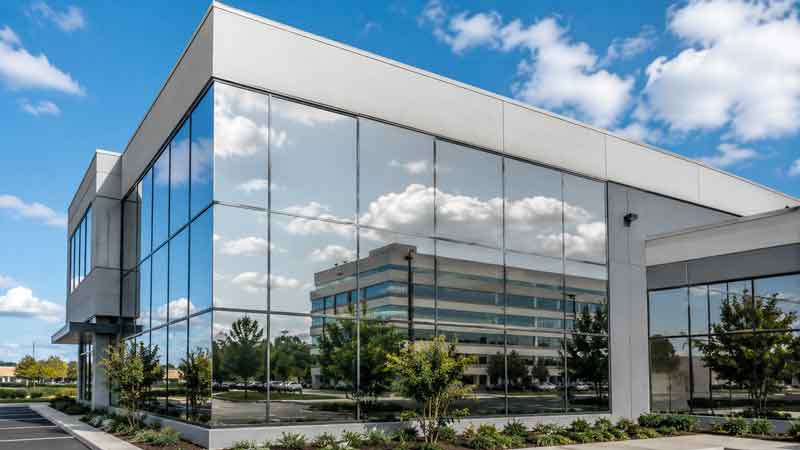
Silver reflective window film combines solar-control performance with a visible reflective exterior appearance.
It is commonly evaluated for commercial buildings, offices, hotels, storefronts, and high-sun-exposure glazing where buyers need glare reduction, solar control, and a more reflective façade appearance.
Best for: commercial façades, office glass, hotels, storefronts, reflective solar-control projects.
Safety and security window film is used in glazing systems where glass fragment retention and safer breakage behavior are important project requirements.
Depending on the project, buyers should evaluate film thickness, glass configuration, installation method, attachment requirements, and available test documentation before specifying the final system.
Best for: schools, hospitals, storefronts, public buildings, glass doors, safety-upgrade projects.
Decorative window film is used for privacy, interior design, branding, and visual zoning on architectural glass.
It is suitable for office partitions, meeting rooms, clinics, banks, hotels, retail interiors, and other spaces where privacy or visual design is required without necessarily replacing the existing glass.
Best for: office partitions, interior glass, retail spaces, hospitality, branding and design projects.
articles & resources






Ready to Launch Your Decorative Film Business?
Get Pricing, Samples & Distributor Terms
Tell us your target market, preferred finish (gloss / matte / hydrophobic), and expected volume. We’ll recommend the right Decorative Film series, share technical documentation, and provide sampling options so you can evaluate clarity, install feel, and surface performance before scaling.
Ready to Launch Your Decorative Film Business?
Get Pricing, Samples & Distributor Terms
Tell us your target market, preferred finish (gloss / matte / hydrophobic), and expected volume. We’ll recommend the right Decorative Film series, share technical documentation, and provide sampling options so you can evaluate clarity, install feel, and surface performance before scaling.