
Our Automotive Window Film Range
Funo offers a comprehensive product line designed to meet different market segments, price tiers, and installation preferences. Our portfolio covers:
Nano ceramic window film is positioned for premium automotive tint programs where buyers need strong heat-control performance, a clean low-reflective appearance, multiple VLT options, and compatibility with modern vehicle electronics.
Sputtered window film uses deposition-based film technology for premium solar-control applications. Depending on the series, products can provide different VLT, reflectivity, appearance, and heat-management characteristics.
Chameleon window film is a styling-oriented automotive film designed to create color-shifting or angle-dependent visual effects on vehicle glass.
Clear TPU windshield protection film for distributors, installers, and fleet supply programs. Rock chip defense, high optical clarity, roll supply, sample support, and OEM service.
Nano carbon window film provides a clean dark appearance and practical heat-control performance for mainstream automotive tint programs.
It is suitable for distributors and installer networks that need a simple shade structure, stable product positioning, and a more accessible price level than premium ceramic lines.
Dyed window film is designed for entry-level and price-sensitive automotive tint programs where buyers mainly need darker appearance, privacy, and a simple shade range.
It can provide a practical starting category for markets where product price and straightforward SKU selection are more important than premium heat-control positioning.
This breadth allows distributors and brand partners to build a complete offering—from entry-level programs to premium lines—without needing multiple suppliers.
Technical Parameters
| Product | Model | Thickness | VLT | IR Cut | UV Cut | Color | Warranty | Remark |
| Carbon Film | CS05 | 1.8mil | 0.05 | 0.72 | 0.99 | Black | 8 Years | Similar as 3M CS series |
| CS20 | 1.5mil | 0.13 | 0.6 | 0.99 | Black | 8 Years | ||
| CS35 | 1.5mil | 0.35 | 0.43 | 0.99 | Black | 8 Years | ||
| Standard Ceramic Film | NC05100 | 2mil | 0.05 | 0.96 | 0.99 | Black | 8 Years | |
| NC15100 | 2mil | 0.16 | 0.98 | 0.99 | Black | 8 Years | ||
| NC35100 | 2mil | 0.36 | 0.97 | 0.99 | Black | 8 Years | ||
| NC50100 | 2mil | 0.5 | 0.95 | 0.99 | Black | 8 Years | ||
| NC75100 | 2mil | 0.74 | 0.96 | 0.99 | Light Blue | 8 Years | ||
| Super Clear 80% IRR Ceramic Film | SC80-05 | 2mil | 0.05 | 0.8 | 0.99 | Black | 8 Years | |
| SC80-15 | 2mil | 0.16 | 0.8 | 0.99 | Black | 8 Years | ||
| SC80-35 | 2mil | 0.36 | 0.8 | 0.99 | Black | 8 Years | ||
| SC80-70 | 2mil | 0.74 | 0.8 | 0.99 | Light Blue | 8 Years | ||
| Super Clear 90% IRR Ceramic Film | SC90-05 | 2mil | 0.05 | 0.9 | 0.99 | Black | 10 Years | |
| SC90-15 | 2mil | 0.13 | 0.9 | 0.99 | Black | 10 Years | ||
| SC90-35 | 2mil | 0.35 | 0.9 | 0.99 | Black | 10 Years | ||
| SC90-70 | 2mil | 0.7 | 0.9 | 0.99 | Black | 10 Years | ||
| Super Clear 95% IRR Ceramic Film | SC95-05 | 2mil | 0.045 | 0.95 | 0.99 | Black | 10 Years | |
| SC95-15 | 2mil | 0.18 | 0.95 | 0.99 | Black | 10 Years | ||
| SC95-35 | 2mil | 0.34 | 0.95 | 0.99 | Black | 10 Years | ||
| SC95-70 | 2mil | 0.7 | 0.95 | 0.99 | Light Blue | 10 Years | ||
| Super Clear 99% IRR Ceramic Film | SC99-08 | 2mil | 0.08 | 0.99 | 0.99 | Black | 10 Years | |
| SC99-15 | 2mil | 0.15 | 0.99 | 0.99 | Black | 10 Years | ||
| SC99-35 | 2mil | 0.35 | 0.99 | 0.99 | Black | 10 Years | ||
| SC99-45 | 2mil | 0.45 | 0.99 | 0.99 | Black | 10 Years | ||
| SC99-60 | 2mil | 0.6 | 0.99 | 0.99 | Light Blue | 10 Years | ||
| Super Clear Safety High IRR Ceramic Film | SF05100 | 4mil | 0.045 | 0.99 | 0.99 | Black | 10 Years | |
| SF15100 | 4mil | 0.18 | 0.99 | 0.99 | Black | 10 Years | ||
| SF35100 | 4mil | 0.34 | 0.99 | 0.99 | Black | 10 Years | ||
| SF70100 | 4mil | 0.7 | 0.99 | 0.99 | Black | 10 Years | ||
| Chameleon Film | CM8070 | 2mil | 0.82 | 0.65 | 0.99 | chameleon | 8 Years | |
| CM6080 | 2mil | 0.58 | 0.81 | 0.99 | chameleon | 8 Years | ||
| CM-Blue | 2mil | 0.6 | 0.83 | 0.99 | chameleon | 8 Years | ||
| CM7592 | 2mil | 0.74 | 0.92 | 0.99 | chameleon | 8 Years | ||
| CM-SP70 | 2mil | 0.65 | 0.89 | 0.99 | chameleon | 8 Years | ||
| SPUTTERING+CERAMIC FILM | SP05 | 2mil | 0.05 | 0.95 | 0.99 | Black | 10 Years | |
| SP15 | 2mil | 0.15 | 0.95 | 0.99 | Black | 10 Years | ||
| SP35 | 2mil | 0.35 | 0.95 | 0.99 | Black | 10 Years | ||
| SP70 | 2mil | 0.7 | 0.95 | 0.99 | Light Blue | 10 Years | ||
| Sputtering film | VK70 | 1.8mil | 0.71 | 0.96 | 0.99 | Light green | 10 Years | Similar as V-KOOL |
| VK40 | 1.8mil | 0.46 | 0.98 | 0.99 | Black | 10 Years | ||
| LX70 | 3mil | 0.72 | 0.96 | 0.99 | Light green | 10 Years | Similar as Solar gard | |
| LX40 | 3mil | 0.21 | 0.84 | 0.99 | Black | 10 Years | ||
| LX25 | 3mil | 0.34 | 0.83 | 0.99 | Black | 10 Years | ||
| K14 | 2mil | 0.13 | 0.87 | 0.99 | Black | 10 Years | Similar as V-KOOL | |
| K28 | 2mil | 0.3 | 0.73 | 0.99 | Black | 10 Years | ||
| RE20 | 2mil | 0.14 | 0.9 | 0.99 | Black | 10 Years | Similar as 3M | |
| SP50 | 2mil | 0.5 | 0.53 | 0.99 | Light Grey | 10 Years | Similar as 3M 9901 | |
| Dyed film | D-BK05 | 1mil | 0.05 | 0.11 | 0.99 | Black | 3 Years | |
| D-BK20 | 1mil | 0.2 | 0.11 | 0.88 | Black | 3 Years | ||
| D-BK35 | 1mil | 0.35 | 0.11 | 0.8 | Black | 3 Years | ||
| HP05 | 2mil | 0.05 | 0.73 | 0.99 | Black | 3 Years | ||
| HP15 | 2mil | 0.15 | 0.58 | 0.92 | Black | 3 Years | ||
| HP35 | 2mil | 0.35 | 0.46 | 0.81 | Black | 3 Years | ||
| HP50 | 2mil | 0.46 | 0.2 | 0.56 | Black | 3 Years | ||
| HP70 | 2mil | 0.7 | 0.11 | 0.44 | Black | 3 Years |
| Model | Thickness | Self Healing | Color | Warranty | Roll Szie |
| TPU Windshield | 6.5mil | Instant | Clear | 1 year | 1.2m×15m |
Test Automotive Window Film Before Bulk Ordering
Before placing a bulk automotive window film order, buyers should test samples on real vehicle glass and under realistic installation conditions.
Window tint should not be selected only by price, VLT, or one heat-rejection number. A useful sample evaluation should include:
- shade and color consistency;
- optical clarity and haze;
- VLT direction;
- visible reflectivity;
- heat-control performance;
- adhesive behavior;
- installation handling;
- heat-shrinking behavior;
- edge finishing;
- appearance from inside and outside the vehicle;
- installer feedback.
For distributors and installer networks, sample testing also helps confirm whether a product is suitable for the intended market position before larger-volume purchasing.
Key Specifications for Automotive Window Film Buyers
Car window film is a thin, engineered film applied to automotive glass to change how the glazing system manages light and solar energy. When you compare products across suppliers, avoid marketing-only claims and anchor evaluation to standard, widely used metrics:
Visible Light Transmission (VLT)
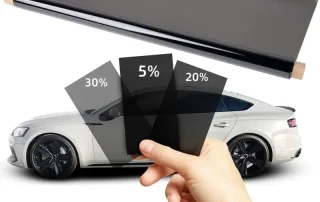
VLT shows how much visible light passes through the filmed glass. A higher VLT normally produces a lighter appearance, while a lower VLT produces a darker appearance.
For distributors, VLT affects product positioning, customer preference, and local road-use compliance. It should therefore be selected by both market demand and vehicle-window requirements.
Visible Light Reflectance (VLR)
VLR describes how much visible light is reflected by the filmed glass. It helps buyers understand whether the installed film will appear more neutral or more reflective.
This is especially important when evaluating sputtered, metallized, or styling-oriented film lines.
Total Solar Energy Rejection (TSER)
TSER describes the percentage of total solar energy rejected by the filmed glazing system.
When available, TSER gives buyers a broader view of solar-control performance than a single narrow-band infrared percentage. Always confirm how the value was tested and whether it refers to film applied to glass.
UV Rejection
UV rejection describes how much ultraviolet radiation is reduced by the filmed glass system.
It is relevant to product positioning around interior material protection and UV-exposure reduction, but it should be considered together with the rest of the film’s optical and solar-performance data.
Infrared Performance
Infrared performance can be reported using different methods, wavelength ranges, and test conditions.
When comparing products, buyers should confirm:
- the metric being used;
- the wavelength range;
- the test method;
- whether the result refers to film alone or film applied to glass.
Do not compare two “IR rejection” percentages as directly equivalent unless their test conditions are comparable.
For advanced heat-management discussions, you will also see infrared performance presented with different calculation methods. Some leading technical literature distinguishes IRER (a filmed-glass metric intended to reflect in-cabin heat experience) from IRR (often measured on film alone over a narrow band). Comparing “IR%” numbers without method and wavelength range is a common sourcing mistake.
What Buyers Should Confirm Before Ordering Car Window Film
Before requesting a final quotation, buyers should confirm:
Film Series
Nano ceramic, nano carbon, sputtered, chameleon, dyed, or another required direction.
VLT Range
Confirm the shade levels required for your target market.
VLR / Appearance
Confirm whether the market prefers a neutral, dark, reflective, or specialty appearance.
Solar Performance
Review available TSER, UV, and infrared data with the relevant test conditions.
Thickness
Confirm the required film thickness by product series.
Roll Size
Confirm the roll width and length required by your installation channel.
Warranty Program
Confirm the warranty applicable to the specific series and market.
Packaging
Standard packaging or OEM/private label.
Target Market
Confirm local automotive tint requirements before finalizing the SKU range.
Automotive Window Film Supply for Professional Buyers
Distributors & Wholesalers
Distributors need a clear product ladder, stable SKUs, reliable documentation, and repeat supply.
A practical automotive window film portfolio may include an entry-level dyed line, a mainstream carbon line, a premium ceramic line, and selected specialty products according to local market demand.
Installer Networks & Retail Chains
Installer networks should evaluate more than published film specifications.
Heat-shrinking behavior, adhesive handling, optical clarity, shade consistency, edge finishing, and installer acceptance can all affect daily installation efficiency and callback risk.
We recommend sample approval before introducing a new series across multiple locations.
Fleets & Dealership Programs
Fleet and dealership programs normally prioritize standardization, visibility, consistent appearance, documentation, and repeat availability.
Film selection should be based on the intended window position, required VLT range, local rules, and the level of solar-control performance required by the program.
Market Compliance and Product Selection
Automotive tint requirements vary by country, state, province, vehicle type, and window position.
Buyers should confirm local requirements for:
- visible light transmission;
- reflectivity;
- windshield use;
- front side windows;
- rear glazing;
- color or specialty appearance where applicable.
FUNO can provide product specifications and sample support, but final road-use compliance should be confirmed for the destination market before the SKU range is finalized.
Automotive Window Film Manufacturing & Quality Control
FUNO is the film brand of Hebei Fengao New Materials Co., Ltd., based in Shijiazhuang, Hebei Province, China.
Our window film supply system supports coating, slitting, roll converting, inspection, packaging, sample preparation, and repeat-order coordination for international customers.
For automotive window film, quality control should focus on more than one performance number. Depending on the series, important checks can include:
- film appearance;
- shade consistency;
- optical clarity;
- thickness;
- coating consistency;
- roll condition;
- adhesive behavior;
- packaging accuracy;
- SKU identification;
- batch consistency.
Buyers can use approved samples and product specifications as reference points before moving into repeat purchasing.
OEM & Private Label Automotive Window Film
FUNO supports distributors, tint brands, installer networks, and wholesalers that want to sell automotive window film under their own brand.
Depending on the project, we can support:
- existing film series with private label packaging;
- product-line and VLT planning;
- roll labels and stickers;
- branded roll boxes;
- outer cartons;
- SKU naming;
- barcode layout;
- multilingual packaging;
- sample approval before bulk production;
- repeat-order planning.
For faster market entry, buyers can begin with an existing film series and customized packaging. More specific product targets can be discussed through sample and specification comparison.
Frequently Asked Questions About Wholesale Car Window Film
What Automotive Window Film Types Does FUNO Manufacture?
FUNO supplies nano ceramic, nano carbon, sputtered, chameleon, and dyed automotive window film for different market positions, appearance requirements, VLT ranges, and price levels.
Can I Request Different VLT Options?
Yes. Available VLT options depend on the selected film series and model. Buyers should define the shade range required by their market and confirm local road-use requirements before finalizing the product mix.
Can I Test Samples Before a Bulk Order?
Yes. Sample testing is recommended for checking shade, clarity, heat shrinking, adhesive behavior, installation handling, reflectivity, and overall market fit before volume purchasing.
Can FUNO Provide OEM or Private Label Car Window Film?
Yes. We can support branded roll boxes, labels, cartons, SKU naming, barcode layout, multilingual packaging, and product-line planning according to the project.
What Information Should I Provide for a Quote?
Please provide your country or target market, preferred film series, VLT requirements, expected quantity, roll specification, target price position, and whether you need standard or private label packaging.
Can FUNO Recommend a Product Range for My Market?
Yes. If you provide your target market, sales channel, price range, preferred appearance, and performance priorities, we can help narrow the film series and sample options for evaluation.
Request Car Window Film Samples & Wholesale Pricing
Tell us your target market, sales channel, preferred film type, VLT range, estimated quantity, and packaging requirements.
We can help you compare suitable automotive window film directions, prepare samples, confirm product specifications, and plan the next step toward bulk or private label supply.
Contact us
Related products
Nano ceramic window film is positioned for premium automotive tint programs where buyers need strong heat-control performance, a clean low-reflective appearance, multiple VLT options, and compatibility with modern vehicle electronics.
Sputtered window film uses deposition-based film technology for premium solar-control applications. Depending on the series, products can provide different VLT, reflectivity, appearance, and heat-management characteristics.
Chameleon window film is a styling-oriented automotive film designed to create color-shifting or angle-dependent visual effects on vehicle glass.
Clear TPU windshield protection film for distributors, installers, and fleet supply programs. Rock chip defense, high optical clarity, roll supply, sample support, and OEM service.
Nano carbon window film provides a clean dark appearance and practical heat-control performance for mainstream automotive tint programs.
It is suitable for distributors and installer networks that need a simple shade structure, stable product positioning, and a more accessible price level than premium ceramic lines.
Dyed window film is designed for entry-level and price-sensitive automotive tint programs where buyers mainly need darker appearance, privacy, and a simple shade range.
It can provide a practical starting category for markets where product price and straightforward SKU selection are more important than premium heat-control positioning.
articles & resources
Factory-Direct PPF vs Local Distributor Supply: Which Sourcing Model Fits Your Business?
How to Remove Window Film From Car Windows (Tint/Solar/Smoke) and Clean the Residue
Is There a Protective Film for Windshields? What Windshield Protection Film Is and How to Choose It
What Is Nano Ceramic Film? Benefits, How It Works, and Whether It Is Worth It
What Is Sputtered Window Film?
Car Window Tint Film Types: Which Film Is Best for Your Car?
Does Windshield Protection Film Work? What It Really Helps Prevent