
Residential decorative window film is one of the simplest ways to improve privacy without making a room feel closed in or dark. The strongest options allow daylight to pass through while reducing direct visibility, which is why decorative and privacy films are so often used on bathrooms, entry glass, sidelights, partitions, and other spaces where both light and privacy matter.
The best film is not always the most decorative one, and it is not always the most private one. The right choice depends on four things: how much privacy you need, how much light you want to keep, what visual style fits the room, and whether the glass is exterior-facing or interior-facing. Frosted and etched-style films usually lean more toward privacy. Patterned and artistic films often balance privacy with stronger design character. Stained-glass-look films are more decorative and light-friendly, but they are not always the strongest option if your priority is obscured visibility.
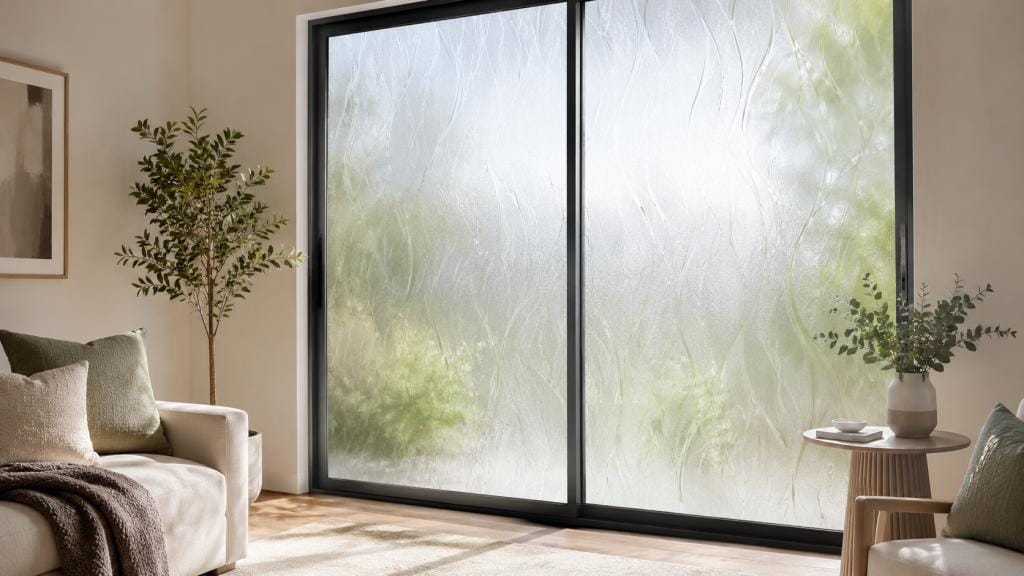
The Short Answer: Which Decorative Window Film Type Works Best?
If your main priority is stronger privacy with a clean, modern look, frosted or etched-style film is usually the safest choice. These films are widely used because they soften or block direct views through the glass while still allowing natural light to brighten the space.
If your main priority is privacy plus visible design impact, patterned decorative film is often the better fit. It can still provide meaningful privacy, but its real strength is combining a softer obscuring effect with a more intentional visual style.
If your main priority is decorative character first, stained-glass-look or more artistic decorative films are often the most attractive choice. These are especially useful when the room needs visual warmth, texture, or color, but they are usually less privacy-focused than frosted or heavier etched designs.
How to Compare Decorative Window Film for Privacy and Style
Privacy level
Privacy is the first real comparison point. Some decorative films only soften the view through the glass. Others create a much stronger obscured effect. Frosted and denser etched-style films are usually the strongest choice when the room needs dependable privacy. Lighter patterned films can still reduce visibility, but they often prioritize appearance over full concealment.
Light filtering
One of the biggest reasons decorative window film works so well in residential spaces is that it can preserve natural light while improving privacy. This is what separates it from heavier coverings that darken the room. Many decorative and frosted films are specifically positioned as privacy solutions that still let daylight in, which is why they work so well in homes where brightness matters.
Style effect
Decorative film does more than control visibility. It also changes how the glass contributes to the room. Frosted film usually feels clean, minimal, and modern. Etched-style film often looks more refined and architectural. Patterned film can feel softer, more expressive, or more decorative. Stained-glass-look film adds color, texture, and a much stronger design statement. The right choice depends on whether you want the glass to disappear quietly or become part of the room’s visual identity.
View distortion versus view preservation
This is where many buyers make the wrong assumption. Decorative privacy film is excellent at keeping light while reducing visibility, but it does not usually preserve a clear outward view in the way a reflective privacy solution can in bright daytime conditions. Frosted and etched films are stronger when the goal is obscured privacy. They are not designed to keep a crisp view through the glass.
Frosted vs Etched vs Patterned vs Stained-Glass-Look Film
Frosted film
Frosted film is usually the most straightforward answer when you want more privacy without losing light. It gives the glass a soft, diffused look and works especially well in bathrooms, front doors, sidelights, and interior partitions. Its strength is practical privacy with a clean finish that suits many home styles.
Etched-style film
Etched-style film serves a similar purpose, but it often feels slightly more refined than plain frosted film. It is a strong option when you want privacy and a glass finish that looks more architectural or custom. This type of film is a good fit for entry glass, dining-room partitions, and homeowners who want the privacy effect to feel more elevated than basic frosting.
Patterned decorative film
Patterned decorative film is the most flexible middle ground. It can provide meaningful privacy while adding visible design character, and it works well when the room needs both light and personality. Depending on the pattern density, this option can range from lightly obscuring to fairly private. That is why it works well in interior glass, home offices, and feature windows where plain frosting may feel too plain.
Stained-glass-look film
Stained-glass-look film is the most style-led option in this group. It is ideal when the glass should become a decorative feature, not just a privacy surface. It can add warmth, color, or traditional character to a room, especially in entryways or accent windows. But if privacy is the main objective, this style should be chosen carefully because visual beauty does not always equal stronger obscurity.
Which Decorative Window Film Is Best for Each Room?
Best for bathroom windows
Bathroom windows usually need stronger privacy than almost any other residential glass area. Frosted or etched-style film is usually the best fit because it keeps daylight in while creating a much more dependable privacy effect. Decorative patterns can also work, but only if the pattern density is strong enough for the room’s real privacy needs.
Best for entry glass and sidelights
Entry glass and sidelights need a balance of privacy, curb appeal, and daylight. This is where etched-style film, frosted film, and certain stained-glass-look designs often perform best. The right direction depends on whether the priority is a cleaner modern look or a more decorative entrance statement.
Best for living rooms
Living-room glass usually needs a lighter touch. In many cases, the goal is not full obscurity but softer visibility and a brighter room. This makes lighter decorative or patterned films more suitable than heavy frosting in many living spaces, especially when the room benefits from daylight and the window is part of the design of the home.
Best for office partitions and interior glass
For interior glass, decorative and patterned privacy films are often the strongest option because they divide space without making it feel closed off. Frosted film still works well where more privacy is needed, but decorative patterns usually offer more style flexibility for home offices, interior partitions, and meeting-style spaces inside the home.
What Decorative Window Film Can and Cannot Do
Decorative window film does very well when the goal is privacy, soft daylight, and a more finished look for the glass. It is especially strong in spaces where the room should stay bright and open, but direct visibility needs to be reduced.
What decorative film does not always do is preserve a clear outward view or deliver the same kind of solar performance as a dedicated heat-control film. Decorative film is mainly a privacy-and-style solution. In many cases, it can contribute to a more comfortable room visually, but it should not automatically be treated as a substitute for specialized solar-control window film.
This matters because buyers often compare all window films as if they solve the same problem. They do not. Decorative film is strongest when the glass needs to look better and feel more private without turning the room dark. That is a different goal from maximum heat rejection or one-way daytime privacy.
What to Check Before You Choose
How much privacy do you really need?
Before choosing a film, decide whether you need light obscuring, medium privacy, or strong privacy. This changes everything. A lightly patterned decorative film may look excellent, but it may not be enough for a bathroom or a front-facing side window.
How much light do you want to keep?
The best decorative film still needs to match the room’s light needs. If natural brightness matters a lot, choose a film designed to preserve more daylight and avoid overly dense visual treatments unless the privacy need is high.
Is style more important than full obscurity?
Some homeowners want the film to disappear into the room. Others want it to become a design feature. Frosted and etched films often lean more toward subtlety. Patterned and stained-glass-look films lean more toward visual expression.
Is the glass exterior-facing or interior?
This matters because room type and sight lines change what works best. A bathroom window, an entry sidelight, and a glass pantry door do not need the same kind of privacy. Choosing by room function is usually more reliable than choosing by pattern alone.
Do you want a removable or more permanent solution?
Some decorative films are designed for easier DIY use or removable installation, while others are more permanent. That matters if the design may change later, if the home is a rental, or if the homeowner wants lower commitment.
FAQ
What is the best decorative window film for privacy?
Frosted and etched-style films are usually the strongest choice when privacy is the top priority. They soften or block direct views while still allowing natural light into the room.
Does frosted film let in light?
Yes. That is one of its biggest advantages. Frosted privacy film is commonly used because it improves privacy without making the room feel dark.
Is patterned film good for bathroom windows?
It can be, but only if the pattern is dense enough to provide the privacy level the room needs. For stronger bathroom privacy, frosted or etched-style film is usually the safer option.
What decorative film style looks most like real etched glass?
Etched-style decorative film is usually the closest match when the goal is a more architectural, custom-glass appearance.
Can decorative window film also block UV?
Some decorative films can contribute to UV control, but decorative film should still be chosen mainly for privacy and style. If UV and heat control are major priorities, that should be compared separately with dedicated solar-control film options.
Working With FUNO
At FUNO, the right residential decorative window film starts with the room goal, not just the pattern. Some homeowners want stronger privacy. Some want softer light. Some want the glass to become part of the design of the room. The best result comes from matching the film style to the real balance between privacy, daylight, and visual character.
Decorative window film is used for privacy, interior design, branding, and visual zoning on architectural glass.
It is suitable for office partitions, meeting rooms, clinics, banks, hotels, retail interiors, and other spaces where privacy or visual design is required without necessarily replacing the existing glass.
Best for: office partitions, interior glass, retail spaces, hospitality, branding and design projects.
Safety and security window film is used in glazing systems where glass fragment retention and safer breakage behavior are important project requirements.
Depending on the project, buyers should evaluate film thickness, glass configuration, installation method, attachment requirements, and available test documentation before specifying the final system.
Best for: schools, hospitals, storefronts, public buildings, glass doors, safety-upgrade projects.
Silver reflective window film combines solar-control performance with a visible reflective exterior appearance.
It is commonly evaluated for commercial buildings, offices, hotels, storefronts, and high-sun-exposure glazing where buyers need glare reduction, solar control, and a more reflective façade appearance.
Best for: commercial façades, office glass, hotels, storefronts, reflective solar-control projects.
Related Posts






Contact FUNO
Tell us your target market, product category, preferred specification, estimated purchasing volume, and whether you need standard or private label supply.
FUNO can help you narrow suitable film options, sample requirements, packaging needs, and the next step toward bulk purchasing.