
Yes, you can wax some cars with paint protection film, but the product must be compatible with the film.
Modern PPF usually has a protective topcoat designed to support gloss, stain resistance, and easier cleaning. Because of this, conventional waxing is often optional rather than necessary.
If you decide to wax PPF, use a non-abrasive, dye-free product that does not contain strong polishing or cutting ingredients. You should also confirm the care instructions for the specific film series before application.
The correct approach depends on whether the vehicle has gloss, matte, satin, or colored PPF.
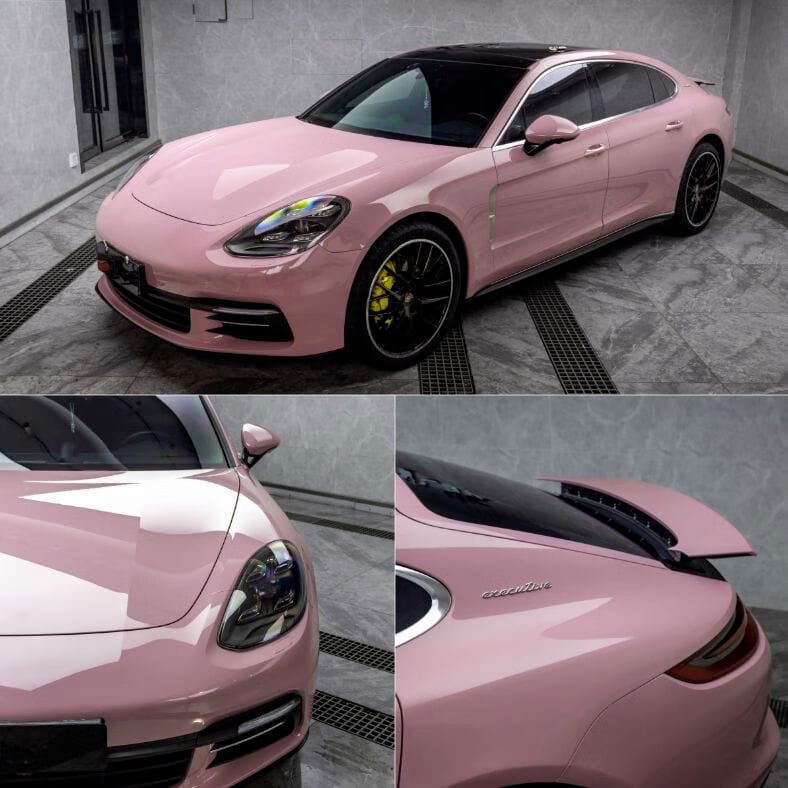
The Short Answer
Waxing is generally acceptable on compatible gloss PPF, provided that:
- the film has fully settled after installation;
- the surface is clean;
- the wax is non-abrasive;
- the product does not contain strong dyes or polishing compounds;
- residue is not allowed to build up around film edges.
However, modern PPF does not always need wax. A good topcoat may already provide the surface appearance and easy-clean properties that owners expect.
Matte and satin PPF require more caution because conventional wax can create uneven shine or change the intended finish.
Does PPF Need Wax?
In most cases, PPF does not require traditional waxing in the same way as unprotected automotive paint.
The film itself acts as the main protective layer. Its purpose is to reduce direct exposure to:
- road debris;
- light scratches;
- bug residue;
- environmental contamination;
- routine washing wear.
Many modern films also include a surface topcoat that helps maintain gloss and makes contamination easier to remove.
Wax may add temporary slickness or visual depth to compatible gloss film, but it should not be treated as essential protection. It also cannot replace correct washing, stain removal, or proper film maintenance.
A vehicle owner should first ask:
Does this specific PPF need an additional wax layer?
If the film already has a strong easy-clean or hydrophobic topcoat, routine washing and proper drying may be enough.
How Long Should You Wait Before Waxing New PPF?
Do not wax PPF immediately after installation.
Newly installed film needs time to settle, especially around edges, curves, and stretched areas. Applying wax or other detailing products too early can interfere with inspection and may leave residue near edges that are still stabilizing.
The correct waiting period depends on:
- the film series;
- the adhesive system;
- installation conditions;
- temperature and humidity;
- the installer’s aftercare instructions.
A practical rule is to wait until the installer confirms that the film has fully settled. The surface should also be free from installation moisture, edge movement, or visible curing issues.
The same caution applies to the first wash. Follow the installer’s recommended waiting period before introducing wax, sealant, or coating products.
What Type of Wax Is Safe for PPF?
The safest choice is a product clearly described as suitable for paint protection film or modern automotive film surfaces.
Product compatibility matters more than the word “wax” on the label.
Choose a non-abrasive product
The wax should not contain cutting or corrective particles.
PPF is not designed to be polished in the same way as exposed clear coat. Abrasive products may reduce surface clarity, affect the topcoat, or create uneven areas.
Avoid products described as:
- cutting;
- heavy cleaning;
- scratch removing;
- paint correcting;
- oxidation removing;
- compound-based.
Avoid strongly dyed products
Dark or colored waxes may leave residue along seams and edges. This residue can become especially visible on light-colored vehicles or clear film.
A neutral, clear, or low-residue product is generally easier to manage.
Check for cleaner or polishing ingredients
Some products are marketed as wax but also contain cleaners, solvents, or mild polishing agents.
This type of combination product may be suitable for traditional paint but less appropriate for PPF. Read the product description carefully instead of assuming all waxes are the same.
Choose products that wipe off cleanly
Heavy residue is difficult to remove from film edges and panel gaps.
A product that applies thinly and removes easily is usually more suitable than a thick paste that dries around seams.
What Products Should You Avoid on PPF?
The greatest risk usually comes from using a detailing product without checking its function.
Avoid the following unless the film manufacturer specifically confirms compatibility.
Rubbing compounds
Rubbing compounds are designed to remove a small amount of paint or clear coat during correction. This is not an appropriate routine maintenance method for PPF.
Cutting polishes
Aggressive polishing can damage or unevenly alter the film’s topcoat.
Even if the film has light surface marks, do not assume a paint-correction product is the right solution.
Abrasive cleaner waxes
A cleaner wax may contain polishing or chemical cleaning ingredients. These products can be more aggressive than a simple protective wax.
Strong solvent-based products
Harsh solvents may affect surface appearance, adhesive edges, or topcoat performance.
Use only products intended for automotive film care.
Products that leave thick residue
Heavy residue often collects around:
- panel edges;
- film seams;
- badges;
- door handles;
- trim lines;
- corners.
Once dried, this buildup can be difficult to remove without applying unnecessary pressure to the film edge.
Can You Wax Gloss, Matte, and Satin PPF the Same Way?
No. The correct care method depends heavily on the finish.
Gloss PPF
Compatible non-abrasive wax may be used on gloss PPF after the film has fully settled.
The product should support the existing glossy finish rather than try to correct or reshape it.
Before applying wax to the whole vehicle:
- Clean the film properly.
- Test the product on a small, less visible area.
- Check for haze, residue, or uneven appearance.
- Confirm that the product wipes away without affecting edges.
Gloss PPF is generally the most suitable finish for optional waxing, but product compatibility still matters.
Matte PPF
Traditional wax is usually not recommended for matte PPF.
Wax may create:
- glossy spots;
- uneven reflection;
- visible streaks;
- changes in the intended matte appearance.
Once a local area becomes shinier than the surrounding film, the finish can look inconsistent.
Use only maintenance products specifically intended for matte or satin film surfaces.
Satin PPF
Satin film sits between gloss and matte in visual appearance, but it should still be treated as a finish-sensitive product.
A conventional gloss-enhancing wax may make some areas more reflective and reduce the uniform satin effect.
Use a satin-compatible care product and test it before full application.
Colored PPF
Colored PPF may have a gloss, matte, or satin surface, so the surface finish remains the first consideration.
Buyers should also consider whether a product could leave visible residue, staining, or uneven color depth.
Follow the maintenance guidance for the exact colored film series rather than applying general clear-PPF advice automatically.
How to Apply Wax Without Damaging PPF
If the wax is confirmed to be compatible, keep the process gentle and controlled.
Clean the film first
Do not apply wax over dirt, bug residue, sand, or other contamination.
Rubbing a product over a dirty surface can move particles across the film and create marks.
Test a small area
A small test area helps identify:
- haze;
- streaking;
- color change;
- unexpected gloss;
- difficult residue;
- surface incompatibility.
Allow enough time to inspect the final appearance before applying the product to the whole vehicle.
Apply a thin layer
More product does not mean better protection.
A thin, even application is easier to remove and reduces the risk of residue around edges.
Use soft, clean microfiber towels
Use separate towels for application and removal.
Dirty or rough towels can trap particles and mark the film surface.
Avoid heavy pressure
Do not press aggressively, especially near film edges and corners.
The goal is to spread and remove the product, not to polish the surface.
Keep residue away from edges
Do not push wax into seams or exposed edges.
If residue appears, remove it carefully before it hardens. Avoid picking at edges with sharp tools.
Wax vs Sealant vs Ceramic Coating on PPF
Wax is not the only surface-care option for PPF.
| Product | Main Purpose | Typical Positioning | Main Consideration |
|---|---|---|---|
| Wax | Adds temporary slickness and visual depth | Short-term surface enhancement | Must be non-abrasive and film-compatible |
| Sealant | Adds a longer-lasting surface layer | Easier cleaning and environmental resistance | Must not interfere with the film topcoat |
| Ceramic coating | Supports hydrophobicity and easier maintenance | Longer-term premium aftercare | Requires correct product selection and application |
Wax is often the simplest temporary option, but it normally requires more frequent reapplication.
A compatible sealant may last longer and provide easier maintenance.
A ceramic coating formulated for PPF may provide stronger hydrophobic behavior and reduce how easily contamination bonds to the surface. However, ceramic coating is not automatically necessary, and it does not replace the physical protection provided by PPF.
The right choice depends on:
- the film topcoat;
- the vehicle’s use;
- the desired maintenance schedule;
- the finish type;
- the owner’s expectations.
Common Waxing Mistakes on PPF
Waxing too soon after installation
The film should be fully settled before applying additional detailing products.
Treating polish and wax as the same product
Wax generally adds a temporary surface layer. Polish removes or corrects material. This difference is critical on PPF.
Using gloss-enhancing wax on matte film
A glossy product may permanently affect the visual consistency of matte or satin PPF.
Applying too much product
Thick layers create more residue and are harder to remove around edges.
Using a machine without confirming compatibility
Machine application can generate pressure and heat. Hand application is generally easier to control for routine care.
Allowing residue to remain around edges
Dried residue makes film seams more visible and can encourage unnecessary cleaning pressure later.
Expecting wax to repair damaged PPF
Wax will not correct:
- deep cuts;
- edge lifting;
- adhesive failure;
- heavy staining;
- permanent topcoat damage;
- severe yellowing.
Damaged film should be inspected by a qualified installer.
Is Waxing Good for PPF Longevity?
Compatible wax can support surface appearance and make cleaning easier, but it is not the main factor that determines how long PPF lasts.
PPF longevity depends more strongly on:
- film quality;
- installation quality;
- UV and climate exposure;
- road conditions;
- washing methods;
- contamination removal;
- edge condition;
- product-specific maintenance.
A suitable wax may support routine care, but an unsuitable product can create more problems than benefits.
The safest approach is to keep maintenance simple and compatible with the film.
Final Answer
Yes, you can wax a car with some types of PPF, especially compatible gloss film.
However, modern PPF often does not require conventional waxing. If you choose to apply wax, wait until the film has fully settled and use a non-abrasive, dye-free, PPF-compatible product.
Avoid rubbing compounds, cutting polishes, aggressive cleaner waxes, strong solvents, and products that leave heavy residue.
Gloss PPF can usually accept compatible wax more easily. Matte and satin PPF require finish-specific products because traditional wax may create uneven shine.
The most important rule is simple:
Follow the care guidance for the specific film series instead of treating all PPF surfaces like ordinary painted clear coat.
FAQ
Can waxing damage PPF?
Yes, an unsuitable product can affect the topcoat, create haze, leave stains, or change the finish. The main risks come from abrasives, polishing compounds, strong solvents, dyes, and heavy residue.
Is wax necessary on modern PPF?
Usually not. Many modern films already include an easy-clean or hydrophobic topcoat. Wax is generally an optional surface treatment rather than a required maintenance step.
Can you use carnauba wax on PPF?
Some non-abrasive carnauba waxes may be compatible with gloss PPF, but the formula should be checked carefully. Avoid products containing dyes, cleaners, or polishing particles.
Can you wax matte PPF?
Conventional wax is generally not recommended for matte PPF because it may create glossy or uneven areas. Use only a product specifically intended for matte film.
Is ceramic coating better than wax for PPF?
A compatible ceramic coating may provide longer-lasting hydrophobicity and easier cleaning than conventional wax. However, it requires correct product selection and application, and it is not necessary for every vehicle.
How often should PPF be waxed?
There is no universal schedule. Some modern PPF does not need wax at all. When a compatible wax is used, follow the product instructions and reapply only when the surface effect has clearly reduced.
Can you polish scratches out of PPF?
Do not use conventional cutting polish without confirming that the film supports that process. Some light surface marks may respond to heat or the film’s self-healing topcoat, while deeper damage may require professional inspection or film replacement.
Should wax be applied by hand or machine?
Hand application is generally easier to control and reduces unnecessary pressure near edges. Machine use should only be considered when both the film and detailing product instructions confirm that it is appropriate.
Caring for FUNO PPF
At FUNO, we recommend matching every aftercare product to the specific PPF finish and topcoat.
Gloss, matte, satin, and colored films should not automatically receive the same treatment. Before using wax, sealant, or ceramic coating, confirm product compatibility, test a small area, and avoid aggressive correction methods.
Good PPF maintenance does not need to be complicated. Clean the film regularly, remove contamination promptly, protect the edges, and use only care products that support the intended surface finish.
Related Posts





Contact FUNO
Tell us your target market, product category, preferred specification, estimated purchasing volume, and whether you need standard or private label supply.
FUNO can help you narrow suitable film options, sample requirements, packaging needs, and the next step toward bulk purchasing.