
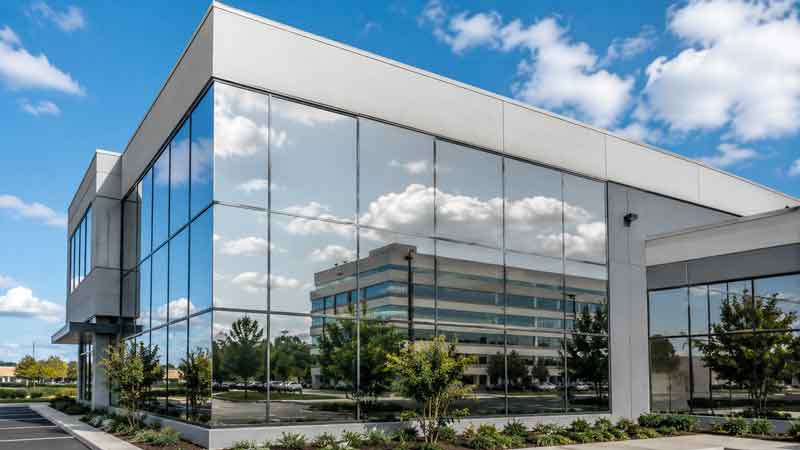
Architectural window film is a retrofit film solution for building glass. It is applied to existing flat glass to improve how the glass performs without replacing the full window system. In practical terms, it is used to help manage solar heat, glare, UV exposure, privacy, safety, and decorative appearance in homes, offices, retail spaces, hospitality projects, and public buildings. Most architectural films are built on polyester film structures and are commonly installed on the interior side of the glass, depending on the project and film type.
What makes architectural window film different from a simple tinted look is its purpose. This is not just about making glass darker. It is about helping the glass do a better job in real spaces. A well-matched film can make rooms more comfortable, reduce harsh sunlight, protect interiors from UV-related fading, create privacy, or add a decorative finish to the glazing. That is why architectural window film is best understood as a building glass upgrade, not just a visual add-on.
What Architectural Window Film Means in Simple Terms
It is made for buildings, not automotive glass
The word architectural matters because it tells you the film is intended for flat glass applications in buildings. That includes office windows, storefront glass, interior partitions, residential windows, hospitality spaces, healthcare facilities, schools, and other commercial or public environments. The product category is defined by building use and glass performance, not by vehicle styling or automotive tint language.
It improves existing glazing without full replacement
One of the main reasons architectural window film is widely used is that it offers a way to improve glass performance without removing and replacing the existing glazing system. For many projects, that matters as much as the performance benefit itself. Full window replacement is more disruptive, more expensive, and often unnecessary when the real problem is heat, glare, privacy, or fading rather than structural failure of the window unit.
What Architectural Window Film Does
Architectural window film is not one single-purpose product. Different film types are designed for different project goals, but the main uses usually fall into a few clear categories.
Heat and solar control
One of the most common uses of architectural window film is to help reduce solar heat gain. In buildings with large glass areas or strong sun exposure, untreated glazing can create hot spots, uneven room temperatures, and higher cooling demand. Solar control film helps reduce how much solar energy enters through the glass, which can improve near-window comfort and support more stable indoor conditions.
This is especially relevant in offices, retail spaces, hotels, residential towers, and public buildings where glass is part of the design but heat build-up becomes a daily operational problem. The goal is not simply to darken the room. The goal is to make the glazing work more effectively in the real climate and orientation of the building.
Glare reduction
Architectural window film is also widely used to reduce glare. In spaces with screens, presentation surfaces, reflective desks, or direct line-of-sight exposure to strong daylight, glare affects comfort and usability. A good film solution helps soften excessive brightness so offices, classrooms, meeting rooms, control areas, and living spaces remain easier to use throughout the day.
The important point is balance. Glare control should not be treated as a simple “darker is better” decision. A film needs to reduce harsh light while still keeping enough useful daylight for the intended space. That is why performance comparison matters more than appearance alone.
UV protection and fade reduction
Another major function of architectural window film is UV protection. Glass can allow light into a space while exposing interior materials to long-term UV-related stress. Over time, that can contribute to fading and aging in flooring, furniture, fabrics, displays, wall finishes, and other interior surfaces. Window film helps reduce that exposure and supports longer-lasting interior appearance.
This benefit matters in residential interiors, hotel rooms, retail display zones, offices, galleries, healthcare spaces, and any environment where appearance retention is important. The professional way to explain this benefit is not to promise that all fading will stop, but to explain that film helps reduce one of the main contributors to premature surface deterioration.
Privacy and decorative design
Architectural window film is also used for privacy and decorative purposes. Frosted films, patterned films, gradient effects, and other decorative finishes can help divide spaces, obscure direct visibility, improve interior branding, or create a more finished visual identity without changing the glass itself.
This makes film a practical option for meeting rooms, clinics, reception areas, bathrooms, office partitions, retail fit-outs, and hospitality interiors. In these settings, the film is not mainly being chosen for thermal performance. It is being chosen to improve how the space looks, how it functions, or how much privacy the glass provides.
Safety and security support
Some architectural window films are selected to help support glass safety and security performance. In these cases, the film can help hold broken glass fragments together and reduce the hazards associated with shattered glazing. That does not mean the film makes glass unbreakable, but it can support retrofit risk reduction in the right application.
This type of film is relevant in schools, entrances, public-facing spaces, storefronts, healthcare facilities, and managed properties where broken glass behavior is part of the safety conversation. The correct way to present this category is with clear scope and realistic expectations, not with absolute protection claims.
Where Architectural Window Film Is Commonly Used
Office buildings and commercial spaces
In office environments, window film is often used to address heat, glare, and comfort near glazed areas. It can also support a cleaner visual balance in spaces with strong daylight exposure, especially where employees work on screens or spend long periods near perimeter glass.
Retail and hospitality environments
Retail stores, hotels, restaurants, and showrooms often use architectural window film to balance presentation and performance. The glazing needs to look attractive, but it also needs to manage heat, daylight, display protection, and guest comfort. Decorative and privacy films are also common in these environments.
Homes and residential projects
In residential settings, architectural window film is commonly used for heat control, glare reduction, UV protection, and privacy improvement. It is especially useful in homes with large windows, strong sun exposure, or rooms where direct light affects daily comfort.
Schools, healthcare, and public buildings
In schools, clinics, hospitals, and public buildings, film can be relevant for comfort, privacy, and selected safety-related improvements. These environments often need practical glazing upgrades that can be installed with less disruption than a full replacement program.
How to Judge Architectural Window Film Performance
Architectural window film should not be judged only by color, shade, or marketing language. If the project goal includes heat reduction or daylight control, you need to compare objective performance values.
SHGC for solar heat control
SHGC, or Solar Heat Gain Coefficient, tells you how much solar heat is allowed through the window system. In general, a lower SHGC means less solar heat enters the space. This is one of the most useful values when the project goal is to reduce overheating or improve solar control.
VT or VLT for daylight balance
VT, or Visible Transmittance, tells you how much visible light passes through the glazing system. In general, a higher VT means more daylight enters the space. This matters because a film should not only reduce heat. It should also match the daylight needs of the space.
The best film is not simply the darkest film
A darker look does not automatically mean a better-performing film. The right film is the one that creates the best balance between solar control, glare reduction, daylight needs, interior appearance, and the actual use of the room. That is why professional comparison should focus on performance data first and visual effect second.
Glass compatibility still matters
Film performance is never completely separate from the glass it is applied to. Results depend on the existing glazing system, building orientation, climate, and installation guidance. That is why film selection should always consider the actual glass condition and project context rather than treating all windows as the same.
Common Misunderstandings About Architectural Window Film
It is not just “tint for buildings”
This is one of the biggest misunderstandings in the market. Architectural window film is not only about changing color or making windows darker. It is a functional glass upgrade that may be selected for heat control, glare management, UV protection, privacy, safety support, or design purposes.
It does not solve every glass problem the same way
Not every film does the same job. A decorative film is not the same as a solar control film. A privacy film is not the same as a safety film. A security-support film is not selected the same way as a UV-control film. Good project decisions start with the real problem the glass needs to solve.
Performance still depends on the full glazing system
Even a good film can produce different results depending on glass type, building exposure, and the conditions of the installation. This is why realistic specification and compatibility review are part of professional film selection.
FAQ
What is architectural window film?
Architectural window film is a retrofit film applied to building glass to improve performance or appearance. It is commonly used for solar control, glare reduction, UV protection, privacy, decorative design, and selected safety applications.
What is architectural window film used for?
It is used to help control heat, daylight glare, UV exposure, fading, privacy needs, decorative finishes, and broken-glass behavior in building applications.
Does architectural window film reduce heat?
Yes, solar control window film can help reduce solar heat gain. The most useful comparison value for this purpose is SHGC, which indicates how much solar heat passes through the glazing system.
Is architectural window film the same as privacy film?
Not always. Privacy film is one type of architectural window film, but the broader category also includes solar control, decorative, safety, and security-support films.
How do you compare architectural window films?
Start with the project goal, then compare the relevant metrics such as SHGC for heat control and VT/VLT for visible light transmission. Also review glass compatibility, appearance expectations, and installation conditions before making a final choice.
Working With FUNO
At FUNO, we treat architectural window film as a practical building-glass solution, not just a film category name. Some projects need better solar control. Some need less glare. Some need privacy, decoration, or a safer glass response. The right answer starts with understanding what the space needs from the glass, then matching that need to the right film direction.
We support that process with clear film positioning, sample support, project-fit recommendations, and OEM/ODM capability so you can evaluate architectural window film as a real performance solution for your market and application.
Related Posts





Contact FUNO
Tell us your target market, product category, preferred specification, estimated purchasing volume, and whether you need standard or private label supply.
FUNO can help you narrow suitable film options, sample requirements, packaging needs, and the next step toward bulk purchasing.