
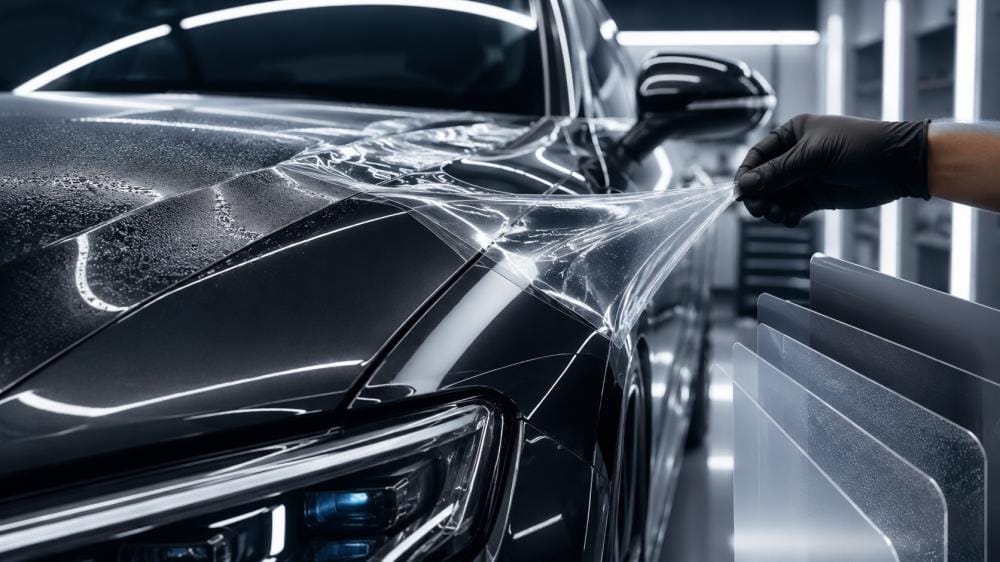
Color PPF (color paint protection film) is paint protection film that adds a visible color or design effect while still acting as a protective barrier for your vehicle’s exterior. In other words, it combines “restyling + protection” in one layer—so you can change the look without giving up the core PPF value proposition.
Color PPF at a Glance
| What you want to know | Practical answer |
|---|---|
| What color PPF is | A colored or style-effect paint protection film that protects paint while upgrading appearance |
| What it changes | Color/finish (the visual output) while still functioning as PPF protection |
| What it protects against | Common PPF threat set: scratches/chips/weathering; many premium lines include self-healing for minor marks |
| Best fit | Buyers who want a paint-like upgrade plus protection, not “just a cosmetic wrap” |
| Key limitation | Not “damage-proof.” Outcomes depend on film system + installation quality. (Procurement should validate TDS/warranty.) |
What Is Color PPF?
Color PPF is colored paint protection film, typically built on the same “protective film” concept as clear PPF, but designed to deliver a finished look (color, tone, or pattern) rather than remaining invisible.
A clear, defensible way to define it is how leading brands position their products:
- XPEL describes its Color Paint Protection Film as a durable, self-healing urethane film that “shields paint while adding color finishes.”
- Avery Dennison’s neo™ noir is presented as a high-gloss color PPF that serves as a “complete restyling upgrade” while still protecting the vehicle, backed by a stated warranty program.
- STEK markets “fashion film” PPF as patterned protective films (e.g., carbon-fiber and other designs) and frames them as long-term investments with a stated warranty.
Common names you’ll see: color PPF, colored paint protection film, fashion PPF, patterned PPF, color PPF wrap.
What Does Color PPF Protect Against?
Color PPF is chosen because it delivers a visible style change while keeping the “PPF protection logic” intact.
A practical, buyer-friendly way to describe the protection scope (without exaggeration) is:
- Chips, scratches, and weathering exposure are the core category claims repeatedly used in mainstream PPF product positioning.
- Many premium PPF systems also claim self-healing behavior for minor scratches, typically activated by heat, and should be framed as “minor marks” rather than deep damage.
Your commercial advantage is to sell color PPF as a two-outcome product: appearance upgrade + protective ownership economics.
Color PPF vs Vinyl Wrap
This is the decision buyers struggle with most, because both can change the look. The clean way to guide the decision is by primary intent:
Choose Color PPF when you want protection as a core requirement
- You want the “PPF-style” ownership benefit set (chip/scratch/weathering protection) while also changing appearance.
- You value premium claims like self-healing for minor marks (series-dependent).
Choose Vinyl Wrap when the priority is styling at the lowest entry cost
- The primary goal is cosmetic color change and design flexibility.
- Protection may exist, but it is usually not purchased or evaluated under the same protective-film expectations.
Procurement note: if a buyer is debating these two, the fastest way to close is to align on “what must be true at delivery”: finish realism, panel-to-panel uniformity, and the expected protection scope.
Finish Options in Color PPF
Color PPF is not a single look. It is a finish portfolio. This is where you can position your lineup so that all PPF types remain main products:
- High-gloss color PPF: paint-like, mirror finish positioning (e.g., “high-gloss” restyling).
- Patterned / design effects: carbon, forged patterns, and other fashion effects (series-dependent).
- Clear PPF families remain the base choice when the buyer wants maximum invisibility while protecting paint.
A simple “finish matrix” you can use on-page (and link internally):
- Gloss PPF (invisible protection look)
- Matte PPF (stealth, low-glare look)
- Satin PPF (soft sheen, in-between look)
- Color PPF (color + protection in one)
Self-Healing, Stain Resistance, and Durability
This section should reduce disputes by setting accurate expectations:
Self-healing: keep it specific
Multiple mainstream PPF references describe self-healing as minor scratches disappearing on their own (often heat-related). Treat this as a surface-mark benefit, not a guarantee against deep damage.
Durability and warranty: validate by series and program
Warranty coverage and duration vary by manufacturer and product family. For example, Avery Dennison publicly states warranty durations for certain PPF lines (including neo™ noir) within its program documentation.
Substrate compatibility: do not assume “works on everything”
Avery Dennison’s warranty documentation includes substrate and usage limitations (e.g., intended use on fully cured OEM painted surfaces, with exclusions such as installation over repainted/aftermarket/vinyl surfaces). This is a procurement-grade checkpoint you should surface early.
Coverage Options for Color PPF
Color PPF can be sold in tiers, which helps buyers budget and helps you standardize quoting:
Accent / partial coverage
Best when the buyer wants a design highlight (roof, hood section, mirrors, pillars) while controlling scope.
Full front + accents
Best for buyers who want protection exposure coverage plus a distinctive signature look.
Full vehicle
Best when color change is the primary objective and the buyer wants uniformity across all panels.
Operationally, full-vehicle projects reduce mismatch risk and create the cleanest “factory-style” outcome, but they require stronger installation QA and finish control.
Buyer’s Checklist
If you want higher close rates and fewer post-delivery issues, drive the buyer through a procurement-grade checklist:
- Define the target look: gloss vs satin vs matte vs patterned effect.
- Ask for documentation: TDS/warranty summary and coverage terms (series-specific).
- Confirm self-healing language: “minor scratches/marks,” not “scratch-proof.”
- Confirm approved substrates: especially if the vehicle has repaint, aftermarket paint, or existing wrap history.
- Agree on acceptance criteria: panel uniformity, edge finish, contamination tolerance, and finish consistency under standard lighting.
FAQs
What is color PPF?
Color PPF is paint protection film that adds a visible color finish while shielding paint, often positioned as a durable, self-healing urethane protective film depending on the series.
Is color PPF the same as clear PPF?
They share the protection concept, but color PPF is designed to deliver a finished color look (or patterned effect) instead of remaining invisible.
Is color PPF better than vinyl wrap?
If protection against chips/scratches/weathering is a core requirement, color PPF is usually evaluated as the stronger protection-led option. If styling at the lowest entry cost is the main goal, vinyl wrap may be the chosen route. For protection expectations, benchmark against mainstream PPF positioning.
Does color PPF self-heal?
Many premium PPF lines claim self-healing for minor scratches. Always treat it as “minor marks,” and validate the claim in the product’s documentation.
Are patterned films considered “color PPF”?
Some brands market patterned protective films as “fashion film” PPF (e.g., carbon and other patterns), which is functionally aligned with the “color/effect + protection” category.
Will color PPF damage paint when removed?
Removal outcome depends on paint condition, substrate type, and installation history. Warranty documents can specify substrate limitations and exclusions, so validate OEM paint condition upfront.
Get a Color PPF Recommendation Pack
If you want the fastest route to the right spec and finish match, request a Color PPF recommendation pack:
- Finish matrix (Gloss / Satin / Matte / Color)
- Product catalog + warranty summary (by series)
- Coverage recommendation template (accent vs full vehicle)
- Samples/swatches for color and effect confirmation
Related Posts





Contact FUNO
Tell us your target market, product category, preferred specification, estimated purchasing volume, and whether you need standard or private label supply.
FUNO can help you narrow suitable film options, sample requirements, packaging needs, and the next step toward bulk purchasing.