
If you are asking what nano ceramic film is, the most direct answer is this: it is a non-metallic window film that uses microscopic ceramic particles to improve heat rejection, block UV rays, and reduce glare without the signal interference often associated with metalized films. In the automotive market, it is usually positioned as a higher-performance upgrade over basic dyed film. Some versions are darker for privacy, while others are nearly clear and focus more on comfort, UV protection, and glass performance.
For most buyers, the real question is not just “what is it,” but “why does it matter?” Nano ceramic film matters because it is built around performance, not just shade. A darker window does not automatically mean better heat control. Ceramic film is popular because it is designed to target heat-generating infrared energy while staying visually refined and electronically friendly. That is why it is widely used in premium automotive tint lines and increasingly discussed in both vehicle and architectural glass applications.
Quick Takeaway
| Question | Short Answer |
|---|---|
| What is nano ceramic film? | A non-metallic window film made with microscopic ceramic particles |
| What is it mainly used for? | Heat rejection, UV protection, glare reduction, and comfort |
| Does it interfere with electronics? | Usually no, because ceramic films are typically metal-free |
| Is it always dark? | No. It can be dark, medium, light, or nearly clear |
| Is it usually more premium than dyed film? | Yes, it is commonly positioned as a higher-performance option |
What Is Nano Ceramic Film?
Nano ceramic film is a type of window film engineered with extremely small ceramic-based particles embedded into the film structure. In practical market language, this means the film is designed to improve glass performance without relying on a metallized layer. Official product descriptions from LLumar and 3M consistently position ceramic film around better thermal comfort, UV blocking, and signal-friendly performance. That is why, in real-world automotive use, “nano ceramic film” is usually another way of talking about high-performance ceramic tint.
The word “nano” matters because it signals that the ceramic material is being used at a microscopic scale, not as a visible coating that changes the glass into an opaque or rough surface. The result is a film that can still look refined and optically clean while delivering measurable solar-control benefits. In premium lines, the focus is often on infrared management, which is one of the main reasons ceramic film is marketed as a comfort upgrade rather than just a styling accessory.
How Does Nano Ceramic Film Work?
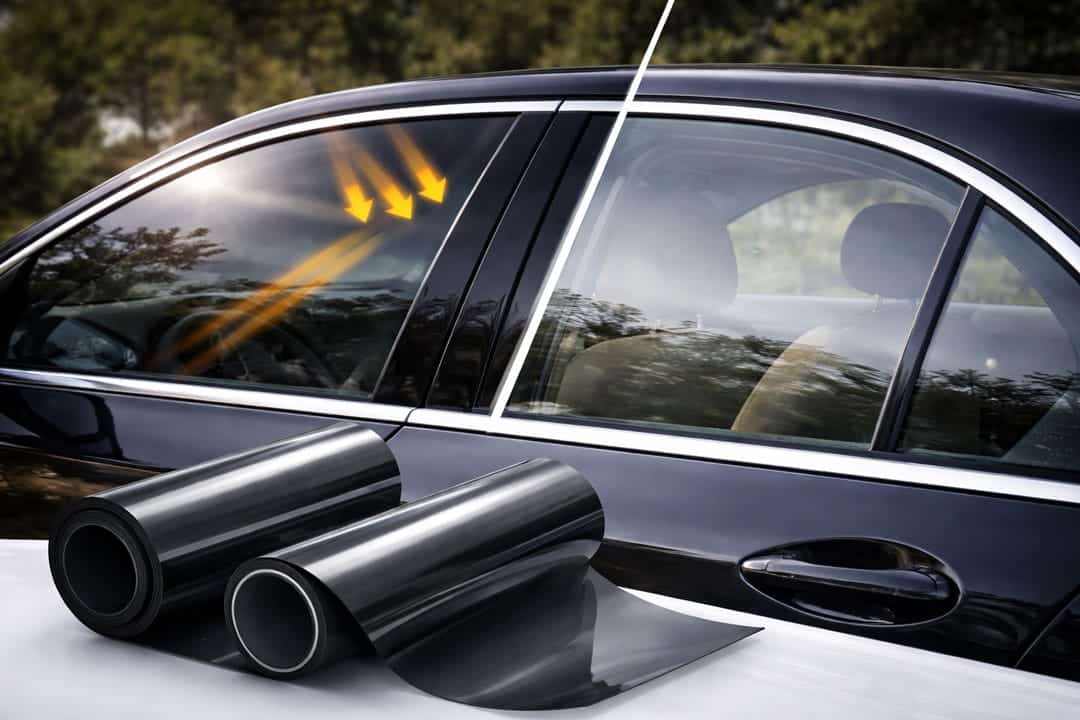
Nano ceramic film works by helping filter and manage parts of solar energy that contribute to cabin heat and discomfort, especially infrared energy. This is why official ceramic product pages repeatedly emphasize infrared rejection or IR-blocking technology. LLumar IRX is described as using advanced nano-ceramic technology to specifically target and reduce infrared heat, while 3M Ceramic IR highlights infrared rejection with absorptive nano-ceramic technology. In simple terms, the film is built to reduce the amount of heat you feel coming through the glass, even when the film is not extremely dark.
Its other major advantage is what it does not do. Because ceramic film is commonly promoted as metal-free or non-metallized, it avoids one of the classic concerns associated with some older film types: electronic interference. 3M states that its ceramic automotive films are compatible with devices including GPS, mobile devices, satellite radio, and 5G. LLumar makes a similar point by positioning ceramic tint as easy on electronic connectivity. For many modern drivers, this is not a small detail. It is one of the reasons ceramic film is treated as a premium category rather than just another tint shade.
What Are the Main Benefits of Nano Ceramic Film?
The first major benefit is better heat control. Buyers typically move toward ceramic film because they want a cooler cabin, reduced heat buildup, and a more comfortable drive in strong sunlight. 3M Ceramic IM highlights total solar energy rejection up to 61%, and 3M Ceramic IR promotes strong infrared rejection for thermal comfort. LLumar’s ceramic range is also explicitly sold on cooling power and infrared-focused performance. These claims explain why ceramic film is usually recommended for hot climates, large glass areas, or drivers who care as much about comfort as appearance.
The second benefit is UV protection. Across official product materials, blocking more than 99% of harmful UV rays is a standard ceramic-film claim. That matters not only for occupant comfort, but also for reducing sun-related fading inside the vehicle. If your buyer is comparing entry-level tint with a higher-tier ceramic film, this is one of the easiest benefits to explain because it links directly to interior protection, long-term appearance, and everyday comfort.
The third benefit is a cleaner performance profile. Many ceramic films are promoted as low-reflective, non-metallic, and visually refined. That does not mean every ceramic film looks the same, but it does mean the category is often chosen by users who want high performance without the mirror-like look or electronics concerns sometimes associated with metallized options. Clear ceramic film takes this one step further. LLumar AIR, for example, is marketed as a virtually invisible solution that uses nano-ceramic technology to improve factory glass performance without noticeably changing the appearance.
Nano Ceramic Film vs Dyed, Metalized, and Carbon Film
The easiest way to position nano ceramic film is not to say it is “the best” in every case, but to explain where it sits. Dyed film is often chosen for appearance and affordability. Metalized film is traditionally associated with stronger heat control than basic dyed film, but it may raise concerns about electronic interference because it uses metal in the construction. Ceramic film is positioned as the upgrade path for buyers who want stronger heat management and cleaner electronic compatibility. LLumar’s own automotive performance data sheet reflects this structure by separating dyed, metallized, ceramic, infrared-rejecting ceramic, and clear ceramic product families.
That is why many users move up to ceramic when the conversation shifts from “I want tinted windows” to “I want better cabin comfort.” In other words, ceramic film is rarely sold on color alone. It is sold on the combination of heat rejection, UV protection, glare control, and everyday usability. This difference is important for writing and selling. If you describe ceramic film like a darker cosmetic tint, you undersell the category. If you describe it as a performance film with visual options, the value proposition becomes much clearer.
Comparison Table: Nano Ceramic Film vs Other Common Film Types
| Film Type | Main Strength | Typical Weakness | Best For |
|---|---|---|---|
| Dyed Film | Lower cost, tint appearance | Weaker heat performance | Style-first, budget-driven installs |
| Metalized Film | Stronger heat rejection than basic dyed film | Possible electronic interference concerns | Users focused on performance but less concerned about connectivity |
| Carbon Film | Darker stable look, mid-tier positioning | Varies by brand and spec | Buyers wanting a balance of appearance and upgraded performance |
| Nano Ceramic Film | Strong heat rejection, UV protection, signal-friendly design | Usually higher price than entry-level film | Drivers prioritizing comfort, performance, and modern vehicle compatibility |
Does Nano Ceramic Film Really Block More Heat?
In most premium automotive positioning, yes, that is exactly what ceramic film is supposed to do. But it is important to explain what “more heat” means. Heat rejection can be described through several metrics, such as total solar energy rejection, infrared rejection, and selective IR rejection. Official performance sheets show why ceramic film gets so much attention: LLumar IRX is presented as the company’s best heat-rejection option with advanced nanoceramic IR-blocking technology, and the data sheet shows strong IR-related performance across multiple visible light transmission levels. 3M Ceramic IR and Ceramic IM also market themselves around infrared and solar-energy rejection rather than just darkness.
This also explains an important buying lesson: darker film is not automatically better film. 3M’s Crystalline materials explicitly position advanced optical and ceramic nano-technology as delivering better heat and UV protection than many darker films while helping preserve the vehicle’s original appearance. That is a useful point because many users still assume tint darkness and thermal performance are the same thing. They are not. High-performance ceramic or ceramic-based films are often designed to outperform darker, lower-tier films in heat management.
Does Nano Ceramic Film Affect Phone, GPS, or 5G Signal?
One of the biggest reasons ceramic film became so widely recommended is that it is typically marketed as non-metallic. That matters because modern vehicles and drivers depend heavily on phones, GPS navigation, wireless connectivity, toll tags, satellite services, and increasingly 5G compatibility. 3M states directly that its ceramic automotive window films are metal-free and designed not to interfere with electronics, GPS, satellite radio, or mobile devices, including 5G. LLumar also highlights electronic connectivity as a benefit of its ceramic range.
This point is especially important when the audience is comparing ceramic with older metallized products. In many sales conversations, heat rejection alone is not enough to justify the price step-up. But when you combine heat control, UV protection, and signal-friendly design, ceramic film becomes much easier to position as a practical upgrade for newer vehicles and more demanding users.
Is Nano Ceramic Film Worth It?
For many drivers, yes. Nano ceramic film is worth it when the goal is not just privacy or a darker look, but a better overall driving environment. If the car spends a lot of time in sun, if the driver cares about heat buildup, if interior preservation matters, or if electronic compatibility is a priority, ceramic film usually makes more sense than basic dyed film. Official product lines from 3M and LLumar both support this positioning by placing ceramic and infrared-rejecting ceramic products above basic cosmetic tint categories.
That said, it is not the only valid choice. If a buyer only wants darker glass for styling and privacy and does not care much about thermal performance, a lower-tier film may still satisfy the need. The mistake is assuming every user needs the same solution. Ceramic film is a performance-led option. It becomes worth the extra spend when comfort, solar control, and modern usability actually matter to the buyer. That is the right way to frame the value conversation.
Who Should Choose Nano Ceramic Film?
Nano ceramic film is usually the right fit for drivers who park outdoors, operate in strong sun, drive long distances, or simply want a more comfortable cabin without sacrificing connectivity. It also makes sense for users who do not want overly reflective glass and for those who prefer a refined, modern window-film category instead of the most basic tint available. Clear ceramic film is especially useful for users who want added heat and UV control while keeping a near-factory glass appearance.
From a product-line perspective, this category also works well for shops and distributors because it naturally supports tiered selling. The buyer can understand the jump from entry-level dyed film to ceramic film when the differences are explained in comfort, signal compatibility, and infrared performance terms. In other words, nano ceramic film is not just a material story. It is a clearer answer to a real customer question: “How do I get better heat control without the compromises of older tint types?”
FAQ
Is nano ceramic film the same as ceramic tint?
In most automotive window-film discussions, yes, the terms are closely related. “Nano ceramic film” is commonly used to describe ceramic-based tint products that use microscopic ceramic particles for heat rejection, UV protection, and non-metallic performance.
Is nano ceramic film darker than regular tint?
Not necessarily. Nano ceramic film comes in different visible light transmission levels, and some versions are nearly clear. Performance is not defined only by darkness. Official ceramic lines include both darker privacy-focused shades and lighter or clear options.
Can nano ceramic film be clear?
Yes. Clear ceramic film is an established category. LLumar AIR is one example positioned as a virtually invisible film that still uses nano-ceramic technology to improve glass performance.
Is nano ceramic film only for cars?
No. While this article focuses on automotive use, nano-ceramic technology is also used in residential and architectural window film products to reduce heat and help maintain clear views.
Does nano ceramic film help protect interiors?
Yes. Official product pages consistently tie ceramic film to strong UV blocking, which helps reduce the sun exposure that contributes to fading and interior wear over time.
Final Answer
So, what is nano ceramic film?
It is a high-performance, non-metallic window film built with microscopic ceramic particles to improve heat rejection, reduce UV exposure, control glare, and stay friendly to modern electronics. It is not just a darker tint. It is a performance-focused film category designed for users who want better comfort and cleaner functionality from their glass.
If your next step is comparing ceramic film options, the smartest move is to compare them by heat management, visible light transmission, and intended use, not by shade alone.
Related Posts



Contact FUNO
Tell us your target market, product category, preferred specification, estimated purchasing volume, and whether you need standard or private label supply.
FUNO can help you narrow suitable film options, sample requirements, packaging needs, and the next step toward bulk purchasing.