
Motorcycle Paint Protection Film for Tanks, Fairings & Body Panels
Motorcycle paint protection film (PPF) helps protect compatible painted surfaces from everyday scratches, light abrasion, road debris, and cosmetic wear. For professional buyers, selecting the right film requires attention to surface finish, panel curvature, adhesive compatibility, and installation requirements.
FUNO supplies TPU paint protection film options for motorcycle distributors, wholesalers, professional installers, and private label brands. Our B2B supply services support product selection, sample evaluation, specification confirmation, customized packaging, and repeat orders.
From fuel tanks and front fairings to fenders and side panels, different motorcycle surfaces require different application considerations. Before placing a bulk order, buyers should evaluate the selected film on representative surfaces and confirm the required specifications.
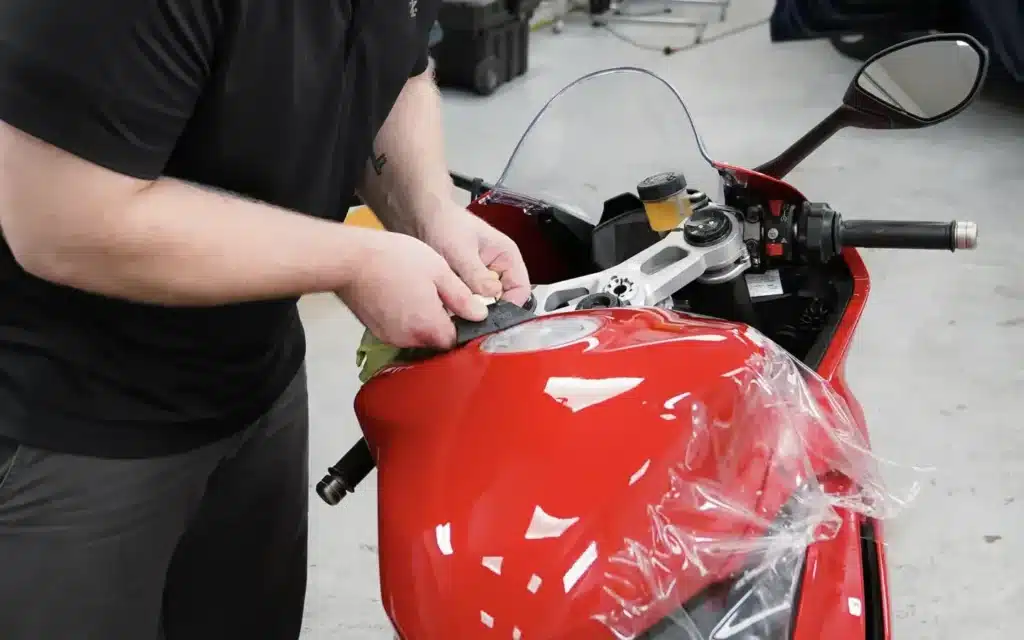


Motorcycle PPF Product Overview
Motorcycle PPF is used on selected painted body panels where an additional protective film layer is required. For distributors and installers, the right product depends on the target market, motorcycle types, installation requirements, and expected product positioning.
| Product Information | Details |
|---|---|
| Product Category | Motorcycle Paint Protection Film |
| Film Material | TPU, subject to the selected product series |
| Typical Applications | Fuel tanks, fairings, fenders, and compatible painted panels |
| Surface Finish | Gloss and matte options, subject to availability |
| Supply Format | Film rolls for professional cutting and installation |
| Product Specifications | Confirm according to the selected series |
| Sample Evaluation | Available for discussion before bulk purchasing |
| OEM / Private Label | Customized packaging and product identification options, subject to project requirements |
For detailed product information, explore the FUNO Paint Protection Film range.
Motorcycle PPF Applications by Body Panel
Different motorcycle panels experience different types of contact, abrasion, and environmental exposure. Selecting the appropriate film starts with identifying the target surface and its operating conditions.
| Motorcycle Area | Typical Exposure | Selection Considerations |
|---|---|---|
| Fuel Tank | Rider clothing, zippers, belts, and routine contact | Curvature, surface finish, and adhesive compatibility |
| Front Fairing | Road debris, insects, and light abrasion | Complex curves, film conformity, and edge finishing |
| Front Fender | Road particles, water spray, and surface contamination | Abrasion exposure and cleaning requirements |
| Side Panels | Riding gear contact and handling marks | Panel geometry and coating compatibility |
| Tail Section | Luggage, passenger contact, and routine handling | Edge placement and surface shape |
| Headlight Lens | Road debris and surface wear | Lens material, existing coatings, and film compatibility |
These applications are intended as selection guidance rather than a guarantee that every film is suitable for every motorcycle component.
For headlight-specific applications, see Headlight Protection Film. Lens material and factory coatings should be evaluated before selecting a film.
Full Motorcycle PPF vs. Partial Motorcycle PPF
Motorcycle protection programs can focus on selected high-contact areas or cover a larger proportion of the painted bodywork. The appropriate approach depends on the motorcycle design, customer expectations, budget, and installation requirements.
Partial Motorcycle PPF
Partial PPF focuses on selected areas such as fuel tanks, tank sides, front fairings, and fenders. It is suitable for programs that prioritize specific contact zones rather than covering the entire motorcycle.
For installers and distributors, partial protection programs can simplify product selection and help establish a clear range of application options.
Full Motorcycle PPF
Full motorcycle PPF aims to cover a larger proportion of compatible painted body panels. It requires more attention to panel geometry, material conformity, edge finishing, and installation consistency.
Complex curves, recessed areas, sharp transitions, and narrow edges may increase installation difficulty. Product suitability should be confirmed through practical evaluation before a large project is approved.
FUNO supplies film rolls for professional cutting and installation. Pre-cut kit availability, if required, should be confirmed separately.
What to Evaluate When Selecting Motorcycle PPF
Motorcycle bodywork often includes tight curves, compound surfaces, recessed details, and narrow edges. These features make film handling and installation performance important selection criteria.
Film Conformability
The film should be evaluated on representative motorcycle panels to determine how it handles curves and changes in surface direction. Results depend on film construction, panel geometry, installation technique, and working conditions.
Edge Stability
Edges and narrow transitions can be more challenging than flat surfaces. Buyers should evaluate edge behavior under the recommended installation conditions and confirm that the film is appropriate for the intended panel.
Optical Clarity
Clear PPF should be assessed for visible surface marks, haze, gloss consistency, and appearance under different lighting conditions. These factors matter particularly on dark paint and high-gloss motorcycle bodywork.
Adhesive Compatibility
Adhesive performance depends on the substrate, surface preparation, installation procedure, and environmental conditions. Test the selected product on the intended finish before approving wider use.
Surface Finish Compatibility
Glossy, matte, satin, and specially coated motorcycle panels may respond differently to film application and removal. Do not assume that a film suitable for conventional automotive clear coat is automatically suitable for every motorcycle finish.
Gloss and Matte Motorcycle PPF Options
Different motorcycle markets have different appearance preferences. Gloss and matte PPF provide two distinct product directions for compatible painted surfaces.
Gloss Motorcycle PPF
Gloss PPF is intended for applications where a clear, high-gloss appearance is preferred. Buyers should evaluate optical clarity, surface consistency, conformity, and the effect of the film on the original paint appearance.
For product information, visit Gloss PPF.
Matte Motorcycle PPF
Matte PPF is intended for compatible surfaces where a matte appearance is required. It may be considered for motorcycles with matte or low-gloss styling, subject to compatibility with the original finish.
Before installation, evaluate whether the selected film changes the appearance of the substrate. Special care is necessary with factory matte paint, satin finishes, and other sensitive coatings.
Explore Matte PPF for the relevant product direction.
Motorcycle PPF for Different Motorcycle Types
Different motorcycle categories have different body designs and surface exposure patterns. Distributors and installers can use these differences to organize product recommendations and application programs.
Sport Bikes
Sport bikes often feature sculpted fairings, angular body panels, and complex curves. Film selection should prioritize conformity, edge finishing, and appearance consistency on visible surfaces.
Touring and Adventure Motorcycles
Touring and adventure motorcycles may have larger body panels and a wider variety of exterior finishes. Buyers should consider the intended application, surface material, and exposure to routine handling and road debris.
Cruisers and Custom Motorcycles
Cruisers and custom motorcycles may feature prominent fuel tanks, decorative paintwork, and specialty finishes. Surface compatibility and preservation of the original appearance are particularly important.
Commuter Motorcycles
Commuter motorcycles may experience frequent daily use and routine contact. Selected tank and body panels can be evaluated for practical protection programs, depending on the motorcycle design and target market.
These categories describe typical application considerations. Final product selection should be based on the actual surface and available film specifications.
Motorcycle PPF vs. Ceramic Coating
Motorcycle PPF and ceramic coatings serve different purposes. PPF creates a physical film layer over a compatible surface, while ceramic coatings are surface treatments designed to modify properties such as water behavior, gloss, and ease of cleaning.
| Comparison | Motorcycle PPF | Ceramic Coating |
|---|---|---|
| Protection Method | Physical film layer | Surface treatment |
| Main Consideration | Film conformity, adhesion, thickness, and edge behavior | Coating compatibility, application, and maintenance |
| Visible Effect | Depends on film clarity and finish | Depends on coating formulation and substrate |
| Installation | Requires film application and edge finishing | Requires suitable surface preparation and coating application |
| Selection Priority | Physical coverage of selected panels | Surface treatment and maintenance objectives |
Neither option should be assumed to prevent every type of damage. If a ceramic coating is to be applied over PPF, confirm compatibility with both products’ instructions.
How to Evaluate Motorcycle PPF Samples Before Bulk Ordering
Sample evaluation helps distributors and installers compare film options before committing to commercial quantities. It also establishes a clearer basis for specification approval and repeat orders.
Step 1: Confirm the Target Surface
Identify whether the film will be applied to a fuel tank, fairing, fender, or another body panel. Record the surface material, finish, condition, and any known coating or repair history.
Step 2: Review the Product Specifications
Confirm the available film thickness, finish, roll dimensions, adhesive information, and supporting technical documentation for the selected product series.
Where a requirement is not supported by available documentation, clarify it before approving the product.
Step 3: Evaluate Installation Behavior
Ask a qualified installer to assess the sample on a representative surface. Review handling, conformity, positioning, edge finishing, and appearance under the recommended installation conditions.
Step 4: Check Appearance and Adhesion
Inspect for visible defects, bubbles, edge lifting, and changes in surface appearance. The evaluation should reflect the actual motorcycle finish rather than an unrelated test surface.
Step 5: Review Removal Compatibility
Where removal is an important requirement, assess the film using the recommended procedure and inspect the underlying surface. Results can vary with paint condition, coating type, adhesive behavior, and service duration.
Step 6: Approve the Specification Before Bulk Production
Document the selected product series, approved finish, roll dimensions, packaging requirements, and any agreed quality criteria.
For repeat orders, retain the approved specifications and reference sample where practical. This helps reduce the risk of inconsistencies between orders.
Request Motorcycle PPF Samples
Motorcycle PPF Specifications and Performance Requirements
Professional buyers should evaluate PPF using product-specific technical data rather than relying on general marketing claims.
| Specification | Information to Confirm |
|---|---|
| Film Material | TPU type and available technical documentation |
| Film Thickness | Nominal thickness and tolerance |
| Roll Dimensions | Available width and length |
| Surface Finish | Available gloss or matte options |
| Adhesive System | Adhesive characteristics and substrate compatibility |
| Optical Performance | Clarity, haze, and appearance data, where available |
| Conformability | Performance on representative curved panels |
| Self-Healing | Applicable conditions and documented performance, if offered |
| Yellowing Resistance | Relevant test data, if available |
| Removal Behavior | Compatibility with the intended paint or coating |
| Packaging | Roll labels, product identification, and carton configuration |
Actual values and available test results must be confirmed for the selected product series. A general TPU specification should not be treated as evidence that every motorcycle application has been independently validated.
OEM and Wholesale Motorcycle PPF Supply
FUNO supports B2B buyers evaluating TPU paint protection film for motorcycle-related product programs. Our cooperation can cover available product selection, sample evaluation, specification confirmation, customized packaging, and bulk roll supply.
Product Selection and Specification Confirmation
Buyers can share their target market, intended motorcycle applications, preferred film finish, reference products, and estimated order quantity.
This information helps establish a suitable product direction and clarify which specifications need to be confirmed before sample approval.
OEM and Private Label Packaging
For distributors and film brands, packaging helps establish a consistent market identity across product lines.
Depending on project requirements, customization discussions may include:
- Brand and product labels
- Roll boxes and outer cartons
- SKU and barcode information
- Multilingual packaging
- Product identification and specification records
Customization options, minimum order quantities, and production requirements should be confirmed before an order is placed.
Repeat-Order Supply Management
Repeat orders require consistent product identification and clear specification records. Buyers should confirm the film series, dimensions, finish, packaging, and applicable quality requirements before production.
Changes to specifications or packaging should be reviewed before the next order is confirmed.
Learn more about FUNO OEM and Private Label Manufacturing Services.
FUNO Manufacturing and Quality Control
FUNO is the film brand of Hebei Fengao New Materials Co., Ltd., a China-based film manufacturer supplying film products to international markets.
Our broader manufacturing capabilities include TPU casting, optical coating, slitting, inspection, and packaging. These capabilities support film production and supply programs across the company’s product portfolio.
For motorcycle PPF orders, buyers should confirm the specifications of the selected film series and review the available product documentation. General manufacturing capability does not replace product-specific performance evidence.
Before bulk production, buyers can discuss sample approval, product identification, inspection requirements, packaging details, and repeat-order specifications.
Learn more about FUNO Manufacturing Capability.
Motorcycle PPF Application Considerations
Professional installation and appropriate surface preparation are essential to achieving consistent results.
Before application, installers should:
- Inspect the surface for damage, contamination, oxidation, and incompatible coatings.
- Prepare the surface according to the applicable installation instructions.
- Evaluate complex curves, recessed areas, and narrow edges.
- Confirm the compatibility of the selected film with the original finish.
- Follow the product-specific installation, maintenance, and removal instructions.
Motorcycle PPF should not be applied indiscriminately to every exterior component. Textured plastics, flexible components, sensitive coatings, and surfaces exposed to unusual temperatures or chemicals require specific assessment.
For detailed product selection and supply information, explore the FUNO Paint Protection Film range.
Frequently Asked Questions About Motorcycle Paint Protection Film
Is Motorcycle PPF Available in Rolls for Wholesale Buyers?
FUNO supports B2B discussions for film roll supply. Available product series, roll dimensions, minimum order quantities, and packaging requirements should be confirmed according to the purchasing project.
Which Motorcycle Parts Are Commonly Protected With PPF?
Common application areas include fuel tanks, front fairings, fenders, side panels, and tail sections. The suitability of each area depends on the substrate, surface condition, film specifications, and installation requirements.
Can Automotive PPF Be Used on Motorcycles?
Some automotive PPF options may be suitable for compatible motorcycle body panels. However, complex curves, narrow edges, and differences in surface coatings require additional evaluation before installation.
Does FUNO Offer Gloss and Matte Motorcycle PPF?
Gloss and matte are relevant finish directions for motorcycle PPF applications, subject to the available product series. Buyers should confirm the actual options and specifications with FUNO before ordering.
Can I Request Motorcycle PPF Samples Before Bulk Ordering?
Yes. Sample evaluation can help buyers assess appearance, installation behavior, surface compatibility, and relevant product requirements before approving a bulk order.
Does FUNO Support OEM and Private Label Motorcycle PPF?
FUNO supports OEM and private label discussions covering product selection, packaging customization, product identification, and bulk supply. Specific options depend on the selected product, order quantity, and project requirements.
Related Paint Protection Film Products
Explore related FUNO product pages to compare available film options and plan your product range.
- Paint Protection Film — Explore the broader PPF product range.
- Gloss PPF — Review the gloss film product direction.
- Matte PPF — Explore matte surface protection options.
- Headlight Protection Film — Review film options for compatible headlight applications.
- OEM and Private Label Services — Learn about customization and supply cooperation.
Request Motorcycle PPF Samples and Wholesale Pricing
Looking for TPU paint protection film for your motorcycle product range?
Tell us your target market, intended applications, preferred film finish, estimated quantity, and packaging requirements. FUNO can help you review available product options and clarify the specifications needed for sample evaluation and commercial supply.
To help us assess your requirements, please include:
- Company name and target market
- Buyer type, such as distributor, wholesaler, installer, or private label brand
- Intended motorcycle applications
- Preferred finish and target specifications
- Estimated order quantity
- Standard or OEM packaging requirements
- Sample evaluation requirements
Contact us
Related products
Dyed window film is designed for entry-level and price-sensitive automotive tint programs where buyers mainly need darker appearance, privacy, and a simple shade range.
It can provide a practical starting category for markets where product price and straightforward SKU selection are more important than premium heat-control positioning.
Nano carbon window film provides a clean dark appearance and practical heat-control performance for mainstream automotive tint programs.
It is suitable for distributors and installer networks that need a simple shade structure, stable product positioning, and a more accessible price level than premium ceramic lines.
Clear TPU windshield protection film for distributors, installers, and fleet supply programs. Rock chip defense, high optical clarity, roll supply, sample support, and OEM service.
Chameleon window film is a styling-oriented automotive film designed to create color-shifting or angle-dependent visual effects on vehicle glass.
Sputtered window film uses deposition-based film technology for premium solar-control applications. Depending on the series, products can provide different VLT, reflectivity, appearance, and heat-management characteristics.
Nano ceramic window film is positioned for premium automotive tint programs where buyers need strong heat-control performance, a clean low-reflective appearance, multiple VLT options, and compatibility with modern vehicle electronics.
articles & resources




Ready to Launch Your Motorcycle Paint Protection Film Business?
Get Pricing, Samples & Distributor Terms
Tell us your target market, preferred finish (gloss / matte / hydrophobic), and expected volume. We’ll recommend the right Motorcycle Paint Protection Film series, share technical documentation, and provide sampling options so you can evaluate clarity, install feel, and surface performance before scaling.