
Yes—there is a protective film for windshields. It’s commonly called windshield protection film (or windscreen protection film). At FUNO, we describe it as a clear sacrificial layer applied to the windshield to help reduce surface pitting and the severity of minor chip damage, while keeping driver visibility compliant when properly specified.
This is not the same as tint or solar film. Tint/solar films are usually installed on interior glass for heat, glare, or privacy. Windshield protection film is installed for impact and surface protection, and its first requirement is optical clarity.
One important boundary: windshield protection film can help reduce certain types of damage, but it is not a guarantee against all rock chips or cracks. In real road conditions, impact energy varies and glass can still crack.
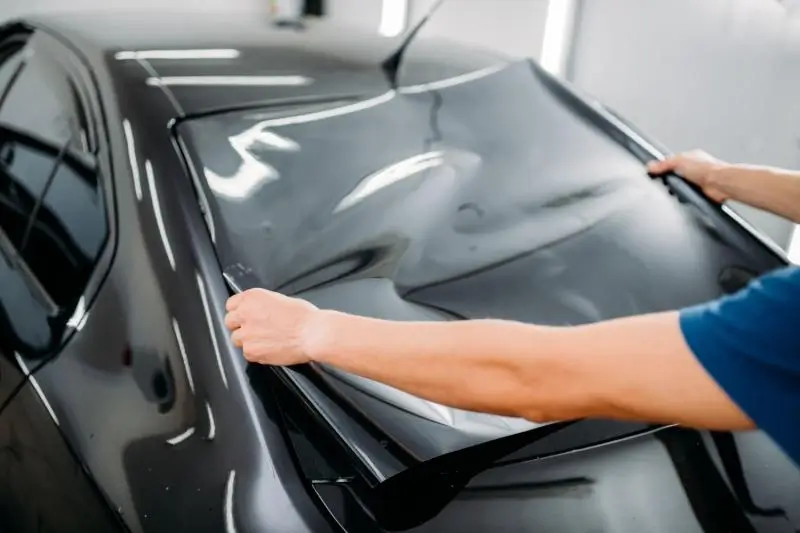
Quick Answer Table: Windshield Protection Film vs Tint Film
| What you’re comparing | Windshield protection film | Tint / solar film |
|---|---|---|
| Primary purpose | Reduce pitting and minor chip severity; keep the glass surface clearer | Reduce heat/glare; add privacy (depending on film) |
| Typical install location | Windshield exterior | Interior side of glass |
| Best at | Stone dust pitting, road abrasion, small chip management | Solar control, glare management, styling/privacy |
| Key risks | Wiper abrasion, optical distortion if wrong spec/installation | Legal VLT limits, nighttime visibility changes |
| What to verify | Optical clarity (haze/distortion), abrasion resistance, removability | VLT compliance, heat/glare performance, reflectance |
Windshield protection is a “surface durability” decision; tint is a “comfort/style” decision.
What Is Windshield Protection Film?
Windshield protection film is a clear protective film installed on the windshield to help protect the glass surface from road debris damage—particularly pitting and minor impacts. From a practical buyer viewpoint, it’s a way to keep the windshield looking clearer for longer and to reduce the rate at which fine pitting accumulates.
It is widely described as an automotive-focused protective film category and often treated as a windshield-specific protection solution rather than a standard tint product.
How Windshield Protection Film Works
At FUNO, we explain the mechanism with one simple idea: the film takes the first hit.
- Road debris creates micro-impacts that can pit glass over time.
- A protective film provides a sacrificial surface that can absorb part of the impact energy and reduce direct contact with the glass surface.
- Over time, the film may show wear before your windshield does—this is normal for a sacrificial layer.
This doesn’t mean “no chips.” It means risk reduction, especially for high-frequency small impacts. The “large impact” cases are more variable and can still cause glass fracture.
What It Can and Can’t Do
What it can help with
- Reducing surface pitting from fine road debris
- Reducing the severity of minor chips in some real-world scenarios
- Keeping the windshield surface clearer longer, which can improve day-to-day visibility quality
What it cannot guarantee
- It does not guarantee a windshield will never chip or crack
- It does not eliminate all impact damage (energy and angle vary)
- It does not override glass quality, existing damage, or extreme environments
This “helps reduce” framing is the only responsible way to publish claims for a product that faces unpredictable impacts in open-road conditions.
Compliance and Visibility: What We Check Before We Recommend It
Because this product sits in the driver’s primary field of view, visibility comes first.
1) Transparency requirements and driver visibility
In the U.S., FMVSS 205 governs glazing materials and references recognized safety glazing standards, with the intent of maintaining required transparency and safety performance for driving visibility.
Different countries have their own rules for windshield films and VLT thresholds. The non-negotiable rule we publish is:
Follow your local regulations and confirm that the installed film does not reduce required visibility or legal light transmission.
2) Optical clarity and distortion control
A windshield protection film must be judged by:
- haze/clarity
- distortion (especially at angles and curvature)
- glare behavior
If a film is not engineered for optical performance in a windshield application, it can cause visual fatigue—so specification matters.
3) Wiper abrasion and surface durability
Wipers are a constant abrasion mechanism. For windshields, we treat abrasion resistance as a primary selection criterion, not a “nice to have.”
Selection Guide: How We Specify Windshield Film at FUNO
We don’t start with “thickness talk.” We start with use case + verification.
Optical clarity comes first
We select for low haze and stable clarity. If clarity fails, the product fails—regardless of protection performance.
Abrasion resistance for wiper zones
We focus on surface durability in the wiper sweep area because that’s where wear accumulates fast.
Impact and puncture resistance (within realistic expectations)
We position the film to help manage pitting and minor chips. We do not position it as a crack-proof solution.
Removability and residue control
A protection layer must remain serviceable. We recommend films designed for controlled removal and manageable residue risk when replaced by condition.
Service life should be communicated as a range
In the market, windshield protection films are often discussed in multi-year service windows, but actual life depends on mileage, debris environment, wiper use, cleaning habits, and climate. A safer program approach is: inspect and replace by condition, not by calendar.
RFQ and Acceptance Checklist (For Importers, Distributors, Fleet Buyers)
Use this checklist to keep projects consistent and to reduce after-sales disputes.
| Item to specify | Why it matters | How to verify before scale |
|---|---|---|
| Optical clarity (haze/distortion) | Driver comfort and safety; reduces complaints | Sample evaluation on curved windshield + real driving check |
| Light transmission / compliance statement | Legal and safety alignment | Local compliance review + on-vehicle VLT check where required |
| Abrasion/wiper resistance | Longevity in real use | Wiper-cycle observation and surface wear inspection over time |
| Adhesive removability/residue control | Serviceability and replacement cost | Supplier documentation + controlled removal policy |
| Warranty scope and limitations | Sets realistic expectations | Written program terms aligned to “helps reduce” claims |
FMVSS 205 provides the baseline concept: glazing in critical view areas must meet safety glazing requirements and maintain the necessary transparency and performance. Use local regulations as your final authority for film permissibility and VLT limits.
FAQs
Is there a protective film for windshields?
Yes. Windshield protection film is a clear protective layer designed to help reduce pitting and manage minor chip damage while maintaining optical clarity when correctly specified.
What is windshield protection film?
It is a clear, removable protective film applied to a windshield as a sacrificial surface to help reduce glass surface wear and minor impact damage.
Does windshield protection film stop rock chips and cracks?
It can help reduce pitting and may reduce the severity of minor chips, but it does not guarantee prevention of chips or cracks in all impact scenarios.
Does it affect visibility or legality?
It can if incorrectly specified or installed. Windshield applications require strict optical clarity and compliance with local regulations. FMVSS 205 reflects the importance of safety glazing performance and transparency for driving visibility.
How long does windshield protection film last?
Service life varies by mileage, debris environment, wiper abrasion, and cleaning habits. We recommend inspection and replacement by condition rather than relying on a fixed calendar range.
Working With FUNO
At FUNO, we support importers, distributors, brand owners, and installer networks with windshield protection film programs built around clarity-first specification, abrasion focus, and claim-safe expectation management. If you need an OEM/ODM package, we can align on performance targets, sample approval, documentation, and private label execution—so your market message stays consistent from first install to replacement.
Related Posts



Contact FUNO
Tell us your target market, product category, preferred specification, estimated purchasing volume, and whether you need standard or private label supply.
FUNO can help you narrow suitable film options, sample requirements, packaging needs, and the next step toward bulk purchasing.