
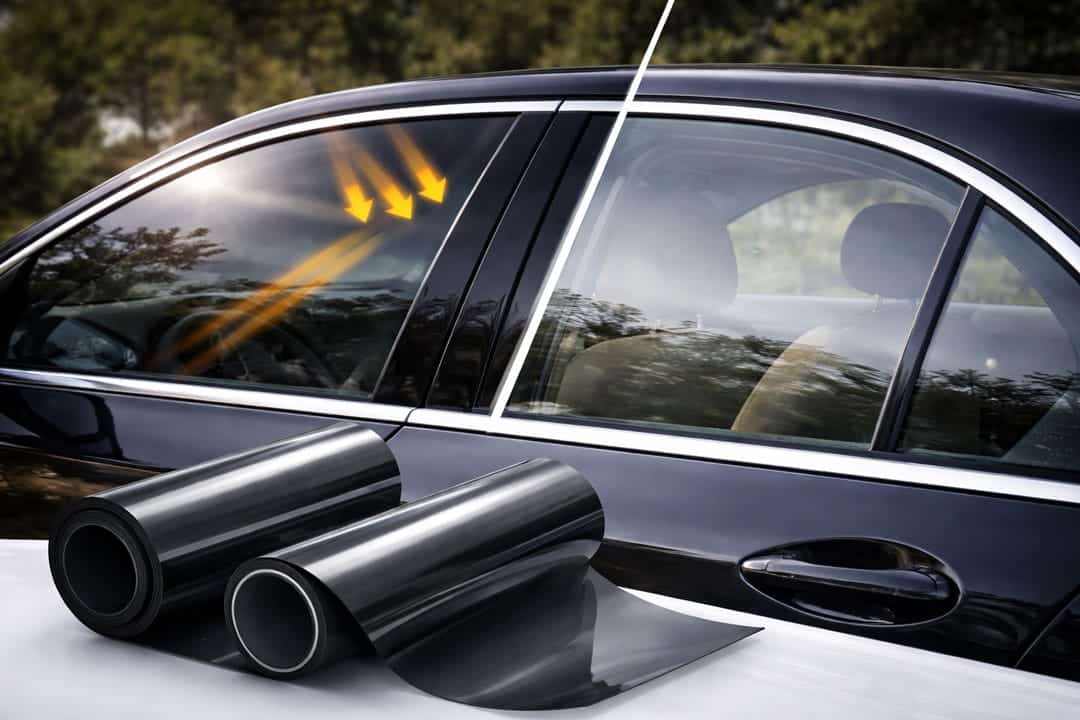
Nano ceramic and nano carbon window film are both modern window tint options, but they are not made for exactly the same level of performance. In simple terms, nano ceramic film is usually the higher-performance choice for heat rejection. In contrast, nano carbon film is usually the more balanced choice for appearance, solid performance, and budget control. Both are commonly positioned as non-metal films, which means they are usually better for signal-friendly everyday driving than older metal-based tint types.
If you want the shortest answer, here it is:
Choose nano ceramic when heat control is your top priority; choose nano carbon when you want good overall performance at a lower level of cost.
The Short Answer
Nano ceramic window film is usually built for stronger heat rejection, strong UV protection, glare reduction, and premium comfort. Public product pages for ceramic tint consistently describe it as a top-performance option and emphasize nano-ceramic construction, infrared heat reduction, glare control, and metal-free design.
Nano carbon window film is usually described as a more economical option that still gives good solar performance, stable color, a non-reflective look, and clear signal connectivity. In other words, it is often the practical middle-ground choice for buyers who want more than basic tint, but do not need the strongest ceramic-level performance.
What Is Nano Ceramic Window Film?
Nano ceramic window film uses very small ceramic particles inside the film structure. Its main purpose is to reduce heat, block UV rays, and lower glare without using a metal layer. Because of that, it is commonly presented as a premium tint option for drivers who care about cabin comfort and signal-friendly performance.
In daily use, nano ceramic film is usually chosen for one main reason: better heat control. That is the most repeated message on public ceramic tint product pages.
What Is Nano Carbon Window Film?
Nano carbon window film uses carbon-based construction to improve tint performance without using metal. It is often described as a non-metal film with stable color, a clean non-reflective look, and good signal compatibility. It is usually positioned as a step up from more basic tint, but still below ceramic in overall heat performance.
In simple words, nano carbon film is usually chosen by buyers who want a clean look, solid performance, and better value balance.
The Biggest Difference: Heat Rejection
The biggest difference between nano ceramic and nano carbon film is usually heat rejection. Ceramic film is commonly marketed as the stronger option for managing solar heat and infrared energy. Some public ceramic pages even present it as the top heat-control category in their product range.
Nano carbon film can still provide useful heat reduction, but it is more often described as an economical alternative to ceramic rather than a direct match for top ceramic performance. That means carbon can be a good choice, but ceramic is usually the stronger answer when the car gets very hot in the sun, and cooling comfort is the priority.
UV Protection and Glare Reduction
Both nano ceramic and nano carbon film are used to improve sun protection. Public ceramic pages repeatedly highlight strong UV protection and glare reduction, and product specification sheets for carbon and ceramic lines also show high UV rejection across many shades.
So if the question is only “Can both help with UV and glare?” the answer is yes. But if the question is “Which one is usually positioned as the more advanced overall sun-control option?” the answer is usually nano ceramic.
Signal-Friendly Performance
This is another important point. Nano ceramic film is often promoted as metal-free, which means it is designed to avoid the signal issues that older metal-based films can create. Public ceramic tint pages clearly use this as a selling point.
Nano carbon film is also commonly described as a non-metal construction with clear signal connectivity. That means both film types are usually better choices for modern vehicles than traditional metal-based tint when signal clarity matters.
Appearance and Style
Nano ceramic film is usually chosen more for performance than for a special visual effect. It gives a clean, modern tint look, but its main value is what it does against heat, UV, and glare.
Nano carbon film is often described as having a non-reflective appearance and stable color. That makes it attractive for buyers who want a darker, clean-looking tint style without a mirror-like finish.
Which One Is Better?
Nano ceramic is usually better if you want:
- stronger heat rejection
- more premium performance
- better hot-weather comfort
- high-performance tint for daily driving
Nano carbon is usually better if you want:
- good overall performance
- stable color
- clean non-reflective style
- a more budget-conscious upgrade
Final Answer
Nano ceramic and nano carbon window film are both good tint options, but they are made for different priorities.
Nano ceramic is usually the better choice when you want the strongest heat-control performance and a more premium result.
Nano carbon is usually the better choice when you want a solid upgrade, a clean look, and a more balanced cost level.
So if your main question is performance or value, the answer is simple:
- Choose nano ceramic for stronger comfort and heat rejection
- choose nano carbon for balanced performance and practical value
Related Posts




Contact FUNO
Tell us your target market, product category, preferred specification, estimated purchasing volume, and whether you need standard or private label supply.
FUNO can help you narrow suitable film options, sample requirements, packaging needs, and the next step toward bulk purchasing.