
In most real-world cases, PPF does not damage healthy factory paint. Modern PPF systems are designed to stay bonded for years yet release cleanly from OEM paint when removed correctly.
Where problems happen is usually not “PPF is harmful.” It’s surface condition + removal control: repainted panels, weak/aged clear coat, very old film, or aggressive removal (cold peel, wrong angle, rushing).
Below is the manufacturer-grade way we explain it—first as a risk map, then with plain talk for procurement teams and everyday drivers.
Quick Risk Map
| Scenario | Paint damage risk | Why it happens | What we recommend |
|---|---|---|---|
| Factory/OEM paint, film removed correctly | Low | Adhesive is designed to release; technique controls stress on clear coat | Proceed, ideally with trained removal |
| Repainted/repair panels (partial respray, bodywork) | Medium–High | Paint adhesion to substrate can be weaker or inconsistent; removal can lift weak layers | Verify paint history; treat as higher-risk panel |
| Very old/brittle film or long-term neglected edges | Medium | Adhesive can age; edges allow contamination; removal becomes higher stress | Replace by condition; avoid “wait until it fails badly” |
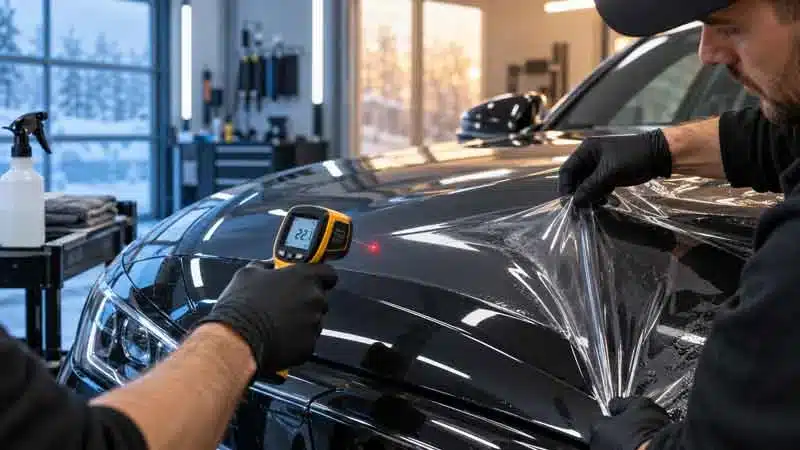
| Cold, fast peel / wrong angle / no heat control | High | High peel force concentrates at the clear coat interface; film tears and pulls stress into paint | Controlled heat + controlled angle + patience |
| DIY scraping with aggressive tools | Medium–High | Scratching/clear-coat marring, especially near edges and contours | Use paint-safe methods; professional removal if unsure |
Why PPF Typically Does Not Damage Healthy OEM Paint
From a manufacturer’s view, clean removability is not luck—it’s a design requirement.
- Adhesive intent: Most modern PPF adhesives are engineered to be strong enough for long-term exposure yet still removable without harming OEM paint when handled correctly.
- PPF is a sacrificial layer: The film is supposed to take abrasion and impacts so your clear coat doesn’t. Over time, the film may show wear first—that’s normal and often a sign it did its job.
What buyers should internalize: PPF is paint-safe on good factory paint, but it is not paint-history-proof.
When Paint Damage Can Happen
1) Repainted or repaired panels
If a panel has been resprayed, the weak point is often paint-to-panel adhesion, not film-to-paint adhesion. That’s why repaint history is the #1 risk factor we ask about.
2) Very old film and adhesive aging
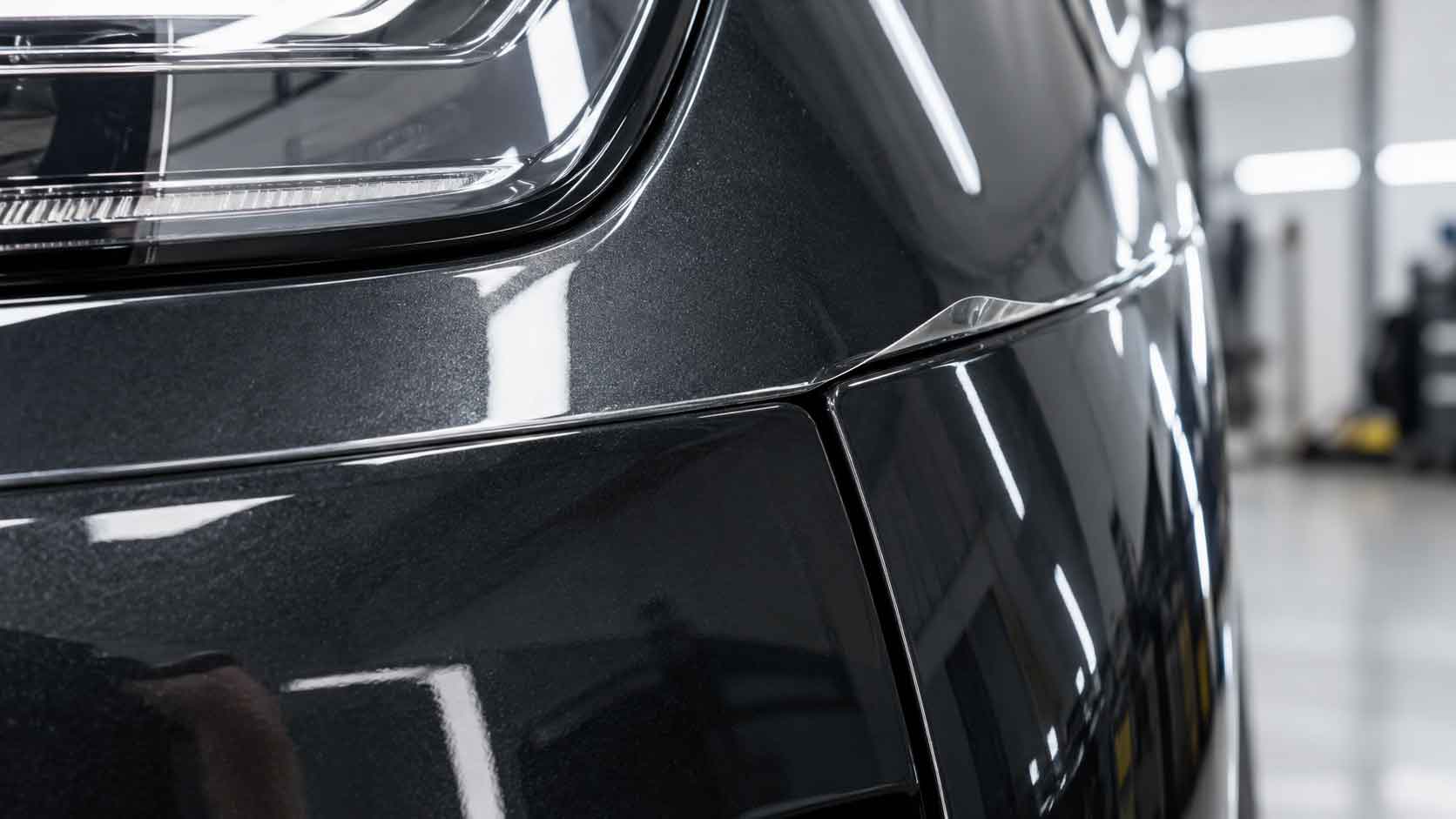
As film ages, removal gets less forgiving. Aged edges can trap contamination; adhesive can become harder to release cleanly; the film can tear into strips—raising both labor and risk.
3) Removal technique errors
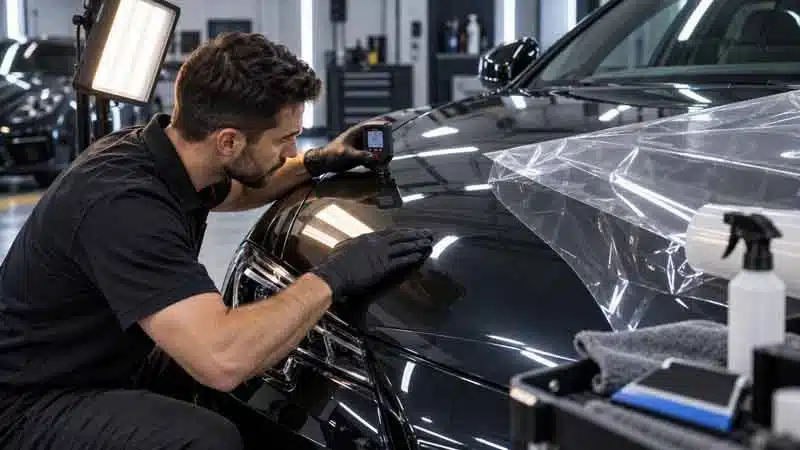
Most “PPF pulled my clear coat” stories trace back to temperature + peel angle + speed. Professional guidance repeatedly highlights that removing too quickly, at the wrong angle, or without proper heat increases breakage and paint stress.
How We Talk About This With Procurement Teams
If you’re sourcing PPF for resale or installer networks, our recommended market messaging is:
What you can confidently say
- “On OEM paint, PPF is designed to protect and remove cleanly when removed correctly.”
What you must also publish
- “Risk increases on repainted panels, very old film, or uncontrolled removal.”
What you should standardize to reduce claims
- Paint-history disclosure on intake (OEM vs repaint).
- Condition-based replacement policy (don’t wait for extreme cracking/yellowing/edge failure).
- Removal SOP emphasizing controlled heat and peel angle, not brute force.
- Documentation alignment (what’s covered as material defect vs what’s surface condition/installation/removal technique).
This is how you protect margin: fewer disputes, fewer chargebacks, cleaner warranty boundaries.
How We Explain It to Car Owners
Short answer:
For most cars with factory paint, PPF won’t damage your paint. It’s made to come off cleanly when removed correctly.
When you should be cautious:
If your car has repainted panels, if the film is very old, or if someone tries to peel it off cold and fast, paint or clear coat can lift.
The safest move if you’re unsure:
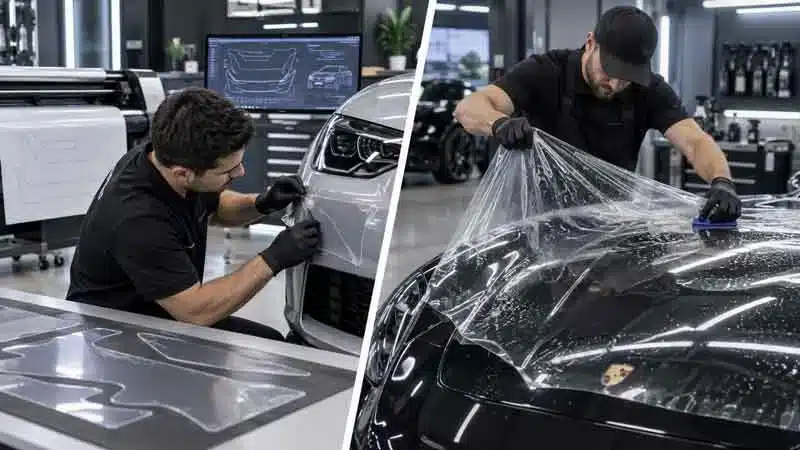
Don’t force a DIY peel. Professional removal uses controlled heat and controlled peel technique to reduce stress and residue.
Practical “Do/Don’t” Guidance
Do
- Verify whether any panel has been repainted before you remove film.
- Treat removal as a controlled process, not a rip-and-go job.
- Replace film when it shows clear aging signals (edge lift, haze, cracking), not after it becomes brittle.
Don’t
- Don’t peel cold and fast.
- Don’t assume “warranty years” means “safe forever.” Aging changes removability.
FAQs
Does PPF damage factory paint?
Typically no—when removed correctly, modern PPF is intended to remove cleanly from OEM paint.
Can PPF pull up clear coat?
It can if the clear coat is weak (often from repaint/repair) or if removal is rushed or done with poor control.
Is repaint the biggest risk factor?
Yes. Repainted panels are more likely to have adhesion variability, which increases lift risk with any adhesive-backed product.
Does older film increase risk?
Yes. Aged film and adhesive can become harder to remove cleanly, and improper removal can increase paint stress.
Should I remove PPF myself?
If you don’t know the paint history or you see brittleness/edge failure, professional removal is the lower-risk option because it relies on controlled heat and peel technique.
Will removal always leave glue?
Not always, but residue risk increases with age and technique. A controlled process reduces residue and reduces the chance of surface marring.
Working With FUNO
If you’re building a PPF program for importers, distributors, brand owners, or installer networks, we recommend standardizing the “paint-safe” story the right way: OEM paint + correct removal = low risk; repaint/aged film/poor technique = elevated risk. That clarity improves customer trust and reduces claims friction.
Related Posts

Contact FUNO
Tell us your target market, product category, preferred specification, estimated purchasing volume, and whether you need standard or private label supply.
FUNO can help you narrow suitable film options, sample requirements, packaging needs, and the next step toward bulk purchasing.