
If you are looking for a PPF supplier for your private label brand, we recommend first familiarizing yourself with internationally renowned brands such as XPEL, 3M, SunTek, LLumar, STEK, HEXIS, and Avery Dennison, and then evaluating manufacturers that can provide OEM and private label services based on your business model. These companies differ significantly in terms of product lines, brand distribution channels, and manufacturing partnership models. For importers and distributors looking to establish their own PPF brands, in addition to product quality, it is essential to focus on manufacturing capabilities, TPU materials, top coats, adhesives, minimum order quantities (MOQs), custom packaging, warranty responsibilities, and long-term supply reliability.
Paint Protection Film (PPF) has become a key product category in the automotive protection film market. With the growth of the automotive detailing, car customization, and professional film installation markets, an increasing number of importers, wholesalers, and regional distributors are considering establishing their own PPF brands.
However, selecting a PPF supplier is not as simple as purchasing a single roll of film.
The market includes both international companies with established brands, authorized installation networks, and comprehensive product lines, as well as manufacturers specializing in TPU film production, coating processing, and OEM supply. There are also companies primarily responsible for product procurement, slitting, packaging, and export, which do not directly handle the entire manufacturing process.
For private label brands, understanding the differences between these types of companies is crucial.
This article will introduce representative global PPF brands and manufacturers, analyze their product positioning and business models, and further highlight the Chinese manufacturer FUNOPPF, as well as the key factors buyers should evaluate before establishing OEM partnerships.
Leading Global PPF Brands and Their Market Positioning
Before selecting a private label PPF supplier, it is recommended to first familiarize yourself with companies in the international market that already have high brand recognition in the international market.
These brands can help buyers understand current product trends in the PPF market, including clear protective films, matte protective films, specialty-colored films, hydrophobic coatings, and self-healing technologies.
The following companies are introduced based on brand prominence and product focus; this list does not represent global sales figures, market share, or rankings from independent laboratory tests. Some companies belong to the same corporate group, so the number of brands should not be directly interpreted as the number of independent manufacturers.
XPEL – A Recognized Brand in Premium Paint Protection Film
Headquarters: United States
Featured Products: ULTIMATE PLUS, STEALTH, ULTIMATE FUSION
XPEL is one of the companies with high brand recognition in the international automotive paint protection film market. Its PPF products focus on protecting automotive paint finishes and include options such as clear films and matte finishes.
Among these, ULTIMATE PLUS is its flagship clear PPF product, while STEALTH is primarily aimed at consumers seeking a satin or matte finish.
XPEL’s product lineup is centered around the following features:
- Paint Protection: Protects factory-applied paint from stone chips, scratches, and environmental pollution.
- Self-Healing: Restores minor surface scratches through heat.
- Optical Clarity: Maintains the visual clarity of the clear film.
- Different Finishes: Offers protective films with various surface finishes.
- Installation Network: Provides products and services through professional installers and authorized channels.
XPEL has also established a product warranty and installation service system. Its official warranty documentation lists the corresponding limited warranty terms for ULTIMATE PLUS and STEALTH; specific coverage is subject to the official terms applicable in each region.
For private label brands, XPEL serves as a suitable market benchmark for an established PPF brand.
If your business model involves acting as an agent for an established brand, you should further investigate its regional licensing and distribution policies. If your goal is to establish your own brand, you will need to seek out a partner manufacturer capable of supplying OEM products.
3M – Industrial Technology and Automotive Protection Film
Headquarters: United States
Featured Product: Scotchgard Paint Protection Film Pro Series 200
3M Scotchgard PPF Official Product Information
3M is a globally renowned materials technology company with a long history in industrial materials, adhesive technologies, and automotive protection products.
Its Scotchgard Paint Protection Film Pro Series 200 is a flagship automotive paint protection film product.
According to 3M’s official product documentation, this series offers surface finishes such as Gloss and Matte and features the following characteristics:
- Hydrophobic Surface: Hydrophobic Surface.
- Self-Healing: Ability to repair minor scratches when heated.
- Optical Clarity: Transparency and clarity.
- Optimized Adhesive: Adhesive layer designed to facilitate precise positioning during installation and minimize adhesive marks.
- Low Orange Peel: Minimal orange peel effect.
3M also provides product support through a network of authorized dealers and professional installers, and serves the installation market with digital film-cutting tools such as its Pattern Marketplace.
For buyers, 3M’s value lies not only in the products themselves but also in how it integrates products, installation tools, distribution systems, and after-sales support.
If you are planning to establish your own PPF brand, you can draw inspiration from this product system management approach; however, you should not mistake the authorized distribution model of an established brand for a third-party private label manufacturing partnership.
SunTek – Performance Films from Eastman
Parent Company: Eastman
Featured Products: PPF Ultra, PPF C
SunTek PPF Ultra Official Product Documentation
SunTek is an automotive protective film brand under Eastman Performance Films.
Its PPF products are primarily targeted at automotive consumers and the professional installation market seeking paint protection, surface hydrophobicity, and long-term performance.
PPF Ultra is one of its flagship products, featuring HydroResist Top Coat technology that emphasizes surface stain resistance, hydrophobicity, and self-healing performance.
Its product features include:
- HydroResist Top Coat: Improves surface stain resistance and hydrophobic properties.
- Self-Healing: Repairs minor scratches using heat from the sun or the vehicle itself.
- Optical Clarity: Provides a crystal-clear visual finish.
- Stain Resistance: Helps resist certain environmental stains.
- Product Warranty: Offers a limited manufacturer’s warranty; specific terms and conditions are subject to the official terms and conditions.
SunTek’s market value lies in its established brand product portfolio, professional installation channels, and related technical support.
For private label buyers, SunTek can serve as a benchmark for product performance and brand service systems; however, brand distribution partnerships should be evaluated separately from OEM manufacturing partnerships.
LLumar – Premium Automotive Film Solutions from Eastman
Parent Company: Eastman
Featured Products: Valor, Platinum
LLumar Valor Official Product Documentation
LLumar is also part of Eastman’s Performance Films brand portfolio, sharing a common corporate background with SunTek, though each has distinct focuses in terms of product lines, market positioning, and channel strategies.
Its PPF products emphasize transparency, surface protection, hydrophobic performance, and long-term appearance retention.
Valor is one of LLumar’s flagship products, with key features including:
- Tetrashield Technology: A technological system designed to enhance surface protection and resistance to environmental impacts.
- High Gloss Finish: A high-gloss appearance.
- Hydrophobic Surface: Hydrophobic properties.
- Self-Healing: Self-repair of minor scratches.
- Environmental Resistance: Protection against environmental contaminants such as bird droppings, tree sap, and acid rain.
According to official LLumar documentation, Valor comes with a limited manufacturer’s warranty; however, the specific warranty period, coverage, and sales regions may vary, so please refer to official local product documentation.
For companies planning to establish a PPF brand, LLumar serves as a valuable reference in demonstrating how product positioning and technological systems can create clear brand differentiation.
It is important to note that SunTek and LLumar are different brands under the same corporate group; when comparing them, one should focus on their respective product strategies rather than treating them as two completely independent manufacturing groups.
STEK – Innovative PPF and Private Label Manufacturing
Company Background: International automotive protective film brand and manufacturing partnership network
Featured Products: DYNOshield, DYNOmatte, DYNOmight, DYNO Fashion Films
STEK Official PPF Product Line
STEK is the company on this list most closely aligned with private label procurement needs.
Not only does it have its own PPF brands and product lines, but it also openly offers OEM and private label manufacturing services.
Its DYNO series covers various product categories:
- DYNOshield: Transparent, high-gloss protective film.
- DYNOmatte: Matte protective film.
- DYNOmight: Products designed for higher protection requirements.
- DYNO Fashion Films: Colored and patterned PPF.
STEK’s key product technologies include:
- TPU Film
- Hydrophobic Top Coat
- Self-Healing Technology
- Optical Clarity
- Colored and Patterned PPF
Of particular interest to private label brands is that STEK officially offers an OEM/Private Label partnership portal, openly stating that it can provide protective film manufacturing, product development, custom packaging, and related technical support.
This means that STEK is not only a PPF brand targeting the end consumer market but also operates a manufacturing partnership business for corporate clients.
For companies looking to establish their own PPF brand while requiring product customization and packaging support, STEK is a supplier worth further consideration.
However, actual collaboration requires confirmation of the specific contracting party, target regions, product scope, MOQ, and terms of cooperation.
HEXIS – European Automotive Protection Film Solutions
Headquarters: France
Featured Products: BODYFENCE, BODYFENCEX, BODYFENCEXM
HEXIS BODYFENCE Official Product Documentation
HEXIS is a French manufacturer of self-adhesive film materials with a long history of serving application markets such as graphics, automotive decoration, and surface protection.
Its BODYFENCE series is a line of automotive paint protection films.
Different products offer tailored protection solutions for various application needs.
For example:
- BODYFENCE: A transparent, high-gloss automotive protection film.
- BODYFENCEX: A protection film featuring special surface technology; official documentation states it possesses self-healing properties at room temperature.
- BODYFENCEXM: An automotive protective film designed for matte finishes.
- BFWIDE: A protective film developed for large body coverage areas.
A notable aspect of HEXIS’s product system is its management of product specifications, application guidelines, and technical documentation.
Its official product documentation provides roll dimensions, thickness, adhesive types, and related application information; buyers can use this information to understand how professional paint protection film suppliers establish their product technical documentation systems.
For private-label brands, HEXIS serves as an ideal reference for product and supply chain systems in the European automotive paint protection film market. Whether third-party private-label manufacturing is available requires further confirmation with specific partners.
Avery Dennison – Advanced Materials and Paint Protection Films
Headquarters: United States
Featured Products: Supreme Defense, Supreme Defense Gloss Lite, Neo
Avery Dennison PPF Official Product Line
Avery Dennison is a globally renowned materials company with a strong market presence in the fields of adhesive materials, graphic materials, and functional films.
Its PPF product line includes:
- Supreme Defense Gloss: Transparent, high-gloss protective film.
- Supreme Defense Gloss Lite: Transparent protective film designed for varying cost and installation requirements.
- Supreme Defense Matte: Transparent, matte-finish protective film.
- Neo Series: A line of colored PPF products.
Its product documentation focuses on:
- Polyurethane Film
- Self-Healing Top Coat
- Optical Clarity
- Permanent Acrylic Adhesive
- Gloss and Matte Finishes
- Outdoor Durability
One of Avery Dennison’s strengths is its comprehensive system of product specifications and technical documentation.
Private label brands can refer to how Avery Dennison structures its product lines, performance tiers, and finish options to address different market needs.
However, Avery Dennison’s established brand product system is not the same as third-party OEM manufacturing partnerships. Buyers should independently verify whether there are brand partnership or manufacturing channels that align with their business model.
Global PPF Brands vs. Private Label Manufacturers: What Is the Difference?
After understanding international brands, buyers also need to clarify an important question:
A company that owns a well-known PPF brand is not necessarily the best private label manufacturer for you.
Suppliers in the market can be categorized into several types based on their business models.
| Supplier Type | Primary Business Model | Suitable Customers |
|---|---|---|
| Established PPF Brand | Sells products under an established brand | Authorized dealers, regional agents |
| OEM / Private Label Manufacturer | Provides products and packaging under the customer’s brand | Private label brands, importers |
| Contract Manufacturer | Manufactures specified products under contract | Brand owners with established product specifications |
| Film Converter | Slitting, rewinding, packaging, and processing | Buyers with specific processing requirements |
| Trading Company | Purchases from manufacturers and resells | Customers who wish to source through trading channels |
These categories are not strictly mutually exclusive. A company may operate both private-label and OEM businesses simultaneously, or it may handle some production in-house while outsourcing other processing.
What buyers really need to confirm is: what tasks the supplier will undertake in actual projects, and who bears ultimate responsibility for quality.
Established Brands: Better for Brand Distribution
If your goal is to quickly enter the local market and leverage existing brand recognition to launch your business, representing an established PPF brand may be a better fit.
This type of partnership typically revolves around:
- Brand Authorization.
- Regional Distribution.
- Product Training.
- Authorized Installation.
- Warranty Administration.
- Marketing Support.
The advantage is the ability to launch sales using an established brand and product system.
However, buyers must also consider brand authorization terms, regional policies, purchase prices, channel management, and restrictions on brand usage.
OEM Manufacturers: Better for Building Your Own Brand
If you already have a distribution network or wish to establish your own automotive protection film brand, an OEM/Private Label partnership may better align with your long-term business goals.
This type of partnership typically involves:
- Existing Product Selection.
- Product Specification Confirmation.
- Private Label Packaging.
- SKU Management.
- Sample Approval.
- Bulk Production.
- Repeat Order Supply.
Compared to distributing established brands, private label brands can establish their own product positioning, packaging, and sales systems based on their target market.
However, they must also take full responsibility for brand building, channel development, customer service, and managing their market reputation.
Choosing an OEM does not necessarily mean the product will be cheaper, nor does it guarantee better quality. True value depends on product fit, manufacturer capabilities, procurement costs, and the stability of long-term partnerships.
FUNOPPF – A Chinese PPF Manufacturer for Private Label Brands
For importers, wholesalers, and brand owners seeking a Chinese PPF manufacturer, FUNOPPF is a manufacturing partner worth considering.
FUNO is the film brand of Hebei Fengao New Materials Co., Ltd., a company located in Shijiazhuang, Hebei Province, China, whose business encompasses Paint Protection Film, Automotive Window Film, and Architectural Window Film.
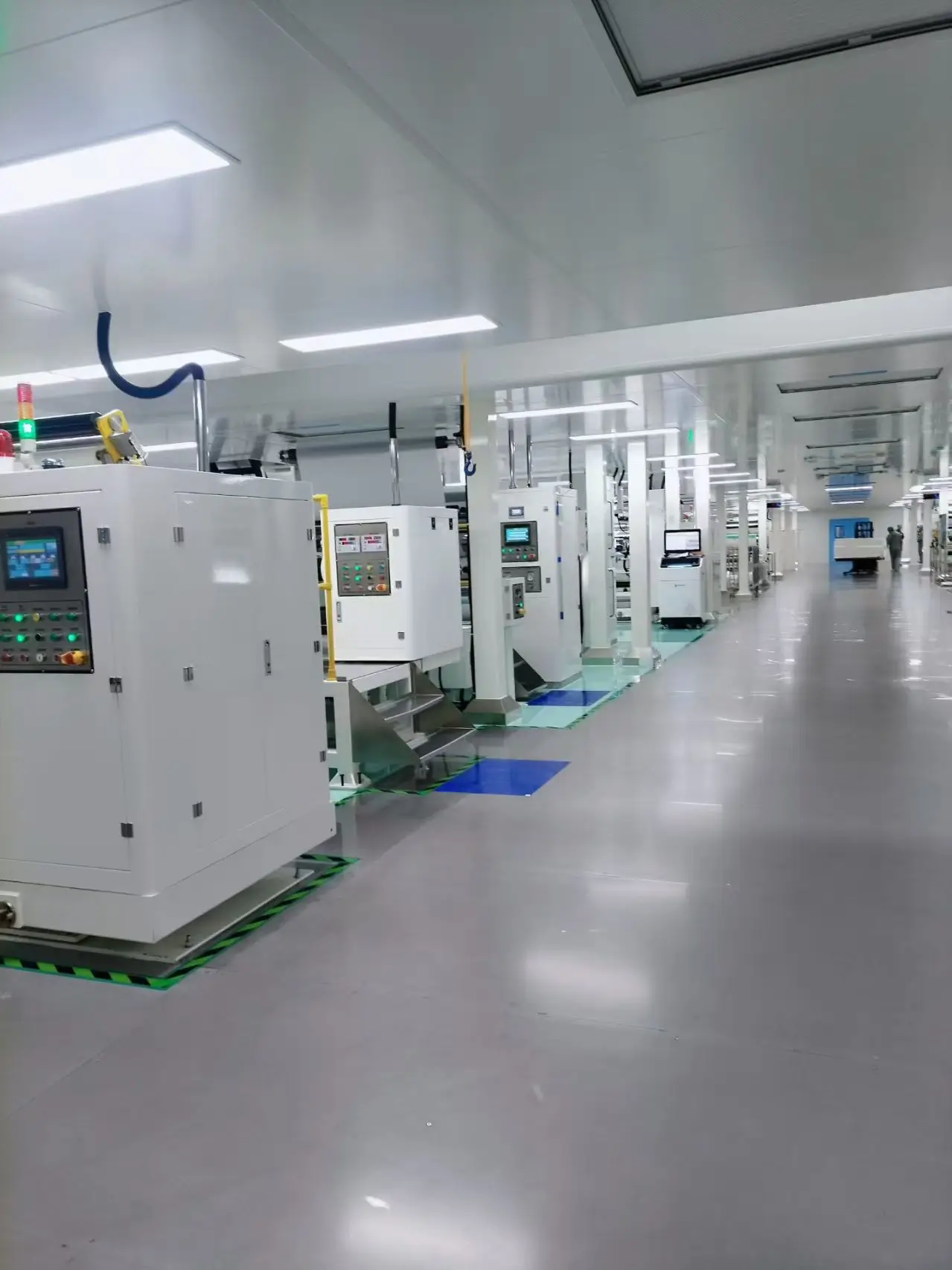
Unlike companies that solely trade in finished films, FUNO’s publicly disclosed manufacturing system encompasses TPU film casting, optical coating, slitting, inspection, packaging, and export preparation.
Manufacturing Background and Production Capabilities
According to FUNO’s publicly available company information, the key data for Phase I of the project are as follows:
| Project | Publicly Available Company Information |
|---|---|
| Manufacturing Entity | Hebei Fengao New Materials Co., Ltd. |
| Location | Shijiazhuang, Hebei, China |
| Phase I Project Area | 30,489.6 m² |
| Building Area | 21,051.6 m² |
| Production Lines | 8 lines |
| TPU Casting Lines | 4 lines |
| Optical Coating Lines | 4 lines |
| Designed TPU Optical Film Output | 10.8 million m/year |
In terms of the production process, FUNO’s manufacturing system encompasses:
- Raw Material Preparation: Preparation of raw materials.
- TPU Film Casting: TPU film casting production.
- Optical Coating: Optical coating processing.
- Slitting: Slitting processing.
- Film Inspection: Film quality inspection.
- Roll Converting: Roll converting.
- Packaging: Product packaging.
- Export Preparation: Preparation of export orders.
For private label brands, understanding which specific production stages the factory handles is more important than simply reviewing the factory floor area.
Before formalizing a partnership, buyers should still verify the actual operational status of the production lines, the raw material supply chain, the scope of outsourced processing, and the division of quality responsibilities.
FUNOPPF PPF Product Portfolio
FUNOPPF offers TPU PPF product lines with different appearances and market positioning, making it easier for importers and brand owners to build product portfolios tailored to their target markets.
Gloss PPF
A high-gloss transparent protective film primarily targeting consumers who wish to preserve the original factory paint finish while enhancing paint protection.
Matte PPF
A matte transparent protective film suitable for consumers who wish to alter the visual appearance of their vehicle’s surface while retaining the original paint color.
Satin PPF
A satin-finish protective film that offers a surface reflection effect distinct from both Gloss and Matte, making it ideal for personalized automotive protection projects.
Colored PPF
Colored TPU PPF combines exterior styling with paint protection, making it ideal for brands and dealers seeking to differentiate their product offerings.
You can explore different product lines through the FUNOPPF Paint Protection Film product series.
For customers planning to establish their own brand, we recommend first determining product positioning based on your target market, then selecting the appropriate product series and specifications—rather than introducing too many SKUs at once.
Private Label and OEM Cooperation
FUNOPPF offers private label partnership support to importers, distributors, wholesalers, and automotive film brands wishing to sell PPF under their own brand.
Depending on project requirements, the following topics can be discussed:
| Collaboration Projects | Support Areas |
|---|---|
| Product Selection | Select from existing PPF product lines |
| Product Positioning | Plan for Gloss, Matte, Satin, and Colored products |
| Sample Evaluation | Sample confirmation prior to bulk purchase |
| Specification Matching | Matching against customer reference samples and target specifications |
| Roll Labels | Custom roll labels |
| Product Stickers | Product Stickers |
| Branded Roll Boxes | Branded Roll Boxes |
| Outer Cartons | Custom Outer Cartons |
| SKU Management | Product Model and SKU Planning |
| Barcode Layout | Barcode Layout |
| Multilingual Packaging | Multilingual Packaging |
| Repeat Supply | Follow-up Orders and Packaging Version Management |
For buyers looking to quickly launch their own private label brands, you can start with our existing product line—first confirm product samples and specifications, then proceed with branded packaging.
For customers who already have an established PPF brand or an existing supplier, you may also provide reference samples and target specifications to facilitate discussions on product matching solutions.
Please note that the feasibility, MOQ, costs, and delivery times for different customization projects must be confirmed individually based on specific product and packaging requirements.
Who Is FUNOPPF Suitable for?
FUNOPPF’s Private Label supply model is primarily suitable for the following customers:
PPF Importers
Importers already engaged in the automotive film import business who wish to expand their portfolio with private-label PPF products.
Regional Distributors
Regional distributors with local distribution networks who wish to establish a range of products across different tiers and price points.
Automotive Film Wholesalers
Wholesalers seeking to expand their product range through bulk purchasing and establish long-term supply channels.
Private Label Film Brands
Automotive protective film brands preparing to launch a new brand or looking to switch from their current manufacturer.
Installer Networks
Professional installation networks seeking to standardize product specifications, packaging, and supply channels across different locations.
Buyers interested in learning about brand building and product portfolio planning can read more at How to Build a Private Label PPF Line.
How to Evaluate a PPF Manufacturer Before an OEM Partnership
Whether you choose an international brand, a domestic manufacturer, or another OEM supplier, you should not base your decision solely on quotes and promotional materials.
A PPF manufacturer worthy of a long-term partnership should be able to clearly explain its product structure, manufacturing capabilities, quality control methods, sample verification processes, and after-sales responsibilities.
The following are key items that buyers are advised to review.
1. Verify the Company’s Identity and Actual Manufacturing Scope
First, confirm the supplier’s legal entity and actual scope of business.
Recommended checks:
- Company Registration: Company registration documents.
- Manufacturing Address: Production address.
- Production Facilities: Production facilities.
- Manufacturing Process: Actual manufacturing process.
- Outsourced Processes: Outsourced production stages.
- Quality Responsibility: Entity responsible for quality.
In particular, it is essential to confirm whether the supplier is a TPU film manufacturer, a coating processor, a slitting and processing company, or a trading company.
All of these types of businesses may supply PPF products, but their production control capabilities and scope of quality responsibility differ.
If a supplier claims to be a full-fledged manufacturer, the buyer should request details about its actual production process, rather than relying solely on photos of offices, warehouses, or product packaging.
2. Understand the TPU Material and Film Construction
TPU is a key base material for PPF.
However, simply confirming that a product uses TPU is not sufficient to assess the quality of the film material.
Purchasers should also understand:
- TPU Material Type: Type of TPU material.
- Raw Material Source: Source of raw materials.
- Film Construction: Film structure.
- Thickness: Thickness and measurement specifications.
- Tensile Properties: Tensile properties.
- Elongation: Elongation at break.
- Dimensional Stability: Dimensional stability.
Different TPU materials, formulations, and manufacturing processes can affect the film’s flexibility, transparency, stretchability, and long-term performance.
If a supplier cannot provide a product structure description, or if specifications across different batches do not match, further verification is necessary.
3. Evaluate the Top Coat Technology
The top coat is a critical factor affecting the surface performance of PPF.
It can influence the product’s gloss, hydrophobicity, stain resistance, self-healing performance, and chemical resistance.
Purchasers are advised to focus on inspecting the following:
| Items | Key Inspection Items |
|---|---|
| Self-Healing | Conditions and performance for recovery from minor scratches |
| Hydrophobicity | Water contact angle and hydrophobic performance |
| Stain Resistance | Resistance to contaminants such as bird droppings and resin |
| Gloss Retention | Long-term gloss retention |
| Surface Smoothness | Surface smoothness and orange peel effect |
| Chemical Resistance | Resistance to cleaning agents and common chemicals |
| UV Resistance | Stability under UV exposure |
Please note that self-healing, hydrophobicity, and stain resistance are not exactly the same properties.
For example, a particular PPF may exhibit good initial water-repellency, but its surface properties may change after prolonged exposure to cleaning agents, environmental pollution, and UV radiation.
Therefore, long-term quality cannot be judged solely based on the water beading effect immediately after the product is opened.
4. Check the Adhesive and Installation Performance
The adhesive is a key component that affects both the PPF installation experience and its performance during subsequent removal.
It is recommended to request actual samples from the supplier and focus on inspecting the following:
- Initial Tack: Initial adhesion.
- Adhesion Development: Changes in adhesive strength.
- Repositionability: Ability to reposition during installation.
- Edge Lifting: Risk of edge lifting.
- Adhesive Marks: Adhesive marks left during installation.
- Residue After Removal: Condition of adhesive residue after removal.
- Compatibility: Compatibility with different automotive paint finishes.
If a brand primarily serves professional installers, it is recommended to arrange actual installation tests rather than basing purchasing decisions solely on laboratory data.
This is because a film’s performance in flat-surface tests does not fully reflect its installation results on complex vehicle body curves.
5. Evaluate Optical Clarity and Surface Appearance
The transparency and surface finish of PPF directly affect the final appearance of the installation.
Recommended key review points:
- Optical Clarity
- Haze level
- Orange peel texture
- Surface Uniformity
- Gloss Consistency
- Color consistency for colored PPF
If you plan to purchase Gloss, Matte, Satin, and Colored PPF, you should establish separate appearance acceptance criteria for each.
You cannot use the same set of visual standards to evaluate all products.
For purchases from different batches, you should also retain an Approved Master Sample to ensure a consistent basis for comparison in subsequent orders.
6. Request Product Samples and Test Them Before Placing Bulk Orders
Sample testing is a critical step in determining whether a supplier is suitable for long-term collaboration.
It is recommended that buyers evaluate samples from various perspectives:
| Test Items | Main Purpose |
|---|---|
| Visual Inspection | Check transparency, color, and surface appearance |
| Thickness Measurement | Verify product thickness |
| Installation Trial | Evaluate installation performance |
| Adhesion Test | Check adhesion performance |
| Removal Test | Check removal performance and adhesive residue |
| Self-Healing Test | Evaluate recovery from minor scratches |
| Chemical Resistance | Check chemical resistance |
| Weathering Test | Evaluate long-term environmental stability |
| Yellowing Evaluation | Check for changes in color and transparency |
For each test, the test method, conditions, and acceptance criteria should be clearly defined.
For example, the self-healing test requires specifying the method of scratch formation, heating conditions, and recovery time; the weathering test requires specifying the test equipment, irradiation conditions, temperature and humidity, and test cycle.
Test data provided by different suppliers is only useful as a reference when the methods and conditions are comparable.
If you want to learn how to systematically compare different PPF samples before bulk purchasing, please refer to FUNOPPF’s relevant sample review materials.
7. Confirm Private Label Packaging and SKU Management
For private-label buyers, OEM packaging is not a minor consideration.
We recommend confirming the following:
- Do they support a proprietary brand logo?
- Can custom roll labels be designed?
- Can paper cores and packaging boxes be customized?
- Can custom product names be used?
- Do they support SKU management for different product lines?
- Do they support barcodes and multilingual packaging?
- Can approved packaging design versions be retained?
- Can the same packaging standards be used for subsequent repeat orders?
If the brand owner plans to sell PPF in multiple countries, they must also consider packaging language, product information, and labeling requirements for different markets.
Packaging designs must be finalized and approved before mass production; printing cannot be arranged based solely on an unapproved design rendering.
8. Check MOQ, Production Lead Time, and Supply Capacity
Private Label projects require attention to actual procurement costs and supply capacity.
It is recommended to confirm the following with suppliers:
| Commercial Projects | Items to Verify |
|---|---|
| MOQ per SKU | Minimum Order Quantity per Product Model |
| OEM Packaging MOQ | Minimum Order Quantity for Custom Packaging |
| Mixed SKU Order | Whether mixed SKU orders are supported |
| Sample Cost | Sample and shipping costs |
| Production Lead Time | Product production lead time |
| Packaging Lead Time | Custom packaging lead time |
| Monthly Supply Capacity | Monthly Supply Capacity |
| Repeat Order Lead Time | Repeat Order Lead Time |
| Payment Terms | Payment Terms |
It is especially important to distinguish between the product MOQ and the packaging MOQ.
Some suppliers allow small-batch purchases of existing products, but custom-printed packaging may have a separate minimum order quantity.
Buyers should also understand the factory’s actual delivery capacity during peak seasons, periods of concentrated orders, and fluctuations in raw material supply.
9. Review Warranty Terms and After-Sales Responsibility
Don’t just compare which supplier offers the longest warranty period.
You should check:
- Who is the warranty issuer?
- Which product models are covered by the warranty?
- Does it cover yellowing?
- Does it cover cracking?
- Does it cover bubbling?
- Does it cover delamination?
- Does it cover adhesive failure?
- Are there installation and maintenance conditions?
- Does it cover installation labor costs?
- How are claims submitted?
- Who is responsible for quality investigations and resolution?
It is also necessary to clearly distinguish between retail warranties for consumers and B2B quality liability agreements between brand owners and manufacturers.
For example, the warranty provided by a manufacturer to a brand owner is not necessarily equivalent to the warranty the brand owner ultimately provides to consumers.
Without a clear division of responsibilities, the brand owner may have to bear the burden of customer complaints and compensation claims alone when after-sales issues arise.
10. Establish Batch Traceability and Specification Change Control
For private label brands with long-term partnerships, batch consistency is critical.
Purchasers should require suppliers to establish:
- Batch Number: Production batch number.
- SKU Identification: Product model identification.
- Specification Version: Specification version.
- Approved Sample: Approved sample.
- QC Records: Quality control records.
- Packaging Revision: Packaging version.
- Production Date: Production date.
- Shipment Records: Shipment records.
If subsequent orders involve changes to raw materials, coatings, adhesive layers, or other critical specifications, the supplier should notify the buyer in advance and re-confirm samples in accordance with the agreement between both parties.
One should not assume that products from different production batches are completely identical simply because the product name has not changed.
For more information on this topic, please refer to PPF Specification Change Control to learn how to establish a change management mechanism for product specifications and repeat orders.
How to Compare PPF Suppliers for Your Private Label Brand
The requirements for manufacturers vary depending on a brand’s stage of development and sales channels.
Therefore, buyers should not simply search for a so-called “world’s best” PPF factory, but rather select partners that align with their business objectives.
| Buyer Type | Primary Procurement Objectives | Supplier Capabilities to Prioritize |
|---|---|---|
| New PPF Brand | Establish an initial product line | Samples, existing products, flexible packaging |
| Regional Distributor | Build a regional sales network | Product portfolio, pricing structure, stable supply |
| Established Film Brand | Expand existing product line | Specification matching, quality control, batch management |
| Wholesale Importer | Bulk import and distribution | MOQ, cost, delivery capability |
| Installer Network | Standardized Installation Products | Installation Performance, Product Consistency, After-Sales Support |
It is recommended that buyers create a Supplier Comparison Sheet before making a final decision.
| Evaluation Item | Supplier A | Supplier B | Supplier C |
|---|---|---|---|
| Actual Manufacturing Scope | |||
| TPU Material Information | |||
| Top Coat Performance | |||
| Adhesive Performance | |||
| Optical Clarity | |||
| Sample Test Results | |||
| Private Label Support | |||
| MOQ per SKU | |||
| OEM Packaging MOQ | |||
| Production Lead Time | |||
| Warranty Conditions | |||
| Batch Traceability | |||
| Repeat Supply Capability |
All suppliers should be compared based on the same set of product specifications, testing conditions, and commercial requirements.
If one supplier offers a high-specification product while another offers a basic product with a different structure, one cannot directly conclude that the latter has a price advantage, even if the quoted prices differ significantly.
Common Mistakes When Choosing a Private Label PPF Supplier
Choosing a Supplier Based Only on Price
A low price may indicate differences in material composition, product performance, packaging conditions, or scope of services.
Buyers should first confirm that the product meets requirements before comparing total procurement costs.
Assuming Every Factory Owns All Production Processes
Some companies possess branding and production management capabilities, but certain raw materials or processing steps may be sourced from external partners.
Outsourcing itself does not necessarily imply poor quality, but the actual scope of production and responsible parties must be clearly defined.
Trusting Warranty Years Without Reading the Terms
The warranty period does not fully represent all product performance characteristics.
You should review the applicable products, covered defects, installation requirements, exclusions, and the claims process.
Approving a Supplier Without Physical Sample Testing
Product photos and technical specification sheets cannot fully represent actual performance during installation.
Before bulk purchasing, physical samples should undergo necessary testing and evaluation.
Ignoring Packaging and Specification Changes
If product specifications and packaging versions are not properly documented, inconsistencies in model numbers, labels, or product appearance may arise during subsequent restocking.
Brand owners should manage sample approval, product specifications, and packaging versions in a coordinated manner.
Selecting Too Many Products at the Beginning
New brands do not necessarily need to launch a large number of PPF models all at once.
A more pragmatic approach is to first establish a core product line and then gradually add products such as Matte, Satin, and Colored PPF based on market sales and installation feedback.
FAQ
Which Are the Leading PPF Brands in the Global Market?
XPEL, 3M, SunTek, LLumar, STEK, HEXIS, and Avery Dennison are all international PPF brands or supply chains worth exploring. They differ in product positioning, brand distribution channels, and manufacturing partnership models, so they cannot be ranked uniformly based solely on brand recognition.
Are XPEL, 3M, SunTek, and LLumar Private Label Manufacturers?
These companies’ public-market operations primarily focus on their own-brand products and related distribution and installation networks. It cannot be assumed that they all accept third-party private-label production orders. If a buyer wishes to establish their own brand, they should confirm directly with the specific company whether corresponding OEM or brand partnership programs are available.
Can I Buy PPF Directly from a Chinese Manufacturer Under My Own Brand?
Yes. Some Chinese PPF manufacturers can provide overseas importers and brand owners with existing product lines, OEM packaging, product labeling, SKU planning, and bulk supply support. However, specific terms of cooperation depend on manufacturing capacity, product range, MOQ, and packaging requirements.
What Is the Difference Between an OEM PPF Manufacturer and a PPF Trading Company?
OEM manufacturers may directly handle film production, coating processes, or other manufacturing stages, or they may organize some subcontracted production in accordance with the contract. Trading companies, on the other hand, are primarily responsible for product procurement and sales. Both may provide qualified products, but buyers should verify the actual scope of production, quality control methods, and the party ultimately responsible.
What Should I Test Before Choosing a Private Label PPF Supplier?
It is recommended to test transparency, thickness, surface finish, adhesive performance, installation performance, self-healing properties, chemical resistance, and weather resistance based on the target product. All tests should clearly define methods, conditions, and acceptance criteria; decisions regarding partnership should not be based solely on promotional data provided by the supplier.
Is Private Label PPF Better Than Selling an Established Brand?
Each model suits different business objectives. Distributing an established brand allows you to leverage existing brand recognition and distribution channels, but typically requires adherence to brand licensing policies. Private label allows you to establish your own product positioning and brand equity, but you must take full responsibility for marketing, channel development, and customer service. Buyers should make their choice based on existing channels, budget, and long-term business plans.
Conclusion
When searching for a PPF supplier, you should not focus solely on whether the company owns a well-known brand, nor should you decide on a partnership based solely on the factory’s quote.
International brands such as XPEL, 3M, SunTek, LLumar, STEK, HEXIS, and Avery Dennison provide buyers with diverse product positioning and market benchmarks. For importers and distributors seeking to establish their own PPF brands, it is also essential to gain a deeper understanding of OEM manufacturers’ production capacity, product structure, packaging support, and long-term supply systems.
As a Chinese PPF manufacturer, FUNOPPF offers overseas importers, wholesalers, distributors, and private-label brands with Gloss, Matte, Satin, and Colored PPF product lines, as well as support for sample verification, product specification matching, branded packaging, and repeat order fulfillment.
Before formally establishing a partnership, it is recommended to first confirm the manufacturer’s actual production scope, verify product performance through sample testing, and clarify MOQs, warranties, batch traceability, and quality liability.
The Right PPF Supplier Should Match Your Brand Strategy, Product Requirements, and Long-Term Supply Needs — Not Just Your Initial Purchase Budget.
Related Posts





Contact FUNO
Tell us your target market, product category, preferred specification, estimated purchasing volume, and whether you need standard or private label supply.
FUNO can help you narrow suitable film options, sample requirements, packaging needs, and the next step toward bulk purchasing.