
For importers, distributors and private label brands, choosing a film manufacturer is about more than comparing quotations or approving a sample. An OEM partnership requires a supplier that can control product specifications, maintain consistent quality, manage brand requirements and support repeat orders.
A film sample may look good, and the initial quotation may be competitive. However, neither guarantees that the supplier can reproduce the same specifications across production batches, manage material changes or deliver orders according to an agreed schedule.
This is why a factory audit should take place before a long-term OEM partnership is approved.
For Paint Protection Film (PPF) and automotive window film, the audit should cover the supplier’s actual manufacturing scope, production processes, quality management, testing capabilities, traceability and private label controls. The assessment should also distinguish between processes performed in-house and those handled by external partners.
The objective is not simply to find a factory with more equipment or a larger production site. It is to verify whether the supplier can consistently deliver the specific products your business intends to purchase.
This guide explains how importers, distributors and private label brands can audit a PPF or automotive window film factory, identify potential risks and establish a practical supplier qualification process before signing an OEM agreement.
If you are comparing product options before starting an audit, you can first review our PPF product range and automotive window film product range.
Why Factory Audits Matter Before an OEM Partnership
A factory audit helps buyers verify whether a supplier’s actual operations support its commercial and technical commitments.
A quotation describes the proposed transaction. A product sample demonstrates a particular product under specific conditions. A factory audit examines the systems and processes behind that product.
These are different types of evidence, and they should not be treated as interchangeable.
For example, a supplier may provide an acceptable PPF sample but lack a documented process for controlling changes to the topcoat, adhesive system or other critical materials. Another supplier may have suitable production equipment but no reliable method for connecting finished rolls to their production records.
Either situation can create problems when orders are repeated under a private label brand.
| Potential issue | Business risk | What the audit should verify |
|---|---|---|
| Unclear manufacturing scope | The buyer may misunderstand which processes the supplier controls | Actual production activities and outsourced operations |
| Weak process control | Product performance may vary between batches | Production procedures and inspection records |
| Incomplete technical documentation | Specifications may be difficult to verify | Product-specific TDS and applicable test reports |
| Poor traceability | Quality problems may be difficult to investigate | Batch identification and production records |
| Uncontrolled specification changes | Repeat orders may differ from the approved product | Change notification and approval procedures |
| Weak private label management | Packaging or product identification errors may occur | Artwork approval, SKU control and version management |
| Unreliable production planning | Delivery commitments may not be met | Capacity planning, lead-time records and contingency procedures |
A factory audit does not eliminate every supply-chain risk. It provides a structured way to identify weaknesses before they become expensive problems.
For distributors comparing multiple suppliers, our PPF supplier checklist covers the broader supplier comparison process. This article focuses specifically on factory verification and OEM readiness.
Verify the Legal Entity and Actual Manufacturing Scope
Before reviewing equipment or technical performance, confirm who you are dealing with and what the supplier actually manufactures.
A company may operate as a manufacturer, converter, contract processor, trading company or a combination of these roles. None of these business models automatically determines whether a supplier is suitable. The important point is whether its actual role matches your expectations and the responsibilities agreed in the contract.
Confirm the Contracting Entity
Request the supplier’s registered company name, business registration information, operating address and proposed contracting entity.
Check whether the company receiving payment, signing the OEM agreement and issuing commercial documents is consistent with the information provided during supplier qualification.
Where necessary, verify the registration details through the relevant official registry or an appropriate third-party verification service.
Also confirm who will be responsible for product quality, technical documentation, warranty claims and corrective actions.
If different entities handle manufacturing, sales and export, the relationship between them should be clearly explained.
Confirm What the Factory Produces In-House
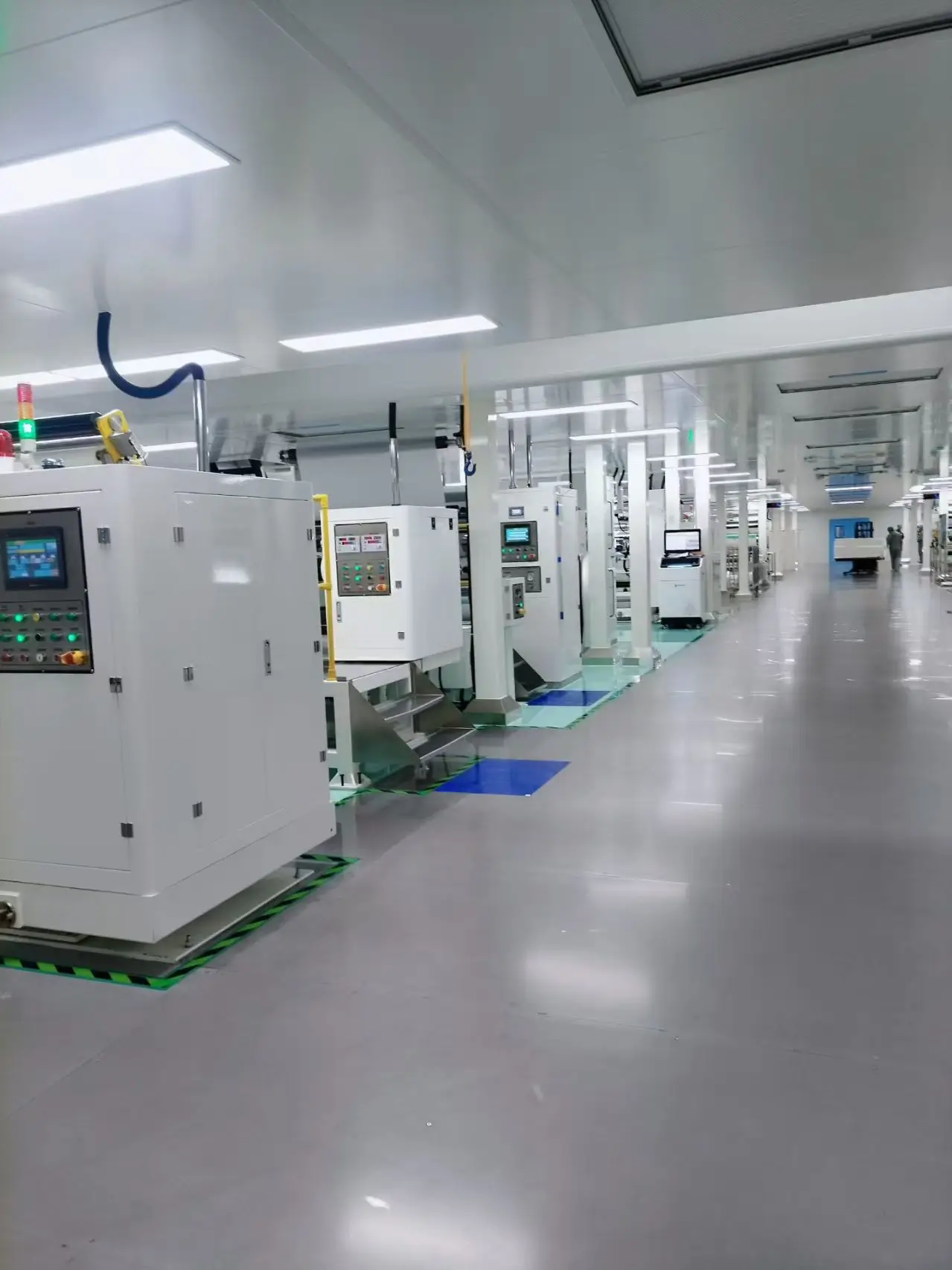
Ask the supplier to map its actual production process and identify which activities are performed internally.
For PPF, these activities may include coating, lamination, converting, slitting, rewinding and finished-product inspection. The exact scope depends on the manufacturer’s production model.
For automotive window film, the process may involve coating, coloring, lamination, curing, slitting, rewinding and inspection, depending on the product technology.
Do not assume that every factory performs every process in-house.
For example, a PPF supplier may purchase TPU base film from an upstream producer and perform subsequent coating, lamination and converting operations. This arrangement is not automatically a reason to reject the supplier. The audit should establish who controls the incoming material, who performs each critical process and who accepts responsibility for the finished product.
A useful question is:
Can the supplier clearly explain the complete production route for the exact product you intend to order, including outsourced processes and quality responsibilities?
If the answer is unclear, the manufacturing scope should be verified before the audit proceeds.
Audit PPF and Automotive Window Film Production Separately
PPF and automotive window film share some converting and inspection activities, but their product structures, manufacturing routes and performance requirements differ.
A single generic audit checklist is therefore insufficient. Buyers should use a common supplier-management framework while applying product-specific technical checks.
PPF Factory Audit
PPF is a multilayer product whose performance depends on the interaction of the surface layer, TPU film, adhesive system and release liner.
The audit should establish how the supplier controls these components and the processes used to produce the finished film.
| Audit area | What to verify | Evidence to request |
|---|---|---|
| Incoming materials | Material identity, specifications and acceptance criteria | Supplier specifications and incoming inspection records |
| Topcoat and surface properties | Relevant appearance and performance requirements | Product-specific specifications and test records |
| TPU film | Material identification and applicable quality requirements | Material records and traceability information |
| Adhesive system | Defined performance requirements and process controls | Applicable test results and production records |
| Lamination and coating | Process parameters and defect controls, where applicable | Process instructions and inspection records |
| Slitting and rewinding | Roll dimensions, edge quality and identification | Slitting records and finished-roll inspection |
| Finished product | Appearance, thickness and other agreed specifications | Inspection results and product release records |
Not every item will apply to every manufacturing model. The audit should be based on the actual product structure and processes used by the supplier.
For example, a factory that purchases finished TPU base film should be assessed on its ability to control that incoming material and its subsequent processes, rather than being judged solely on whether it operates a TPU extrusion line.
Automotive Window Film Factory Audit
Automotive window film requires a different set of product-specific checks.
Depending on the technology, the manufacturing route may involve PET film, coloring or coating processes, lamination and other specialized operations.
The audit should focus on the production methods relevant to the exact product range being purchased.
| Audit area | What to verify | Evidence to request |
|---|---|---|
| Base film | Material identification and incoming quality | Specifications and incoming inspection records |
| Coating or coloring | Relevant process controls and product identification | Process records and applicable quality checks |
| Optical performance | VLT and other agreed optical parameters | Product-specific test reports |
| Solar performance | Relevant TSER, IRR or IRER requirements | Defined test methods and corresponding results |
| Adhesive and release liner | Applicable performance and handling requirements | Specifications and inspection records |
| Slitting and rewinding | Width, length, roll condition and packaging | Finished-product inspection records |
| Product identification | Model, VLT designation and label accuracy | Approved SKU specifications and label records |
The required equipment depends on the product technology. A supplier manufacturing one type of automotive window film should not automatically be required to own every piece of equipment associated with other technologies.
Instead, confirm whether the factory has the processes, controls and verification methods necessary for the specific products included in the OEM agreement.
For more detailed product-level validation, refer to our automotive window film sample testing guide.
Verify Quality Management and Production Records
A factory audit should examine how quality is controlled during routine production, not just how the supplier describes its quality policy.
A quality management certificate can provide useful information, but it does not independently prove that every product meets your requirements. Buyers should verify the certificate’s validity, scope and issuing organization, then examine the actual procedures and records relevant to the proposed order.
Incoming Material Inspection
Ask how the supplier verifies incoming materials before they enter production.
Relevant checks may include material identity, supplier documentation, visual condition, dimensions and other specified properties.
For PPF, confirm how the supplier identifies the relevant film layers and other components. For automotive window film, check how incoming base films and other critical materials are identified and accepted.
The supplier should be able to explain what happens when incoming material fails an acceptance requirement.
In-Process Quality Control
Review how operators monitor critical manufacturing steps.
Depending on the product, this may include coating or lamination conditions, material handling, curing requirements, slitting accuracy and other process-specific controls.
Ask to see the applicable work instructions and recent production records. Where appropriate, request a demonstration of how a process parameter is checked and what action is taken when a result falls outside the specified range.
A documented procedure is useful only if it reflects actual practice.
Finished Product Inspection
Confirm which inspections must be completed before a finished roll is released for shipment.
The acceptance criteria should correspond to the agreed product specification. Depending on the product, relevant checks may include appearance, dimensions, thickness, optical properties and other defined requirements.
Ask whether inspection results are recorded by production batch and whether failed products can be identified and prevented from entering normal shipment.
Nonconforming Product and Corrective Action
Quality problems are not always avoidable. The more important question is whether the factory can identify, contain, investigate and correct them.
Ask the supplier to explain how it handles nonconforming materials, production defects, customer complaints and corrective actions.
Useful evidence may include redacted examples of nonconformance records, root-cause analysis and follow-up verification.
For an OEM buyer, the ability to explain what went wrong, what was changed and how recurrence was checked is more valuable than a general promise that quality problems never occur.
Review Technical Documents and Product Testing
Technical documentation is a critical part of supplier qualification because it connects the product’s commercial description to its actual specifications and test evidence.
Before approving an OEM partnership, confirm that the supplier can provide documents appropriate to the product and intended market.
Check the Technical Data Sheet
A Technical Data Sheet (TDS) should identify the product and provide relevant technical information.
For PPF, this may include thickness, appearance, applicable optical properties and other agreed performance parameters.
For automotive window film, this may include VLT, TSER, IRR, IRER, UV performance and other parameters relevant to the product.
Do not assume that every supplier uses the same test definitions or methods. When comparing products, confirm that the reported parameters are defined consistently and that differences in test conditions are understood.
Verify Test Reports
Ask whether the supplier can provide test reports that correspond to the actual product model and current specification.
Review the following:
- Product identification and specification version.
- Test method and applicable standard, where relevant.
- Sample description and test conditions.
- Results and acceptance criteria.
- Testing organization and report traceability, where applicable.
- Any limitations affecting the interpretation of the results.
A report for one product model should not automatically be treated as evidence for an entire product range.
Similarly, a test report should not be described as a certification unless it actually represents an applicable certification.
Check Document Control
The supplier should be able to distinguish between current approved documents and obsolete versions.
This is particularly important for private label projects, where product specifications, packaging artwork and labels may be revised during development.
Ask how the factory ensures that production personnel use the correct specification and that the documents supplied to the buyer correspond to the delivered product.
If a supplier cannot reliably connect a product model with its current specification and inspection records, the OEM approval process should remain open until the gap is resolved.
Audit OEM and Private Label Readiness
A factory may be able to manufacture a standard product but still lack the management processes required for a private label partnership.
OEM readiness includes more than printing a customer’s logo on a package. It requires clear control of product specifications, branding, approvals, confidentiality and repeat orders.
Product Development and Specification Approval
Confirm how the supplier converts your requirements into an approved product specification.
The process should identify the product model, relevant technical parameters, packaging requirements and sample approval status.
Where a reference sample is provided, the supplier should explain how it will be evaluated and how the approved specification will be recorded.
For customers who need to match an existing product, our PPF reference sample and specification matching guide explains the distinction between comparing a sample and confirming a repeatable specification.
Packaging and Artwork Control
For private label orders, confirm how the factory manages:
- Brand logos and approved artwork.
- Product labels and model identification.
- Packaging specifications and revisions.
- SKU codes and barcode information, where applicable.
- Approval responsibility before printing or production.
- Records linking the approved artwork to the production order.
The purpose is to prevent the wrong label, obsolete artwork or incorrect model information from being used in a production run.
A buyer should approve the relevant artwork and product identification before mass printing or packaging begins.
Intellectual Property and Confidentiality
The OEM agreement should clearly define the permitted use of brand assets, product designs, confidential information and other protected materials.
Depending on the cooperation model, the parties may also need to clarify ownership and permitted use of custom designs, tooling, exclusive specifications or development work.
These matters should be addressed in the contract rather than left to informal assurances.
The audit should establish whether the supplier has a process for controlling customer files and restricting their use to authorized purposes.
Specification and Material Change Control
A product approved during initial development may later be affected by a change in material, process, supplier or specification.
The OEM partnership should define which changes require notification, technical review or customer approval.
Ask how the supplier identifies affected products, updates documents and prevents an unapproved specification from being used for repeat orders.
For a more detailed procedure, see our PPF specification change control guide.
Evaluate Production Capacity, Lead Time and Supply Continuity
Production capacity should be evaluated against your expected order requirements, not simply the supplier’s stated annual output.
A factory may have substantial total capacity but limited availability for a particular product, coating process, width or customized packaging specification.
Confirm Capacity for the Actual Product
Ask the supplier to explain which production resources are required for your order and whether those resources are shared with other products.
Where relevant, review production planning, recent order schedules, bottlenecks and the availability of critical materials.
The objective is to determine whether the supplier can support the expected order volume without making unsupported assumptions about capacity.
Understand Lead Time
Clarify what the quoted lead time includes.
For example, a customized OEM order may require artwork approval, sample confirmation, material preparation, production, inspection and packaging. These stages should be distinguished so that both parties understand when the delivery schedule begins.
Also confirm how the supplier communicates delays and manages changes to the agreed schedule.
Our PPF OEM lead time guide provides further context on the factors that can affect customized production and delivery.
Review Supply Continuity
For a long-term partnership, ask how the supplier handles material shortages, equipment downtime, subcontractor disruptions and unexpected demand changes.
The supplier does not need to guarantee that disruptions will never occur. It should, however, be able to explain how risks are identified, communicated and managed.
If critical production stages depend on external partners, clarify how those partners are qualified and how changes to them are controlled.
Conduct the Factory Audit: Before, During and After the Visit
A structured audit is more useful than an informal factory tour because it establishes what evidence must be reviewed and how findings will be evaluated.
Before the Audit
Send the supplier an audit agenda and request the documents needed for preliminary review.
These may include company registration details, a manufacturing process flow, product specifications, relevant certificates, quality procedures and examples of inspection records.
Identify the exact product models and OEM requirements that will be assessed. A factory should not be judged against unrelated processes that are not part of the proposed cooperation.
During the Audit
Use the agreed checklist to review the production site, interview responsible personnel and inspect relevant records.
Where practical, select a recent production batch and trace it through incoming materials, production records, inspection results and finished-product identification.
Record the evidence reviewed, any gaps identified and the corrective action required.
If a supplier cannot demonstrate a process during the visit, distinguish between a process that does not exist and one that could not be verified during the audit. Both situations require follow-up, but they do not necessarily have the same significance.
After the Audit
Prepare a written audit report with findings, evidence, risk classification, corrective actions and deadlines.
Ask the supplier to respond to each finding and provide supporting evidence where necessary.
For significant issues, verify that corrective actions have been implemented and are effective before approving the partnership.
A factory audit should produce a documented decision, not simply a positive impression of the visit.
PPF and Automotive Window Film Factory Audit Checklist
The following checklist can be used as a starting point for supplier qualification. The applicable requirements should be adapted to the specific product, manufacturing model and OEM agreement.
| Audit item | Verification method | Result |
|---|---|---|
| Legal entity and manufacturing address | Review registration and site information | Pass / Review |
| Actual manufacturing scope | Review process flow and verify relevant operations | Pass / Review |
| Outsourced processes | Identify external operations and responsibility boundaries | Pass / Review |
| Incoming material control | Review specifications and inspection records | Pass / Review |
| Process control | Review work instructions and production records | Pass / Review |
| Finished product inspection | Verify acceptance criteria and release records | Pass / Review |
| Technical documentation | Check TDS, applicable test reports and document versions | Pass / Review |
| Batch traceability | Trace a selected batch through production and inspection | Pass / Review |
| Nonconforming product control | Review containment and corrective-action procedures | Pass / Review |
| OEM specification approval | Verify product and sample approval records | Pass / Review |
| Artwork and label control | Check approval workflow and revision management | Pass / Review |
| Change control | Review notification and approval procedures | Pass / Review |
| Capacity and lead time | Compare production resources with expected demand | Pass / Review |
| Supply continuity | Review material and process contingency arrangements | Pass / Review |
| Complaint and warranty handling | Review responsibility, investigation and response procedures | Pass / Review |
A checklist should support the audit, not replace professional judgment. A supplier may pass most items and still have a critical weakness that prevents approval.
Supplier Qualification Scorecard: How to Make the Decision
For buyers who need to compare several factories, a weighted scorecard can help organize findings and reduce subjective decision-making.
The following weights are an example for an OEM project involving PPF or automotive window film. They are not an industry standard and should be adjusted according to the order value, product risk and complexity of the cooperation.
| Evaluation category | Suggested weight |
|---|---|
| Manufacturing capability and process control | 20% |
| Quality management and traceability | 25% |
| Product specifications and testing evidence | 20% |
| OEM and private label readiness | 15% |
| Delivery and supply continuity | 10% |
| Commercial and after-sales management | 10% |
| Total | 100% |
A simple scoring method is to rate each category from 1 to 5, where 1 indicates insufficient evidence or major weaknesses and 5 indicates strong, verified performance.
The weighted score can then be calculated as:
Weighted score = Σ (Category rating ÷ 5 × Category weight)
For example, if a supplier receives a rating of 4 out of 5 for quality management, its contribution to a category weighted at 25% would be 20 percentage points.
However, the total score should never override a critical failure. Unverified legal identity, materially misleading documentation, an inability to establish product traceability or unresolved major quality risks may justify withholding approval regardless of the overall score.
Recommended Audit Outcomes
| Outcome | Meaning | Required action |
|---|---|---|
| Approved | Required controls and evidence have been verified | Proceed to the next stage of product and commercial approval |
| Conditionally Approved | Identified gaps can be addressed within an agreed period | Track corrective actions and verify closure |
| On Hold | Important evidence or requirements remain unverified | Pause the decision until sufficient evidence is available |
| Rejected | A critical risk cannot be accepted or resolved | Do not proceed with the proposed partnership |
Factory qualification should be based on verified evidence, not the number of machines, the size of the building or the total number of certificates presented.
Red Flags Before Signing an OEM Agreement
Some issues should trigger additional verification or a pause in the approval process.
Unclear Manufacturing Responsibilities
If the supplier cannot explain which processes are performed in-house and which are outsourced, it may be difficult to establish accountability when a quality problem occurs.
Request a documented process flow and clarify responsibility for each critical operation.
Technical Documents That Cannot Be Matched to the Product
If a test report, certificate or specification does not clearly correspond to the proposed product model, ask for clarification before relying on it.
Do not accept a document as proof of compliance simply because it contains a familiar company name or product category.
Missing or Inconsistent Quality Records
If the supplier claims to inspect products but cannot demonstrate how inspection results are recorded and linked to production batches, the effectiveness of its quality controls remains unverified.
Determine whether the gap can be corrected and whether the necessary evidence can be produced before approval.
Uncontrolled Specification Changes
If the supplier reserves the right to change critical materials, production processes or product specifications without an agreed notification and approval procedure, repeat-order consistency may be difficult to maintain.
This issue should be addressed in the OEM agreement and supported by a documented change-control process.
Unrealistic Delivery Commitments
If the supplier promises delivery without explaining material availability, production scheduling, customization requirements or inspection time, request a more detailed production plan.
A credible supplier should be able to explain the assumptions behind its lead-time commitment.
Resistance to Reasonable Verification
A supplier may need to protect confidential information, and buyers should respect legitimate confidentiality restrictions.
However, if the supplier refuses all reasonable methods of verifying critical production, quality or traceability claims, the buyer should treat the resulting uncertainty as a risk rather than automatically accepting the claims.
How FUNOPPF Supports OEM and Private Label Cooperation
For importers, distributors and private label brands, successful cooperation begins with clear product requirements and continues through specification confirmation, sample evaluation, production approval and repeat-order control.
FUNOPPF offers PPF and automotive window film product ranges that buyers can evaluate according to their target markets, intended applications and product positioning.
Before starting an OEM project, buyers should clarify the product category, target specifications, expected order volume, packaging requirements and applicable technical documentation. These details help establish a clear basis for discussing product selection and cooperation requirements.
For PPF projects, review the PPF product range. For automotive window film projects, review the automotive window film product range.
For a potential long-term partnership, the recommended next steps are:
- Define the product models and target specifications.
- Confirm the supplier’s actual manufacturing scope.
- Review relevant technical documents and quality evidence.
- Evaluate samples against agreed requirements.
- Approve packaging, labels and product identification.
- Agree on change control, delivery responsibilities and after-sales procedures.
The objective is to establish a clear and verifiable basis for cooperation before committing to repeat orders.
FAQ
Is a factory visit necessary before an OEM partnership?
A site visit can provide valuable evidence of manufacturing operations, process controls and production records. However, the appropriate audit method depends on order value, product risk and supplier history. Where an onsite visit is not practical, buyers can use document verification, live video demonstrations and independent third-party inspections, while recognizing that these methods do not provide identical levels of assurance.
What documents should buyers request before auditing a film factory?
Typical documents include company registration information, a manufacturing process flow, product specifications, relevant certificates, applicable test reports, quality procedures and examples of inspection records. The exact list should reflect the product and the scope of the proposed OEM agreement.
Does ISO 9001 certification guarantee PPF or window film quality?
No. ISO 9001 concerns quality management systems and does not independently guarantee that every product meets a buyer’s technical specifications. Buyers should verify the certificate’s validity and scope, then review product-specific test evidence, production controls and traceability records.
Should PPF and automotive window film factories use the same audit checklist?
They can share a common supplier-management framework, but the technical sections should be different. PPF audits may focus on the relevant film layers, coating or lamination processes and surface performance. Automotive window film audits may place greater emphasis on optical parameters, solar performance, coating technology and roll quality.
How can buyers verify whether a supplier is a real manufacturer?
Start by confirming the legal entity and operating address. Then verify the actual production scope through a process flow, relevant site evidence, equipment demonstrations and production records. A supplier’s commercial description alone is insufficient to establish which manufacturing activities it performs.
What should buyers do if a factory fails part of the audit?
Classify each finding according to its severity and impact. Request a corrective-action plan with a responsible person, deadline and supporting evidence. Critical unresolved issues should prevent approval until they are adequately addressed.
How should buyers evaluate OEM production capacity?
Compare the supplier’s available resources with the actual product, order volume, customization requirements and expected delivery schedule. Review production planning and material availability rather than relying solely on total annual capacity figures.
What should an OEM agreement cover?
Depending on the cooperation model, the agreement should define product specifications, approved samples, packaging and artwork, intellectual property, confidentiality, change control, delivery obligations, quality responsibilities, warranty conditions and dispute-handling procedures.
Conclusion
Auditing a PPF or automotive window film factory before an OEM partnership is not simply a matter of visiting a production site or reviewing a collection of certificates.
A reliable assessment should verify the supplier’s actual manufacturing scope, quality management, product-specific testing, traceability, private label controls and ability to support the expected order requirements.
PPF and automotive window film require different technical audit criteria, even when the same supplier-management framework is used. The audit should therefore be tailored to the exact product range and production processes involved.
For importers, distributors and private label brands, the most effective approach is to combine document verification, on-site or equivalent process verification, production-record review and a formal corrective-action process.
The goal is not to find a factory that makes the strongest promises. It is to identify a supplier whose production capabilities, quality controls and OEM management processes can be verified before the partnership begins.
Related Posts





Contact FUNO
Tell us your target market, product category, preferred specification, estimated purchasing volume, and whether you need standard or private label supply.
FUNO can help you narrow suitable film options, sample requirements, packaging needs, and the next step toward bulk purchasing.